October 25, 2026
Как тушить трутовик серно-жёлтый дома
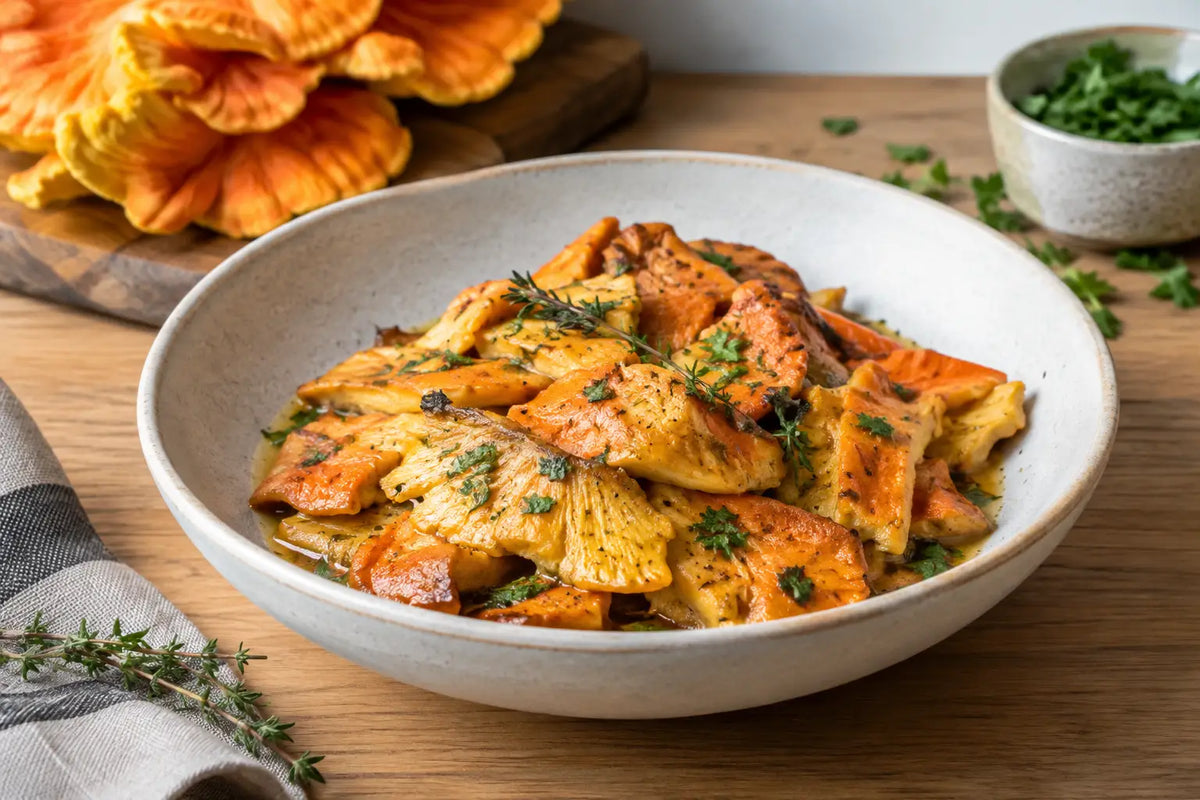
Chicken of the woods has a satisfying, substantial bite when it is cooked with care, but it does not reward a rushed sauté. For home cooks buying wild mushrooms from Crown Fungi, braising is one of the most reliable ways to turn this vivid, tender mushroom into a deeply savory main course or side dish. If you are learning how to braise chicken of woods, the essential idea is simple: brown it first, then cook it gently in a modest amount of flavorful liquid until every piece is tender.
Unlike delicate chanterelles or black trumpets, chicken of the woods can have a firmer, more layered texture. That is part of its appeal. A short braise softens those fibers without washing out the mushroom's flavor, leaving you with golden pieces that absorb butter, aromatics, stock, and herbs while still holding their shape.
What Braising Does for Chicken of the Woods
Braising combines two cooking methods. First, the mushroom is seared in a hot pan to develop color and concentrate its savory flavor. Then it finishes in a covered pan with a shallow layer of liquid. The trapped steam and gentle heat slowly tenderize the mushroom while the liquid reduces into a sauce.
The key word is shallow. Chicken of the woods should not be submerged like a soup ingredient. Too much liquid makes its texture soft and dilute. Use just enough stock, wine, or water to come about one-third of the way up the mushrooms. As the pan simmers, the pieces cook through and the liquid becomes a glossy finishing sauce.
Braising is especially useful for thicker, denser pieces and for frozen chicken of the woods. Fresh, tender edges may need only 10 to 15 minutes of covered cooking. Larger or frozen pieces often benefit from 20 to 30 minutes at a low simmer. Let texture, rather than the clock alone, guide you.
Ingredients for a Simple Mushroom Braise
For about one pound of chicken of the woods, use two tablespoons of olive oil or unsalted butter, one small shallot or half a yellow onion, two garlic cloves, three-quarters cup of chicken or vegetable stock, and a small handful of thyme or parsley. A splash of dry white wine adds brightness, but it is optional. Finish with a squeeze of lemon and salt and black pepper.
This is a flexible foundation, not a fixed flavor profile. Choose chicken stock for a fuller, more savory dish, or vegetable stock if you want the mushroom to remain the center of the plate. Thyme, rosemary, sage, bay leaf, and tarragon all work well, though one or two herbs are usually enough. Strong spices can obscure the mushroom's naturally woodsy, savory character.
Prepare Fresh or Frozen Mushrooms Correctly
Start by separating the mushroom into bite-size pieces, roughly two to three inches wide. Keep the pieces reasonably similar in thickness so they become tender at the same pace. Trim away any tough-looking base sections if needed.
If you are using fresh chicken of the woods, brush away any remaining natural debris and pat the pieces dry. Do not soak them. Extra water prevents browning and extends the time needed to cook the pan dry.
Frozen chicken of the woods can go directly into the pan, particularly when you plan to braise it. It may release more moisture before it begins to brown, so give it extra room and patience. If you prefer, thaw it overnight in the refrigerator and pat it dry before cooking. Either approach works. Cooking from frozen is convenient; thawing gives you a slightly better sear.
How to Braise Chicken of the Woods Step by Step
Set a wide, heavy skillet or Dutch oven over medium-high heat. A wide pan matters because crowded mushrooms steam before they brown. Add the oil, then arrange the chicken of the woods in a single layer. Leave it alone for three to four minutes. When the underside is golden, turn the pieces and brown the second side.
If your pan is small, brown in batches. It takes a few extra minutes, but this is where the mushroom develops the roasted flavor that makes the finished braise memorable. Once both sides have color, transfer the pieces to a plate.
Lower the heat to medium. Add the shallot with a small pinch of salt and cook until softened, about two minutes. Stir in the garlic and herbs for another 30 seconds. If using wine, pour it in now and scrape the pan with a wooden spoon to release the browned bits. Let it reduce by about half.
Return the mushrooms to the pan. Add the stock, aiming for a shallow pool around the pieces rather than a full cover. Bring the liquid to a gentle simmer, cover the pan, and lower the heat. Cook until the mushroom is tender all the way through, checking after 10 minutes for fresh pieces and 15 minutes for frozen pieces.
When the mushroom yields easily to a fork and no longer feels firm or fibrous at its thickest point, remove the lid. Continue simmering for a few minutes if the liquid needs reducing. Finish with a small knob of butter for richness, a squeeze of lemon for lift, and more salt and pepper to taste. Chicken of the woods should be cooked thoroughly, not served raw or merely warmed through.
> Product Callout: Frozen Chicken of the Woods
> Preserved at peak quality for flexible home cooking, frozen chicken of the woods is an excellent choice for braising because it can move from freezer to skillet with minimal prep. Current price: see the current shop listing. Shop the available frozen Chicken of the Woods selection before planning your meal.
Keep the Heat Gentle After the Sear
The most common mistake is treating braising like boiling. A hard boil can make the exterior break apart before the thicker sections become properly tender. Once the lid is on, you want a quiet simmer: a few lazy bubbles around the edge of the pan, not vigorous movement.
Another mistake is stopping too early. Chicken of the woods may look cooked after a quick sauté, yet still have a chewy interior. Braising gives it enough time to become pleasant and tender. If a piece remains firm after 15 minutes, add a splash more stock, cover again, and continue cooking in five-minute intervals.
On the other hand, do not keep it on the heat indefinitely. Very thin, fresh edges can become soft if braised too long. When you have a mix of thin and thick pieces, remove the tender smaller pieces first and give the thicker ones a few more minutes.
Flavor Directions That Work
A classic butter, shallot, garlic, thyme, and stock braise pairs easily with toasted sourdough, creamy polenta, pasta, or roasted potatoes. Spoon every bit of the pan sauce over the final dish.
For a brighter version, use white wine and vegetable stock, then finish with lemon zest, parsley, and a few capers. The briny acidity keeps the rich mushroom from feeling heavy and makes an excellent topping for risotto or beans.
For a warmer, autumnal direction, braise with sage and a small amount of apple cider or dry hard cider in place of some of the stock. Add a touch of Dijon mustard at the end. Keep the cider dry rather than sweet, so the dish stays balanced.
If you want the braised mushroom to stand in as the centerpiece of dinner, serve larger pieces over mashed potatoes or soft polenta with a bitter green salad alongside. For a supporting role, fold smaller braised pieces and their reduced sauce into pasta, farro, or white beans.
Make It Ahead Without Losing Texture
Chicken of the woods braised in a savory liquid holds well for a day or two in the refrigerator. Cool it in its sauce, then store it in a covered container. Reheat gently in a skillet over low heat with a splash of stock or water. Avoid microwaving on high, which can heat the mushroom unevenly and make the sauce greasy.
The flavor often deepens overnight, making this a smart component for a relaxed weekend meal. Reheat only until hot, then add fresh lemon, herbs, or black pepper immediately before serving to bring back contrast.
Shop This Mushroom
For a braise with real depth, start with carefully handled fresh or frozen chicken of the woods and cook it until tender rather than merely browned. Shop the current Chicken of the Woods offerings to bring this distinctive wild mushroom into your next dinner at home.