Cart
0
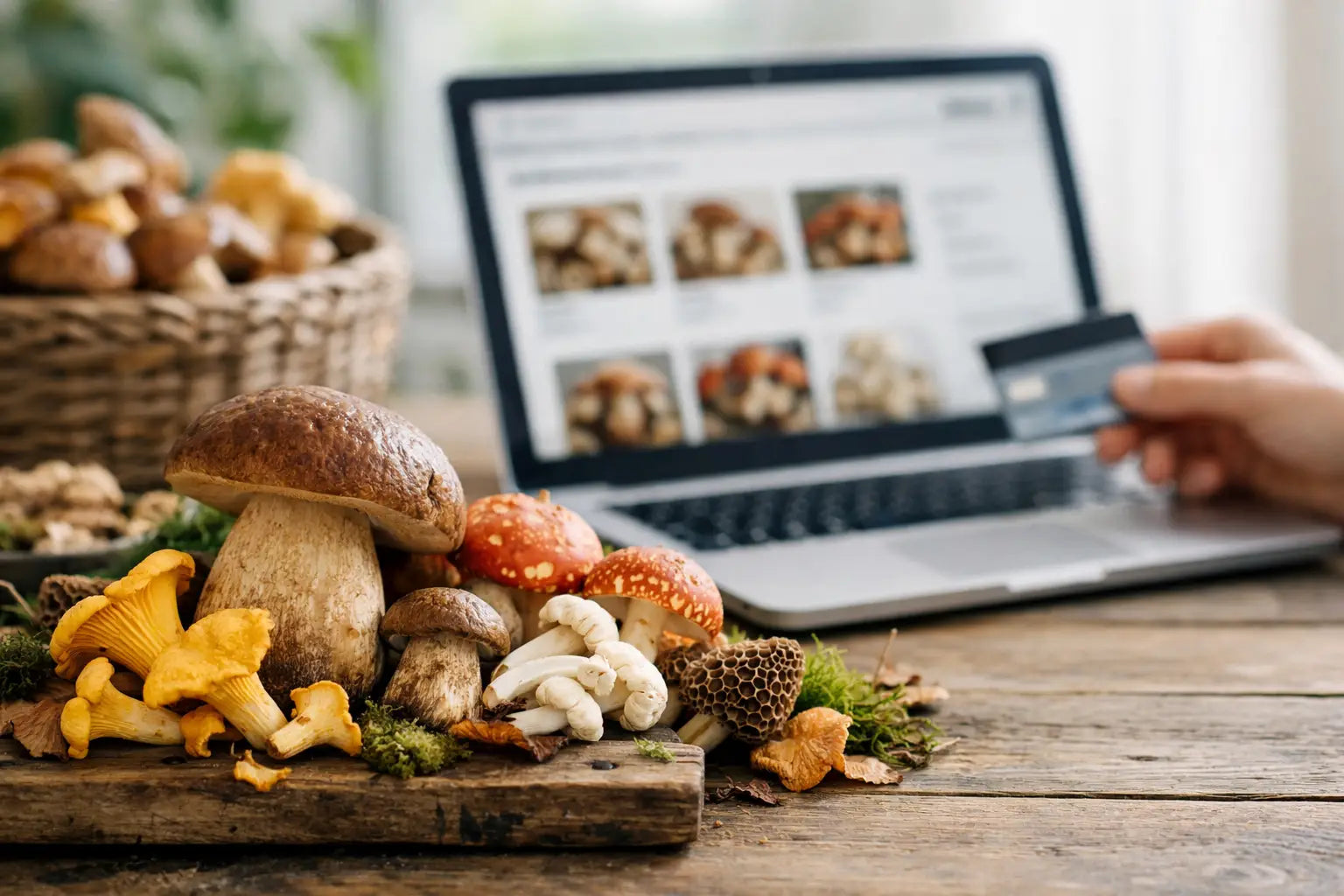
If you need chanterelles for a weekend menu, morels for a spring feature, or porcini that arrive in usable condition, the decision to buy wild mushrooms online comes down to one thing: reliability. Wild product is not commodity produce. Quality depends on species knowledge, harvest timing, grading, preservation, and shipping discipline.
That is why experienced buyers do not shop these mushrooms the way they shop pantry staples. They assess the supplier the same way they assess any serious ingredient partner - by consistency, handling standards, and whether the product performs in the pan.
What matters when you buy wild mushrooms online
The first question is not price. It is whether the mushrooms were sourced and handled for culinary use. Wild mushrooms are highly variable by nature. Two boxes labeled “morels” can differ dramatically in size, cleanliness, moisture level, aroma, and trim quality.
A strong supplier controls as much of that variability as possible. That starts with species-specific grading and continues through cleaning, packing, temperature control, and format selection. If the seller treats wild mushrooms like generic produce, the product usually shows it. Broken caps, excess debris, soft texture, and inconsistent sizing all create waste in the kitchen.
For chefs and serious home cooks, usable yield matters as much as visual appeal. A lower price per pound means very little if a meaningful share of the shipment is too damaged, too wet, or too inconsistent to plate well. Online purchasing works best when the seller understands that the mushrooms are headed for service, not just for display.
Fresh, frozen, or dried? It depends on the kitchen
When buyers think about premium mushrooms, they often default to fresh. Fresh can be the right choice, especially for varieties where visual presentation and immediate aroma are central to the dish. Chanterelles, black trumpets, and matsutake often earn that treatment when they are in season and moving quickly through the kitchen.
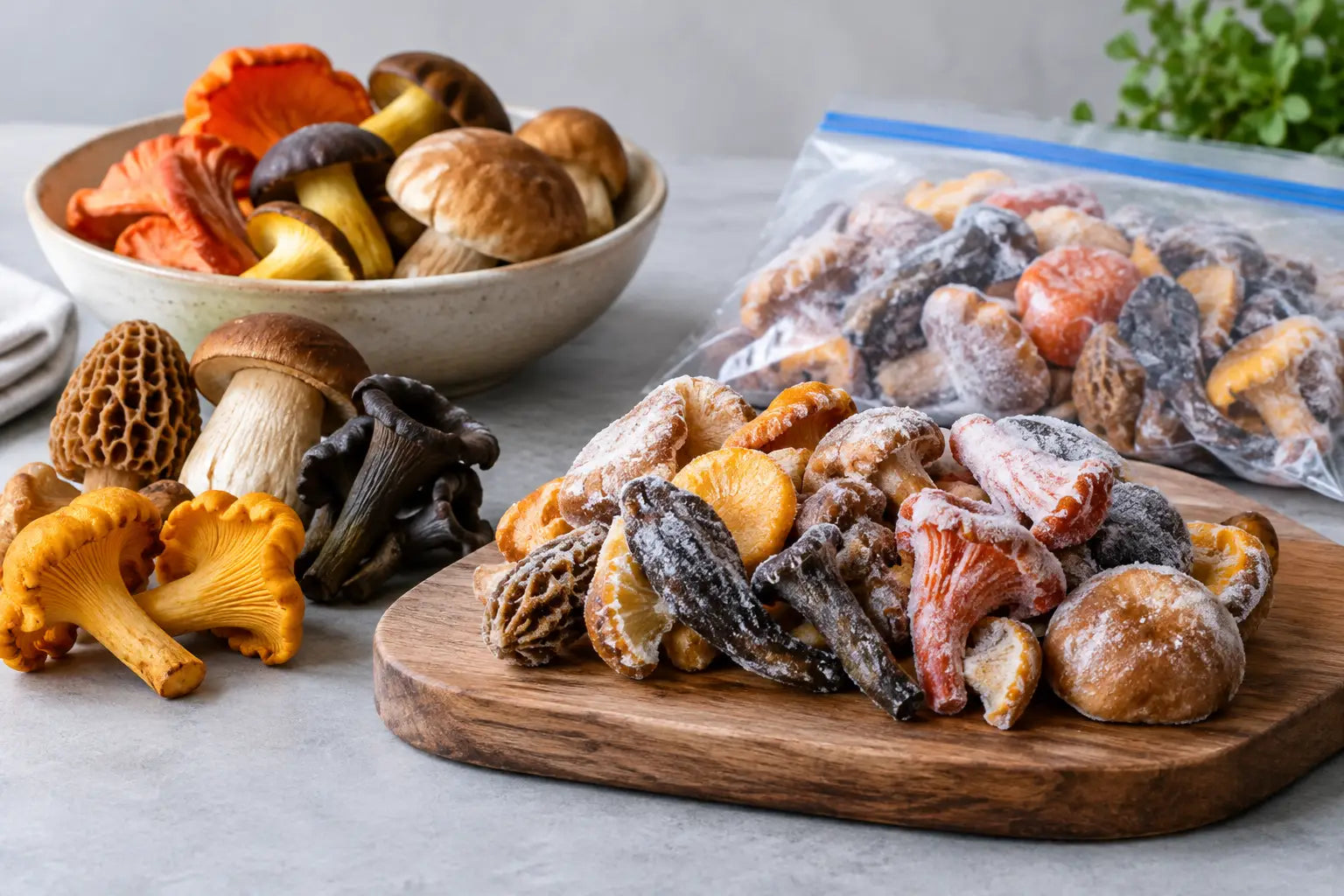
But fresh is not automatically the best format for every use. Frozen wild mushrooms can offer a more stable year-round solution, particularly when they are preserved at peak condition. For menu planning, that matters. A chef may want morels in January not because they are seasonal then, but because the dish requires them and the standard cannot drop.
Dried mushrooms serve a different purpose. They concentrate aroma, store well, and work especially well in broths, sauces, stuffing, risotto, and composed dishes where hydration and extraction are part of the cooking process. Porcini is the obvious example, but dried morels and black trumpet also have serious utility in professional kitchens.
The right format depends on the intended result. Fresh supports immediacy and presentation. Frozen supports consistency and availability. Dried supports depth, shelf stability, and pantry control. The strongest online suppliers do not force one answer. They offer formats that match real kitchen needs.
Seasonality still matters, even online
Buying online does not eliminate seasonality. It just gives you access to a broader sourcing network and better preservation options. That distinction is important.
Wild mushrooms follow weather, elevation, regional flushes, and harvest conditions. Fresh morels have a spring window. Chanterelles tend to track summer and fall patterns depending on region. Matsutake operates on its own seasonal rhythm. Anyone promising every species fresh, all the time, deserves scrutiny.
What professional buyers need is not fantasy availability. They need transparency about what is in season, what is limited, and what is best purchased frozen or dried outside the primary harvest period. That kind of honesty is usually a sign of a supplier built for serious kitchens.
How to judge online mushroom quality before you order
Photos help, but they are not enough. Product pages can tell you more if you know what to look for. The strongest listings usually make clear what species is being sold, what format it is in, and how it has been handled. Vague language is often a warning sign.
Look for evidence of grading and format discipline. Fresh product should indicate that it is packed for transit and time-sensitive use. Frozen product should suggest peak-season preservation rather than surplus stock. Dried product should be identified by species and form, since whole pieces, large cuts, and smaller fragments each suit different applications.
It also helps to consider the seller’s audience. A supplier serving chefs, specialty retailers, and buyers who care about performance is more likely to think in terms of yield, consistency, and kitchen utility. A generic marketplace seller may focus on novelty, not execution.
If you are ordering for service, ask a practical question: will this product reduce labor or create it? Clean, well-graded mushrooms save time. Poorly sorted mushrooms shift the burden to your prep team.
Shipping is part of product quality
With wild mushrooms, shipping is not a back-end detail. It is part of the ingredient itself. A mushroom can be excellent at harvest and mediocre by arrival if packing and temperature control are careless.
Fresh wild mushrooms need speed, protection, and proper cold-chain handling. Too much trapped moisture can shorten shelf life. Too little protection can lead to bruising and breakage. Frozen mushrooms need to stay in a managed temperature environment so the preservation strategy actually holds. Dried mushrooms are more forgiving, but they still need packaging that protects aroma and structure.
This is one of the biggest differences between buying from a specialty supplier and buying from a general food seller. The specialty supplier understands that fulfillment discipline is not separate from product quality. It is quality.
For buyers in the United States, nationwide shipping can be a major advantage, but only if it is executed with control. That is especially relevant for restaurants outside major coastal markets that do not have easy local access to chef-grade wild product.
Buy wild mushrooms online for menu planning, not just impulse
The best reason to buy online is not convenience alone. It is planning. Serious kitchens need to know which ingredients can be featured now, which can be stocked for later, and which formats make sense for different parts of the menu.
A fresh seasonal purchase may support a limited run dish. Frozen inventory may protect a signature preparation from supply gaps. Dried mushrooms may round out the pantry for sauces, braises, and off-season menu development. These are different purchasing decisions, and a serious supplier should support all three.
This is where operational clarity matters. Buyers should be able to understand what they are ordering, when it is best used, and how it fits a service calendar. That is a stronger standard than simply chasing whatever looks rare.
Which varieties are worth sourcing online?
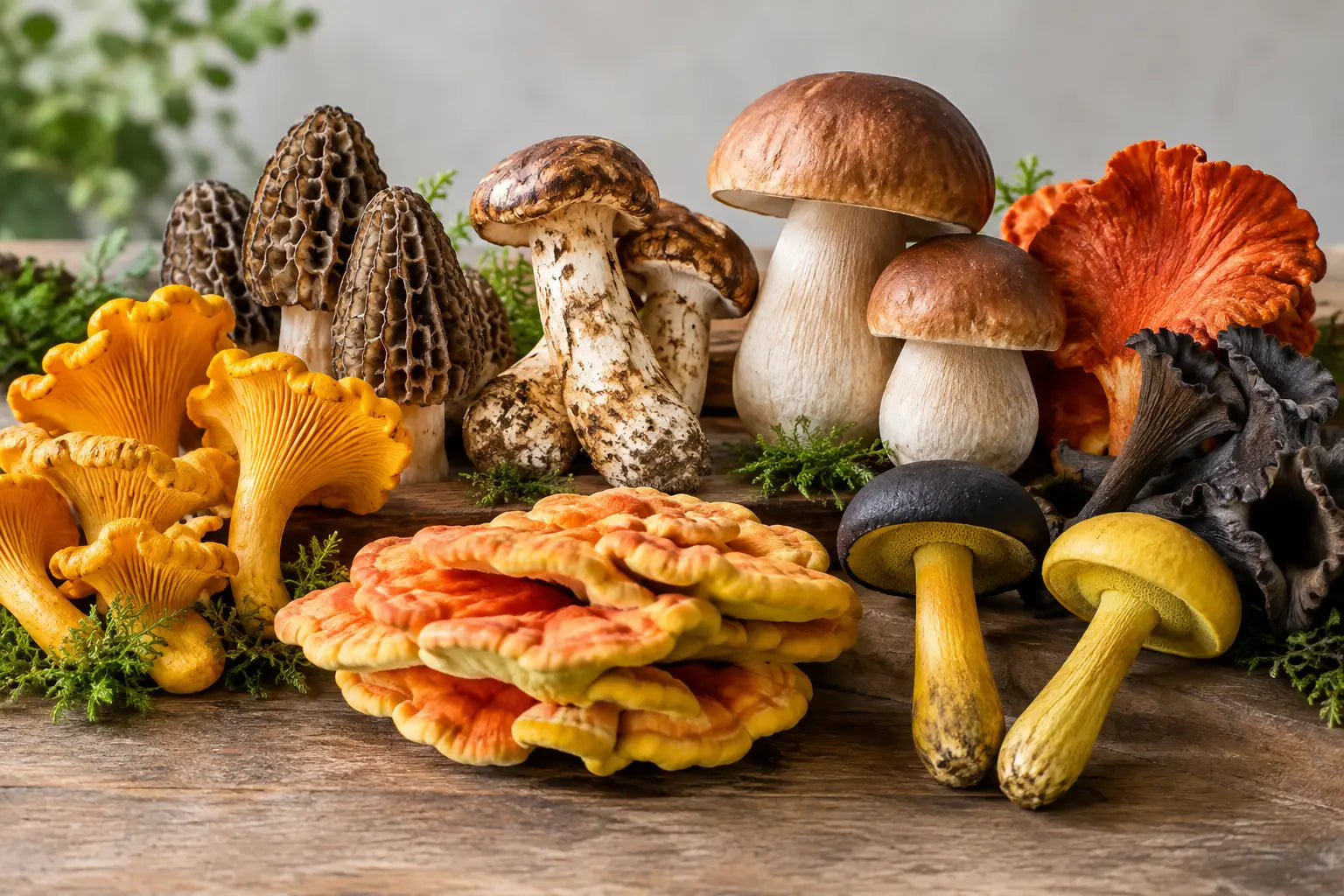
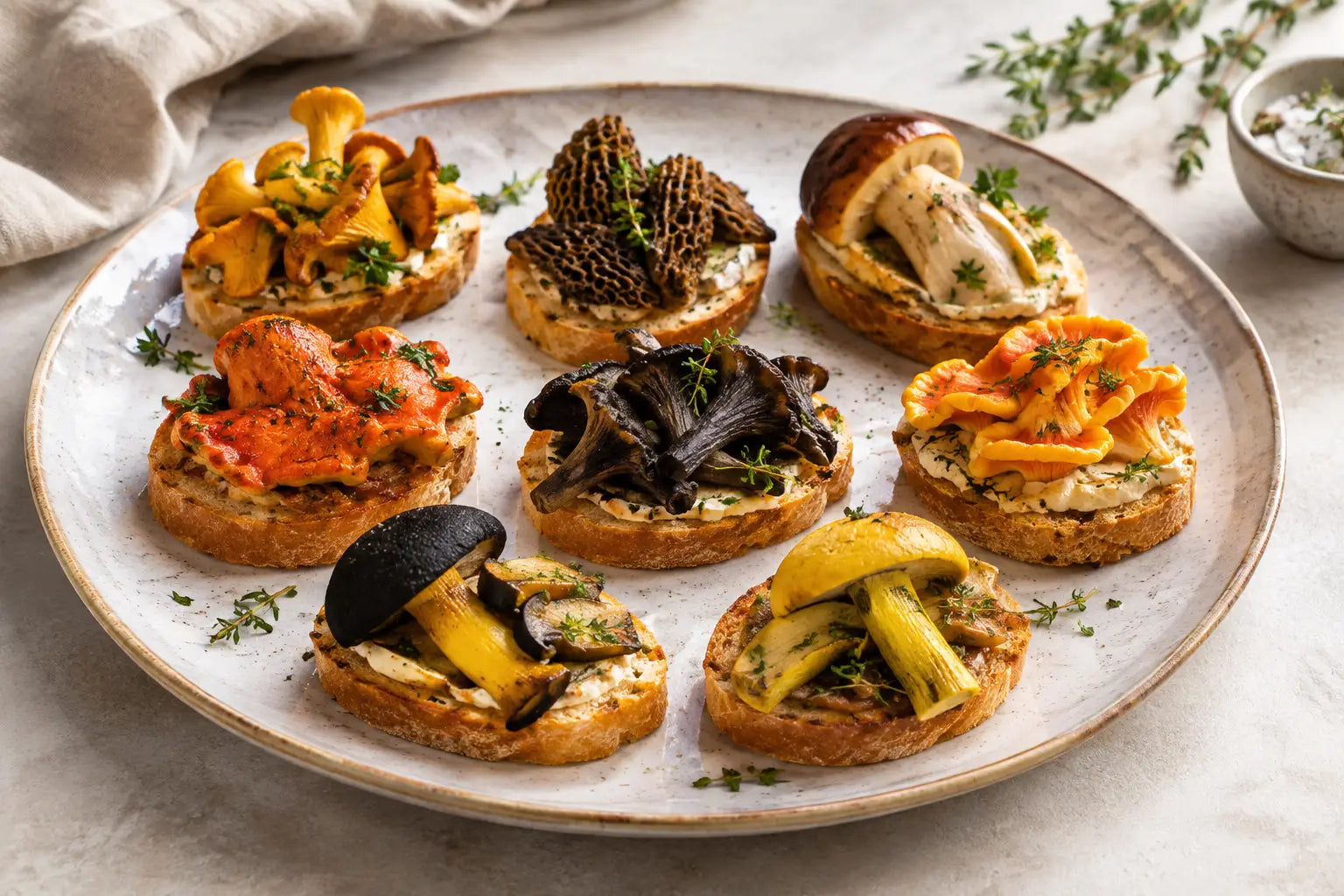
Not every kitchen needs every species, but several wild mushrooms consistently justify online purchasing because they are hard to source locally at a dependable standard. Morels remain one of the clearest examples because demand is high and quality swings widely. Chanterelles are valuable when buyers need strong color, aroma, and uniformity. Porcini is a workhorse across fresh, frozen, and dried formats. Black trumpet offers concentrated character with excellent culinary range. Matsutake is highly specific but important for buyers who understand its aromatic profile and menu value. Lobster mushrooms and chicken of the woods can also be compelling when sourced and handled correctly.
The right mix depends on your menu and your tolerance for seasonality. Some kitchens want a rotating set of fresh wild mushrooms when harvest conditions are favorable. Others want a dependable core assortment in frozen and dried form so they can maintain standards without rewriting dishes every time supply shifts.
The real trade-off: flexibility versus immediacy
There is no single perfect way to source wild mushrooms. Fresh offers immediacy but comes with tighter timing and more seasonal exposure. Frozen offers stability but may not suit every visual application. Dried delivers exceptional utility but changes texture and use case.
That trade-off is not a problem. It is the basis of smart purchasing. Buyers who understand the strengths of each format usually get better culinary results and better cost control.
For that reason, the strongest online mushroom programs are built around more than availability. They are built around preservation strategy, professional grading, and fulfillment that respects the ingredient. That is the model serious buyers should look for, whether they are ordering for a restaurant pass, a hotel kitchen, a specialty retail set, or an ambitious home cook’s weekend project.
Crown Fungi operates in that lane: wild-focused assortment, chef-grade handling, and formats that support both immediate use and year-round planning.
When you buy wild mushrooms online, the goal is not simply to get rare product to your door. The goal is to receive mushrooms that cook the way they should, hold up to your standards, and make the next menu decision easier.