Cart
0
A great wild mushroom announces itself before it reaches the pan. Its aroma is clear and distinctive, its texture feels lively rather than tired, and its flavor holds its own beside good butter, eggs, pasta, or roast chicken. What makes mushrooms premium quality is not one cosmetic detail. It is a chain of careful decisions, from seasonal harvesting to the moment you cook them at home. At Crown Fungi, that standard starts with wild varieties chosen for the qualities that make a meal feel special.
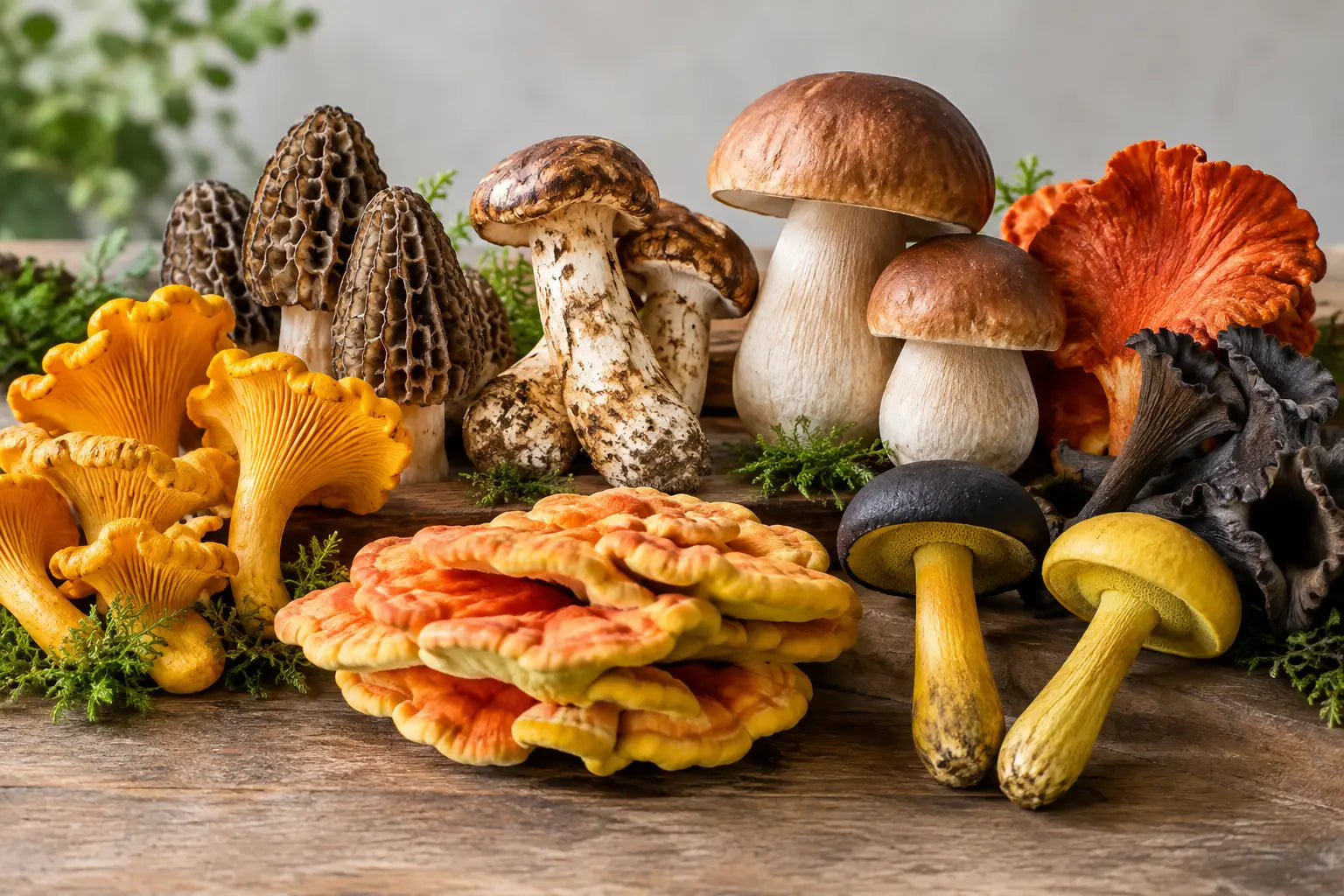
Premium mushrooms are also not necessarily the largest or most perfectly shaped. Wild chanterelles curl, morels have deep honeycomb caps, and lobster mushrooms arrive in wonderfully irregular forms. The real question is whether each mushroom has the aroma, firmness, color, and clean condition needed to cook beautifully.
What Makes Mushrooms Premium Quality?
Premium quality begins with the mushroom itself. Wild mushrooms are intensely tied to season and place, which is why a truly good chanterelle tastes so different from a bland, generic mushroom. A premium specimen has the character its variety is known for: apricot-like fragrance in chanterelles, deep woodsy savor in porcini, rich nuttiness in morels, or the striking seafood-like sweetness that gives lobster mushrooms their name.
That character must be protected. Mushrooms are delicate, high-moisture ingredients. Excess heat, rough handling, or too much time in storage can flatten aroma and turn a firm bite soft. Quality is therefore as much about preserving what was harvested as it is about finding an exceptional mushroom in the first place.
Freshness is more than a date
With fresh wild mushrooms, look first for vitality. Caps and stems should feel firm for their variety, with no widespread sliminess, collapse, or sour smell. Their color should be natural and appealing, whether that means the golden hue of a chanterelle, the dark folds of a black trumpet, or the orange-red surface of a lobster mushroom.
A little natural variation is normal. In fact, it is part of the appeal of wild mushrooms. A premium selection is not one that has been forced into identical shapes. It is one that has been sorted so that damaged, overly mature, or poor-condition pieces do not crowd out the flavorful ones.
Freshness has a practical payoff in the pan. Good mushrooms release moisture, then brown and concentrate rather than breaking down into a watery, dull pile. They keep enough structure to make their texture part of the dish.
Variety-specific character matters
There is no single visual rule that defines quality across every wild mushroom. A premium morel does not look or cook like a premium chicken of the woods. The standard should respect the variety.
Morels should offer a springy, hollow structure and a deeply savory flavor that stands up to cream sauces and rich pan sauces. Chanterelles should smell floral and fruity, with a firm, pleasantly chewy bite. Porcini are prized for their dense texture and concentrated, nutty earthiness. Black trumpets are delicate but intensely aromatic, while chicken of the woods should have a tender, layered texture that suits sautéing, roasting, or pulling into pieces for tacos.
Knowing what each variety is supposed to bring to the plate helps you buy with confidence. It also keeps you from judging a rare mushroom by supermarket standards that do not apply.
Careful Cleaning Preserves Flavor and Texture
Wild mushrooms grow close to the forest floor, so some cleaning is necessary. But aggressive cleaning can damage fragile edges, waterlog tender flesh, or remove the visual character that makes a wild mushroom beautiful. Premium quality means the mushrooms have been carefully prepared so home cooks can spend less time sorting and more time cooking.
That does not mean every piece will be perfectly uniform. Small creases, natural cap folds, and an occasional bit of forest character are part of the ingredient. What matters is that the mushrooms are in clean, usable condition and ready for thoughtful cooking.
At home, handle them with the same restraint. If a quick rinse is needed, keep it brief and dry the mushrooms thoroughly before cooking. For mushrooms with folds or crevices, such as morels, inspect them carefully and clean only as much as needed. Then give them room in a hot pan. Crowding encourages steaming, while space encourages the golden edges that bring out their best flavor.
Seasonality Is a Mark of Quality, Not an Inconvenience
The finest wild mushrooms are seasonal because nature sets the schedule. A short fresh season is often when a variety is most exciting: chanterelles in their bright, fragrant prime or morels when their earthy flavor feels especially welcome after winter.
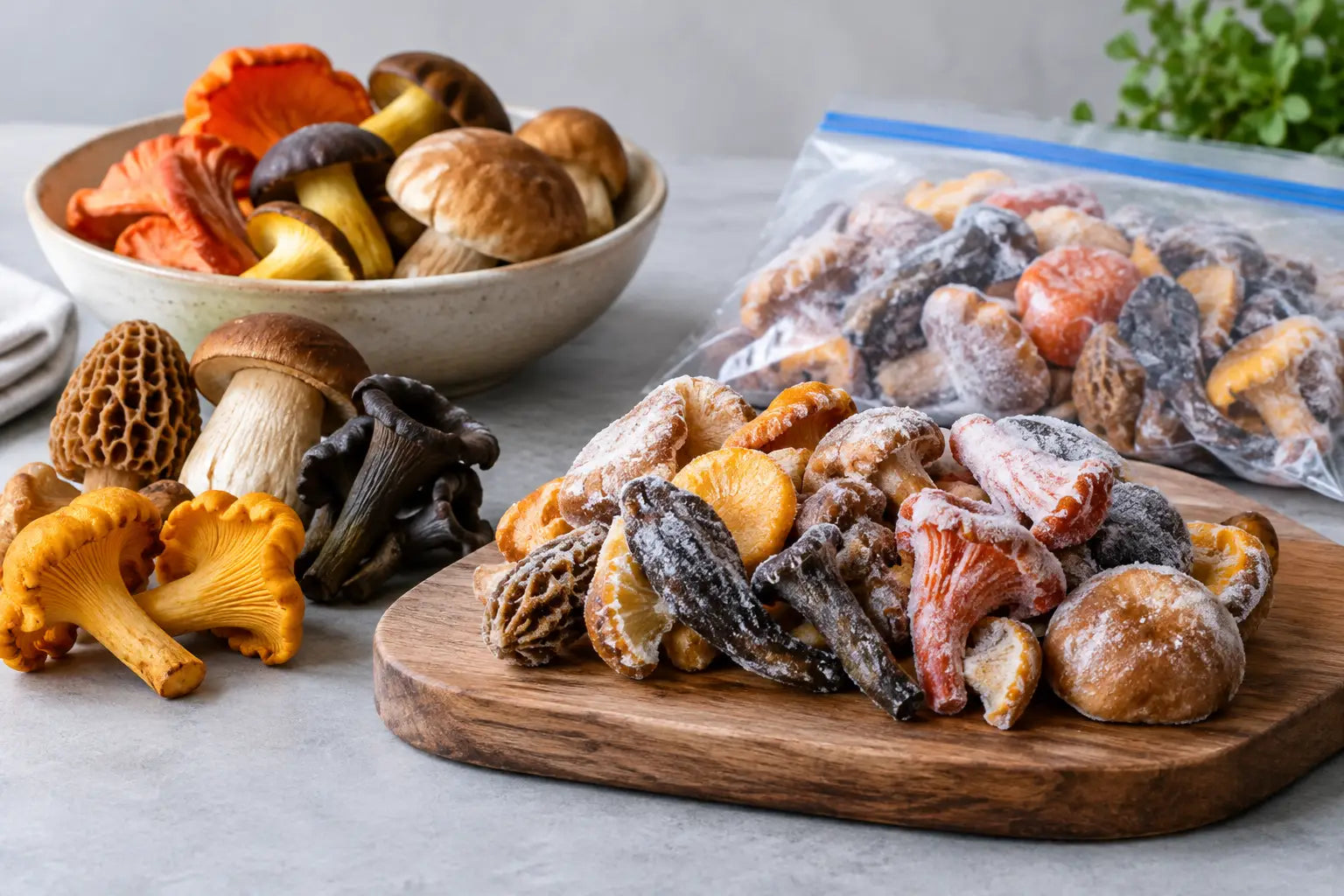
For home cooks, seasonality can mean choosing between two excellent experiences. Fresh mushrooms offer immediacy: a limited-time ingredient to build a dinner around this week. Frozen mushrooms offer access beyond the fresh window, preserved when flavor and texture are at their strongest.
Neither format is automatically better. It depends on how you plan to cook. Fresh mushrooms are ideal when you want their visual presence and delicate texture front and center, such as a simple sauté over toast or folded into eggs. Frozen mushrooms are a smart choice for sauces, risottos, soups, stuffing, and pasta, where their concentrated flavor can shine without waiting for a particular season.
Freezing at peak quality is preservation with a purpose
Freezing is not a compromise when it is done at the right moment. The point is to capture a wild mushroom when its flavor is vivid, then make that ingredient available when the forest is no longer producing it.
A premium frozen mushroom should still smell like itself after cooking. It should add recognizable flavor and satisfying texture, not disappear into a dish. Because frozen mushrooms can release moisture as they cook, use a wide skillet and avoid overcrowding. Let the water cook off before adding butter, oil, garlic, or herbs. That extra patience is often the difference between pale mushrooms and deeply browned ones.
Aroma Tells You More Than Appearance Alone
If you remember one buying cue, make it aroma. Premium wild mushrooms should smell clean, fresh, and unmistakably mushroomy. Depending on the variety, that can read as fruity, peppery, nutty, earthy, or deeply savory. The aroma should invite you to cook, not make you hesitate.
Appearance still matters, but it can be misleading when treated as the only measure. An unusually shaped chanterelle may be superb. A modest-looking porcini may deliver extraordinary flavor. The best selections balance visual condition with the sensory qualities that matter once heat hits the pan.
For a simple test of quality, cook a small portion with salt and fat before building a complicated recipe around it. Premium mushrooms need very little intervention. If their flavor is clear and their texture feels satisfying, they have earned a place in the dish.
The Premium Difference Shows Up on the Plate
Paying for premium wild mushrooms means paying for a more dependable cooking experience. You are more likely to get the fragrance you expected, the texture your recipe needs, and the distinctive flavor that turns a familiar meal into something memorable.
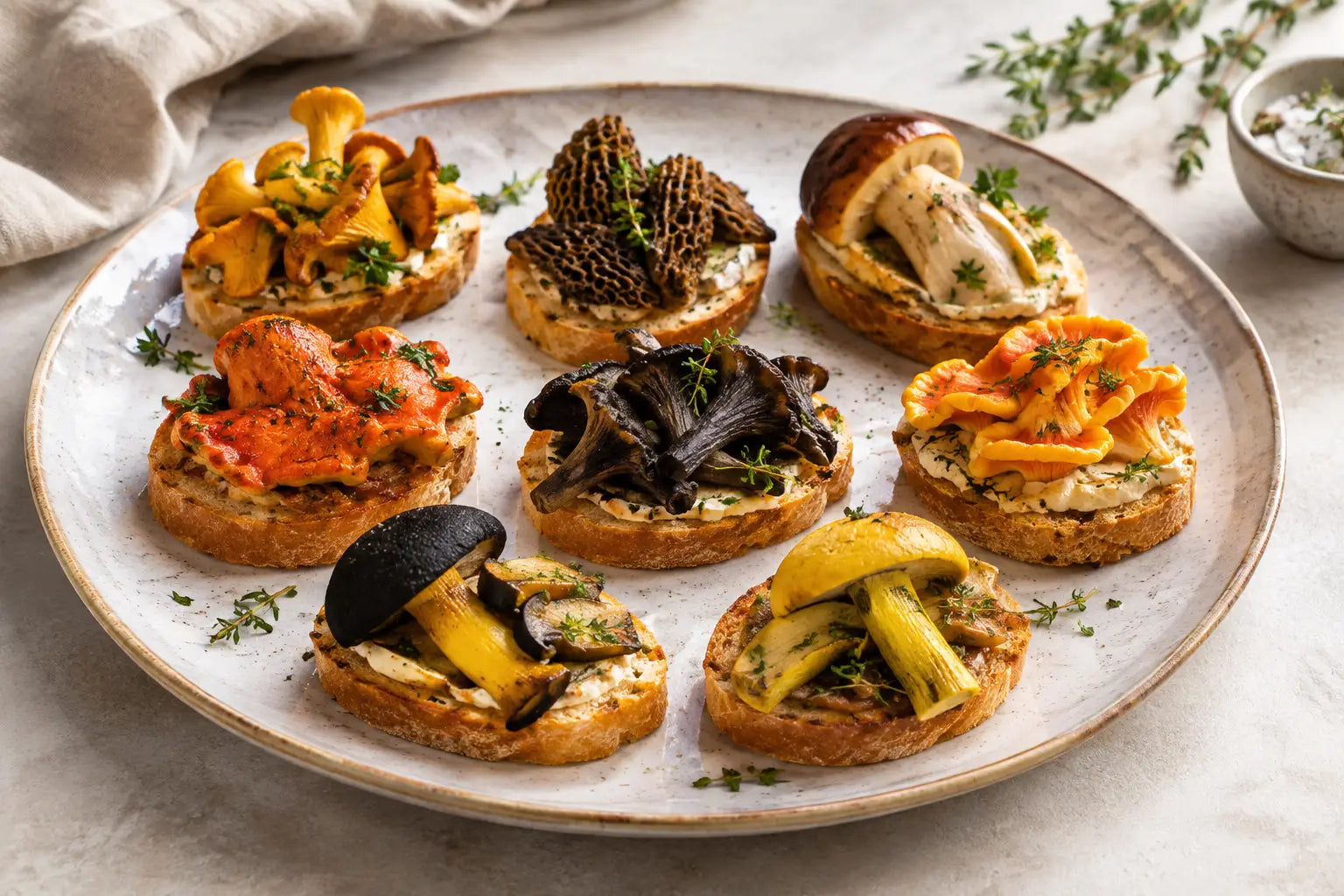
Keep the preparation simple enough to notice the difference. Sauté chanterelles with butter and thyme, spoon morels over creamy polenta, toss porcini into a silky pasta, or let black trumpets deepen a pan sauce. Use lobster mushrooms where their color and savory sweetness can stand out. With ingredients this distinctive, restraint is often the most luxurious choice.
Shop This Mushroom
Explore current fresh and frozen wild mushroom offerings and choose the variety that fits the meal you want to make. A seasonal mushroom in peak condition is one of the simplest ways to bring rare, memorable flavor to your table.