Cart
0
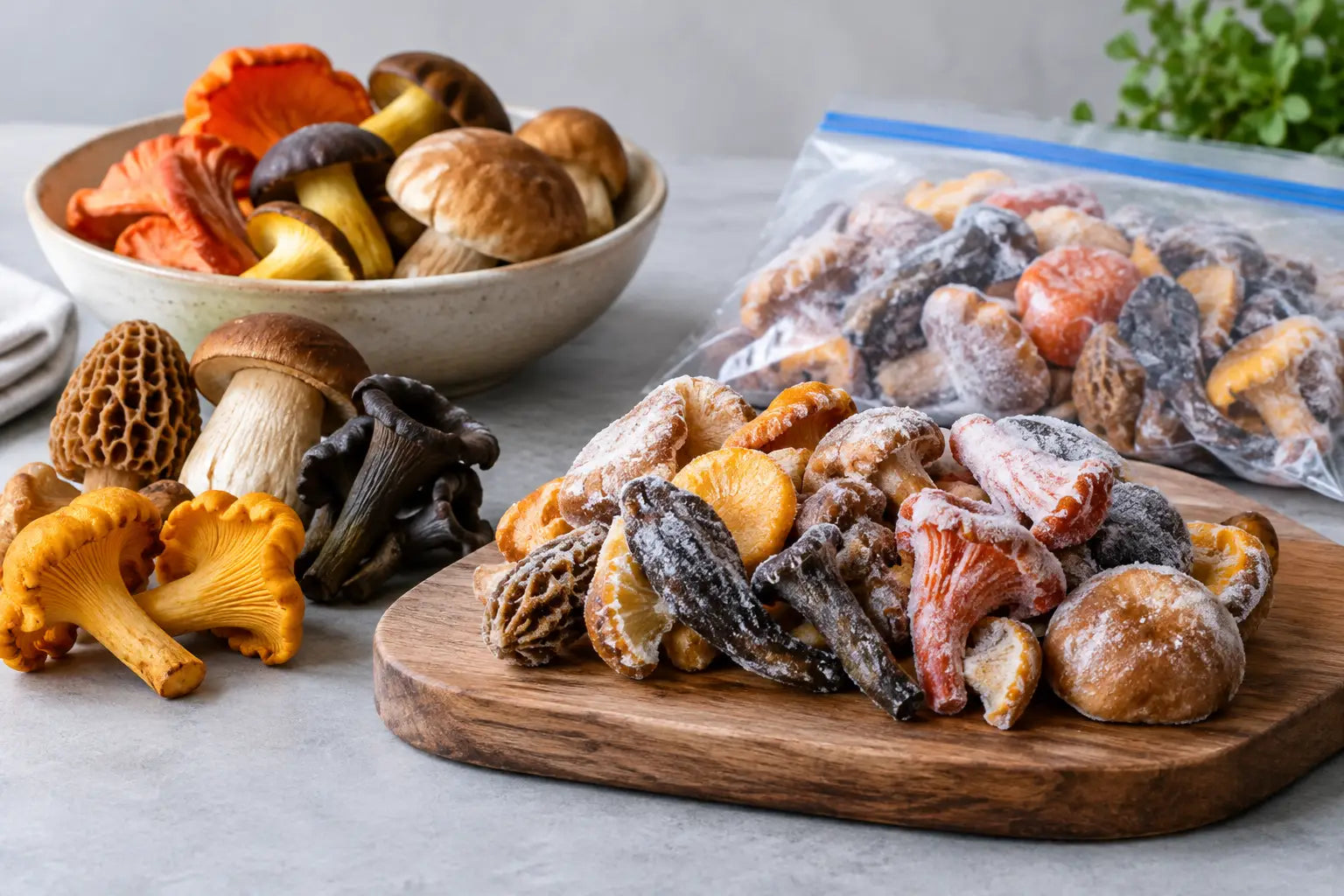
A bag of frozen wild mushrooms can make a memorable dinner feel close at hand: porcini folded into risotto, chanterelles spooned over toast, or chicken of the woods tucked into a warm skillet. But when plans change, a practical question follows: can frozen mushrooms be refrozen? Usually, yes - if they thawed safely. The larger question is whether doing so will still give you the texture and flavor you want.
At Crown Fungi, wild mushrooms are preserved at peak quality so home cooks can enjoy seasonal flavor beyond a short harvest window. Treat that frozen package with the same care you would give any exceptional ingredient. A safe refreeze is possible under the right conditions, but every thaw-and-freeze cycle asks a little more of the mushroom's texture.
Can Frozen Mushrooms Be Refrozen Safely?
Frozen mushrooms may be refrozen when they have thawed in the refrigerator and stayed at 40°F or below. If there are still ice crystals in the package, that is also a reassuring sign that the mushrooms have remained properly cold. Refreezing does not make the mushrooms unsafe simply because they have thawed.
What matters is time and temperature. Freezing pauses bacterial growth; it does not reset the clock if food has spent too long warm. If mushrooms sat on the counter for more than two hours, discard them rather than refreezing them. On a very hot day, when the room is above 90°F, that window is one hour.
Mushrooms thawed using cold water or a microwave need a different approach. Cook them promptly, then cool and freeze the cooked dish or cooked mushrooms if you will not use them right away. Those faster thawing methods can warm parts of the food unevenly, so they are not a good stopping point before returning mushrooms to the freezer.
The Main Trade-Off Is Texture
Safety is one thing; eating quality is another. Mushrooms contain a great deal of water. As they freeze, ice crystals can puncture their delicate cell walls. Once thawed, they naturally release moisture. A second freeze can increase that effect, leaving the mushrooms softer and wetter after cooking.
That does not mean refrozen mushrooms are a lost cause. Their savory depth remains especially useful in dishes where tenderness is welcome and extra moisture can be cooked away. Think risotto, pasta sauce, soup, gravy, stuffing, a mushroom ragout, or an egg dish. In these recipes, a slightly softer mushroom can still bring outstanding woodland flavor.
If you were planning a preparation where the mushroom needs to be especially distinct - a quick sauté to serve over polenta, for example - cook the thawed mushrooms now rather than refreezing them. You will get a better result with less guesswork.
What to Do When a Package Arrives Partly Thawed
A package that feels cold and contains visible ice crystals has generally remained frozen enough to use or refreeze. Put it in the freezer promptly if you are not cooking it soon. Do not leave it out while you decide what to make.
If the mushrooms are fully thawed but still refrigerator-cold, you have two good options: cook them within a day or two, or refreeze them in a well-sealed, portioned package. Refrigerated thawing is the gentlest method for both food safety and quality.
If the package is warm, leaking, or has been at room temperature for an unknown length of time, do not taste it to assess safety. When you cannot confidently account for how long mushrooms have been warm, the cautious choice is to discard them.
A quick quality check
Before cooking or refreezing, look for mushrooms that still smell clean and earthy. They may be softer than when first frozen, and some liquid in the package is normal. A sour odor, unusual discoloration, or a slippery surface that seems excessive are signs to skip them.
How to Refreeze Mushrooms With the Least Quality Loss
If you decide to refreeze, do it once, promptly, and in portions you will realistically use. Repeated partial thawing is where quality drops quickly. The goal is to keep the mushrooms cold, protected from air, and easy to take out only as needed.
First, drain off any accumulated liquid if your recipe will benefit from a drier mushroom later. You do not need to press them hard; a gentle drain is enough. Divide the mushrooms into meal-size portions, then pack them in freezer-safe containers or bags with as much air removed as practical. Label each package with the date.
Place the portions in the coldest stable area of the freezer, not in the door. Use refrozen mushrooms sooner than a newly frozen package for the best aroma and texture. There is no need to wait for a special occasion: a weeknight pasta, hearty grain bowl, or simple butter-basted toast is a fine reason to enjoy them.
> Cooking note: If the mushrooms are already thawed and dinner is still a few days away, cooking them first is often the better move. Sauté them until their released moisture evaporates, cool them quickly, then freeze. They will be ready to add directly to a future sauce, soup, or skillet meal.
When You Should Cook Instead of Refreeze
Cooking is the better choice when the mushrooms have thawed completely and you know you will not use them before their refrigerator time is up. It is also smart when you have opened a larger package for a small recipe and want to protect the remaining mushrooms from another raw freeze-thaw cycle.
A hot pan is your friend. Cook the mushrooms over medium-high heat in a single layer when possible, allowing their moisture to release and then evaporate. Add oil or butter after the pan has had a moment to drive off excess water, and season near the end. This gives refrozen or previously thawed mushrooms a more concentrated flavor and a cleaner finish.
Cooked mushrooms can be cooled, sealed, and frozen for later. Keep the portions small enough to chill quickly, and refrigerate or freeze them promptly once they are no longer steaming. When you are ready to use them, add them straight from frozen to a soup, sauce, or skillet, or thaw them overnight in the refrigerator.
A Better Habit for Premium Wild Mushrooms
The easiest way to avoid refreezing is to portion mushrooms before the first freeze whenever possible. If you know a package will become several meals, divide it while it is still mostly frozen. A little planning protects the character of special wild mushrooms and makes dinner more flexible.
It also helps to choose recipes that match the condition of the mushrooms. Use a pristine, once-frozen package for a preparation that puts mushrooms at the center of the plate. Save a refrozen portion for a dish that welcomes deep flavor and a softer bite. That is not settling - it is cooking with the ingredient in mind.
The Bottom Line
Can frozen mushrooms be refrozen? Yes, when they were thawed safely in the refrigerator or are still partly frozen with ice crystals present. But for the best result, refreeze only once and expect a softer texture when you cook them later. If texture matters most, cook the thawed mushrooms now and freeze the cooked portion instead.
A carefully stored frozen wild mushroom package gives you more freedom to cook with the seasons on your own schedule. Keep it cold, portion thoughtfully, and let the dish guide your decision.
Shop This Mushroom
Explore Crown Fungi's current selection of frozen wild mushrooms for your next meal at home.