Cart
0
A wild mushroom order can strengthen a menu - or create avoidable problems in prep, yield, and service. If you are deciding how to order wild mushrooms, the key is not just choosing a species. It is choosing the right format, timing, and supplier standards so the product arrives ready to perform in a serious kitchen.
Wild mushrooms are not commodity produce. They are variable by season, moisture, fragility, and harvest conditions. That is exactly what gives them value, but it also means buying decisions need to be more deliberate. Chefs, buyers, and experienced home cooks usually get the best results when they order with a clear use case in mind rather than chasing a name alone.
How to order wild mushrooms for your kitchen
Start with the dish, not the catalog. A mushroom that is perfect for a pan roast may be the wrong choice for stock, stuffing, or dry applications. Texture, aroma, water content, and trim loss all affect whether a purchase makes operational sense.
If you need immediate plate performance and visual impact, fresh product is often the right call when available. Fresh wild mushrooms offer the best intact structure and the most direct expression of texture. They also require the tightest handling window. For restaurant service, that works well when volume is predictable and prep teams can turn product quickly.
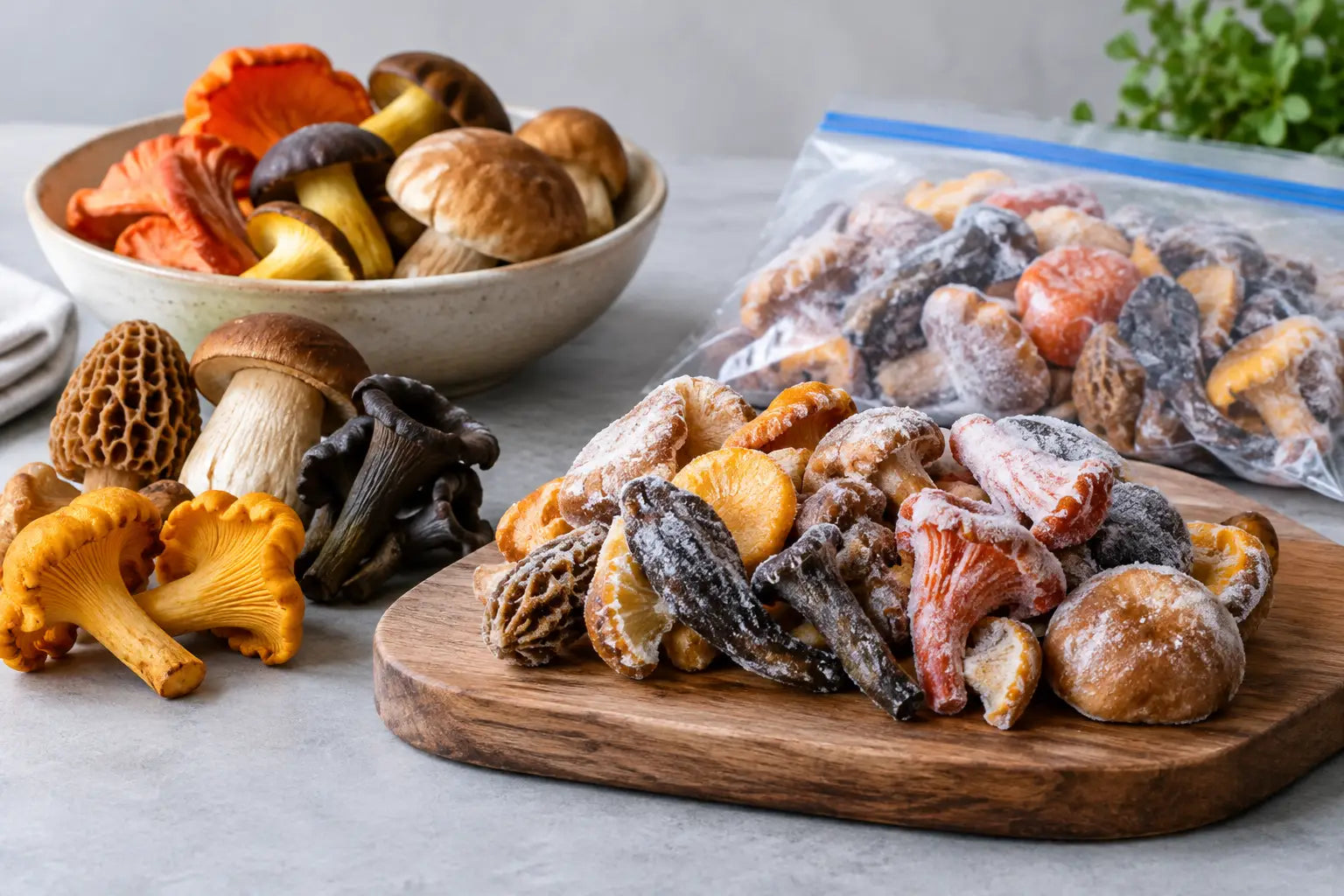
If consistency matters more than romance, frozen can be the stronger format. Professionally frozen wild mushrooms preserve quality close to peak harvest and reduce the volatility that comes with fresh seasonal arrivals. For kitchens that need dependable inventory, controlled portioning, and less exposure to short shelf life, frozen is often the most practical buying decision.
Dried mushrooms solve a different problem. They are ideal when aroma concentration, pantry stability, and year-round access matter most. They also give buyers more flexibility on usage because they can be rehydrated for sauces, braises, fillings, compound butters, and broths. Dried product is not a substitute for every fresh application, but for depth of flavor and storage efficiency, it earns its place.
Choose format before variety
Many buyers make the mistake of selecting a species first and only then thinking about handling. In practice, format should usually come first. Once you define whether you need fresh, frozen, or dried, it becomes much easier to match the mushroom to the application.
Fresh chanterelles are a good example of a product that rewards careful handling and fast turnover. They suit sautés, composed plates, and applications where shape and color matter. Frozen porcini, on the other hand, can be a smarter choice for kitchens building consistent risottos, pasta fillings, or sauces across multiple services. Dried morels or black trumpet mushrooms often make the most sense when a kitchen needs concentrated flavor and efficient storage rather than same-day use.
There is no universal best format. It depends on labor, menu cycle, storage space, and how much risk your kitchen can absorb. A hotel banquet team, an à la carte restaurant, and a serious home cook may all buy the same species in different formats for valid reasons.
What to look for before you place an order
A premium wild mushroom purchase should answer a few operational questions before checkout. First, confirm the product form and pack style. Terms like whole, pieces, grade, cleaned, or chef-ready matter because they affect labor and yield. If a kitchen expects pristine whole mushrooms but receives a pack intended for secondary applications, the product may still be good but wrong for the job.
Second, look at handling standards. Wild mushrooms are delicate, and poor temperature control or rough packing will show immediately. Fresh product should be cold-packed and protected from crush damage. Frozen product should be packed to hold temperature through transit. Dried product should be clean, aromatic, and packed against moisture exposure.
Third, assess whether the supplier is set up for professional fulfillment rather than casual parcel sales. That means clear inventory status, disciplined packing, and realistic delivery expectations. Reliability matters as much as species selection when service is on the line.
Quality standards that matter
Wild mushrooms are naturally irregular, but irregular does not mean careless. Good product still needs professional grading. You want mushrooms that are clean for their category, sound in structure, and consistent with the format sold.
For fresh mushrooms, watch for signs of excess moisture, breakdown, or heavy debris beyond what is normal for wild product. Fragility is expected in some species, but decay is not. For frozen mushrooms, look for product that retains recognizable shape and color after thawing or cooking, not mushy material that collapses into water. For dried mushrooms, aroma is a major indicator. They should smell concentrated and clean, not stale or flat.
The right standard is not cosmetic perfection. It is culinary performance. A chef-grade mushroom should deliver flavor, texture, and usable yield appropriate to its intended application.
Ordering for restaurants versus ordering for home use
Professional kitchens should order backward from service needs. Estimate actual usage by dish, account for trim or hydration changes, and leave room for variability. Fresh product usually calls for tighter pars and more frequent reordering. Frozen and dried products allow broader inventory coverage and can support prep without daily stress.
Experienced home cooks can take a similar approach on a smaller scale. If the goal is a single dinner with a mushroom-forward presentation, fresh may be worth the extra timing sensitivity. If the goal is keeping premium wild mushrooms available for multiple meals, frozen or dried often provides better value and less waste.
This is where a supplier with a focused assortment has an advantage. Crown Fungi, for example, serves serious kitchens and high-intent buyers by centering on wild formats that match real culinary use - fresh when seasonally available, frozen for peak-quality continuity, and dried for pantry-ready flexibility.
Common ordering mistakes
The most common mistake is overbuying fresh product because the ingredient feels special. Wild mushrooms are premium ingredients, but they still need a realistic plan. Ordering more than your kitchen can prep and serve quickly often turns a high-value purchase into shrink.
Another mistake is assuming all preserved formats are interchangeable. Frozen and dried mushrooms solve different problems. Frozen preserves structure and ready-to-cook usability. Dried delivers concentration and shelf stability. One is not automatically better than the other.
Buyers also run into trouble when they ignore lead times or shipping conditions. Wild mushrooms require proper packing discipline, especially in warm weather or for cross-country transit. A low-friction checkout experience does not guarantee a professional fulfillment process.
How to order wild mushrooms with less risk
The safest approach is to start with a controlled first order. Test one or two formats against a real menu need. Evaluate flavor, yield, handling time, and storage performance. Then scale based on evidence, not assumptions.
If your kitchen uses wild mushrooms across several applications, a mixed strategy often works best. Keep dried mushrooms for stocks, sauces, and backup inventory. Use frozen product for consistency in cooked applications. Bring in fresh product when the menu can fully capitalize on its texture and presentation. That balance reduces waste while keeping quality high.
It also helps to think in terms of continuity, not just one shipment. The strongest buying programs are built around dependable access to usable product, not occasional luck. That is especially true for restaurants that want wild mushrooms on the menu without exposing service to unnecessary supply swings.
Final buying criteria
Before placing an order, ask four straightforward questions. Does this format match the dish? Does the pack match your labor capacity? Does the product standard match your quality expectations? And does the supplier handle fulfillment like a professional food partner?
If the answer is yes across those four points, the order is usually on solid ground. Wild mushrooms reward precision. Buy with the kitchen in mind, and they will return value where it matters most - on the plate, in prep efficiency, and across service.