Cart
0
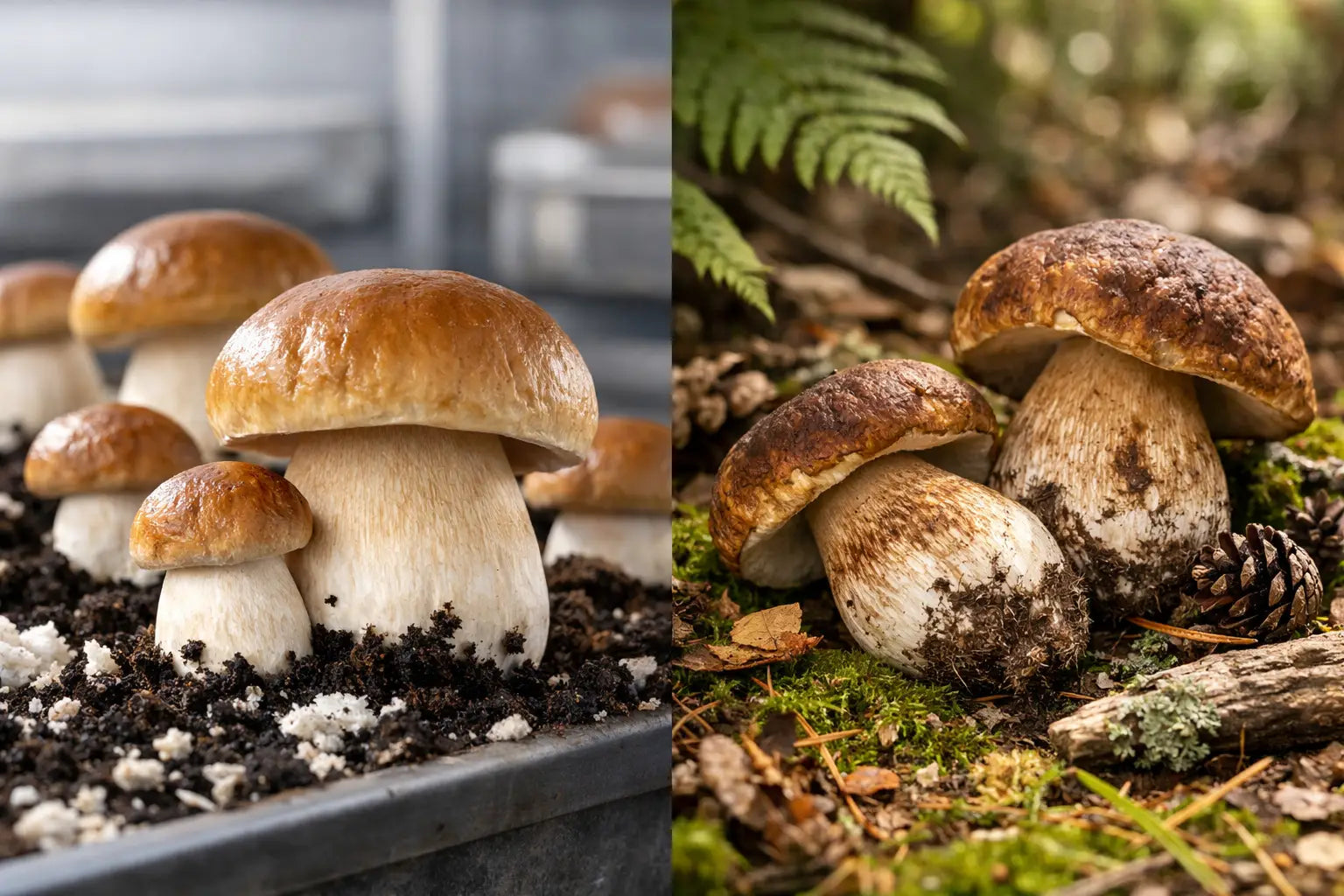
Cultivated porcini sound like a dream: predictable supply, uniform size, and no waiting for the woods. In practice, porcini do not behave like standard farmed mushrooms. Their signature flavor, firm texture, and seasonal scarcity are tied to a complex relationship with living trees and forest soil. For home cooks trying to decide between cultivated and wild porcini, the honest answer is that carefully handled wild porcini remain the standard worth cooking with.
Why Porcini Are So Hard to Cultivate
Porcini (Boletus edulis and close relatives) are ectomycorrhizal. That means they grow in partnership with the roots of specific trees like oak, pine, spruce, and beech. Unlike button mushrooms or oyster mushrooms, which can be grown on straw or sawdust in a controlled room, porcini need a living forest ecosystem to thrive.
That is why, when a product is labeled as "cultivated porcini," it is often one of three things:
- An experimental or small-scale trial that is not widely available.
- A different but related species being marketed under the porcini name.
- A substitute mushroom used to imitate porcini flavor at a lower price.
What Wild Porcini Bring to Your Cooking
Wild porcini are prized for good reason. They offer:
- Deep, savory aroma: Nutty, earthy, and slightly sweet, with a scent that fills the kitchen the moment they hit the pan.
- Meaty, firm texture: Thick caps and dense stems hold their shape in risottos, ragùs, roasts, and pasta sauces.
- Concentrated flavor across formats: Fresh, frozen, or dried, wild porcini deliver a fuller, rounder taste than most substitutes.
Choosing the Right Format for the Way You Cook
Instead of chasing year-round "fresh" through cultivation, home cooks get more from wild porcini by choosing the right format for the dish.
- Fresh wild porcini: Best for showcase dishes when they are in season. Slice thick, sear quickly, and let their texture take the lead.
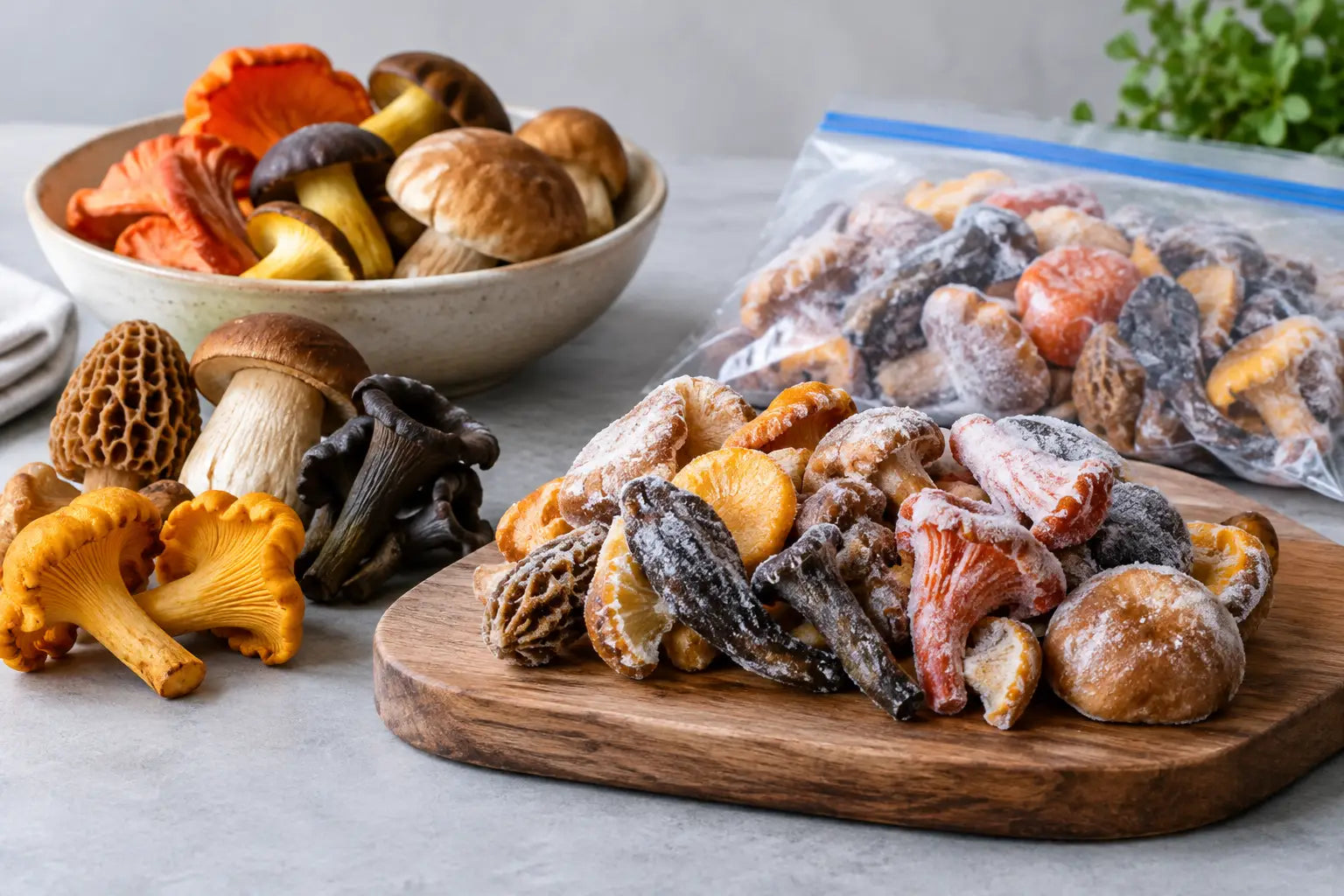
- Frozen wild porcini: A practical way to keep premium porcini on hand. They shine in risotto, pasta sauces, braises, and hearty soups where their flavor infuses the whole dish.
- Dried wild porcini: The pantry hero. A small handful, rehydrated, adds intense porcini flavor to sauces, stocks, grains, and stuffings. The soaking liquid is liquid gold.
What to Look For When Buying Porcini at Home
Whether you shop online or in a specialty store, a few simple checks help you get great porcini:
- Aroma first: Fresh should smell nutty and woodsy; dried should smell fragrant, not musty; frozen should have no freezer-burn odor.
- Firm, clean pieces: Fresh caps should feel solid, not spongy. Dried pieces should be thoroughly dry and mostly whole, not dusty crumbs.
- Honest labeling: Look for the species name and origin. Vague "porcini blend" labels are a warning sign.
- Careful shipping: Fresh and frozen porcini need cold-chain shipping. Dried should arrive well-sealed and protected from humidity.
The Bottom Line for Home Cooks
Cultivated porcini may eventually become more widely available, but today they cannot match the flavor, texture, and character of properly handled wild porcini. For your next risotto, roast, or holiday dinner, wild porcini—in the right format for the recipe—will reward you far more than a substitute. Buy from a source that grades carefully, ships cold, and is clear about what you are getting, and porcini will earn a permanent spot in your kitchen.