Cart
0
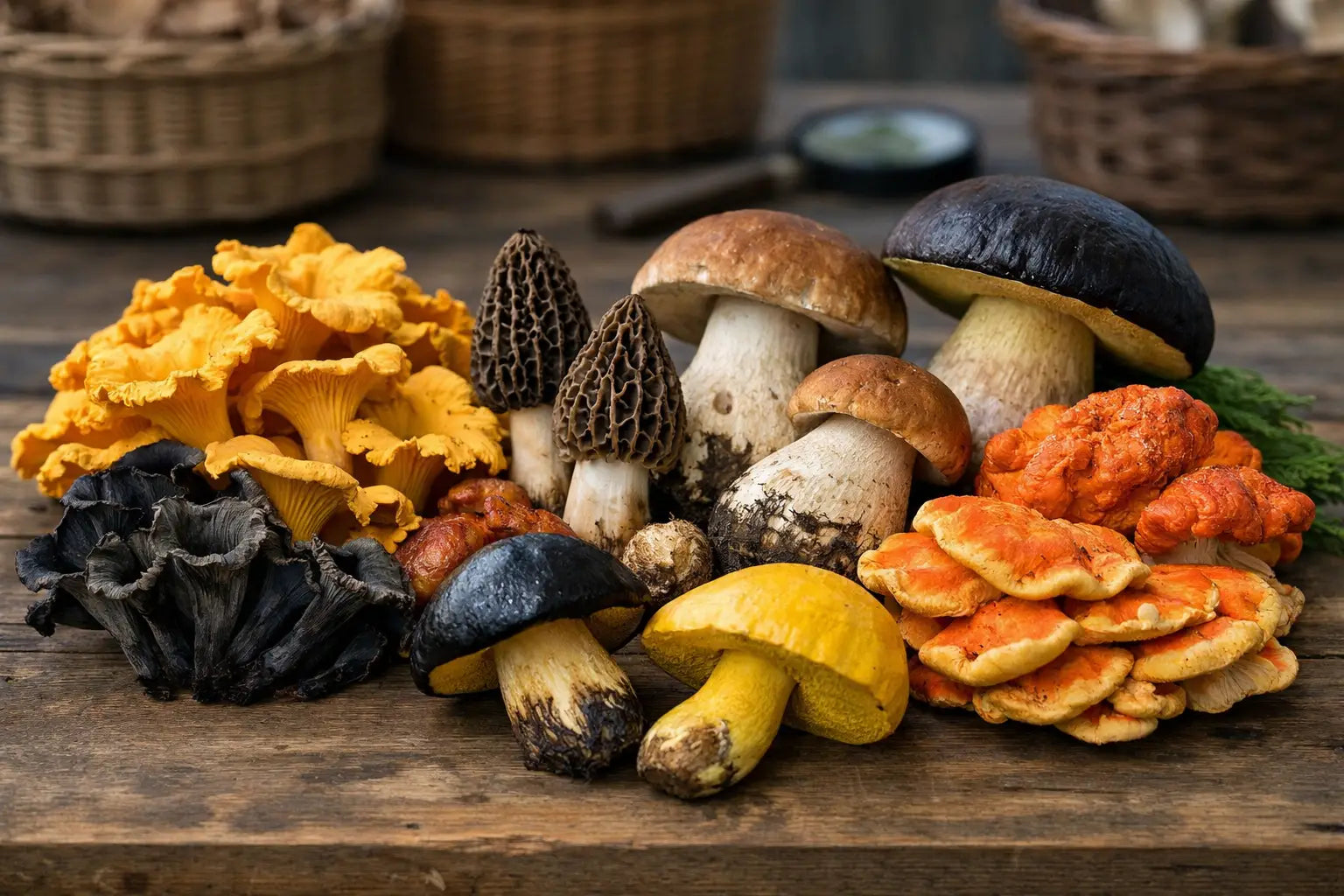
A wild mushroom can be extraordinary at harvest and disappointing by dinner if it is not handled with precision. That is why Crown Fungi treats sourcing, grading, preservation, and shipping as part of the ingredient itself. Foraged mushroom quality standards are not just about appearance - they protect the aroma, texture, and deep woodland flavor that make varieties like morels, porcini, chanterelles, and black trumpets worth seeking out.
What Foraged Mushroom Quality Standards Actually Mean
Unlike a uniform cultivated crop, wild mushrooms arrive with natural variation. Their size, color, shape, and moisture level can shift with weather, terrain, and the point in the season. A serious quality program does not try to erase that character. It sets clear standards around what matters in the kitchen: maturity, condition, cleanliness, freshness, and usability.
For home cooks, the result should be simple. The mushrooms should smell clean and distinctive, cook predictably, and deliver the flavor expected from the variety. A fresh chanterelle should retain its springy bite and fruity aroma. A dried porcini should rehydrate with a rich, savory fragrance. Frozen mushrooms should still bring satisfying texture and concentrated flavor to a sauce, risotto, or pan roast.
Quality also begins well before a box reaches the door. It depends on experienced sourcing, thoughtful sorting, rapid cooling or preservation, and fulfillment methods designed for a highly perishable ingredient.
The First Standard Is Responsible, Expert Sourcing
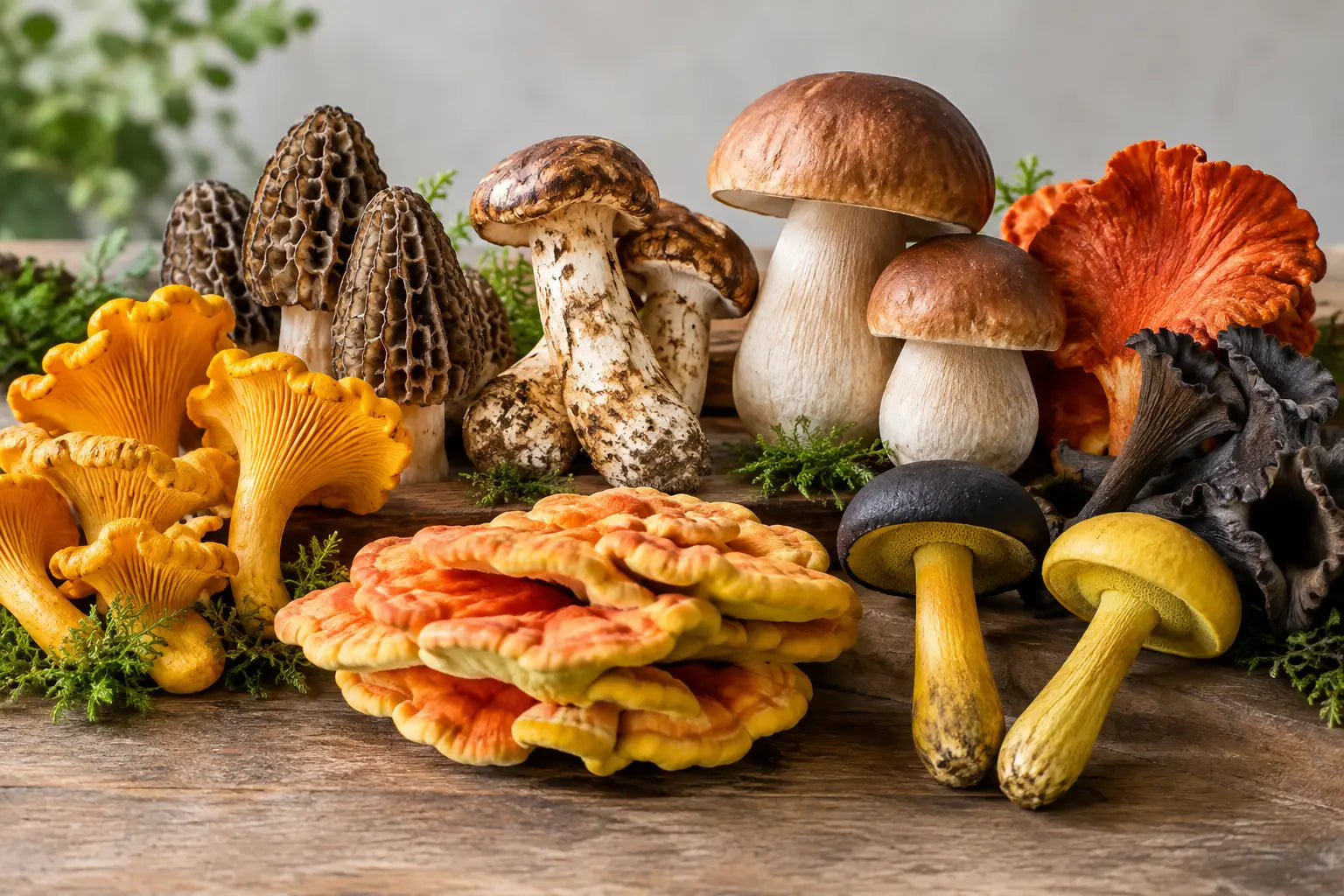
Wild mushrooms are not interchangeable. The best supply comes from knowledgeable foragers who understand seasonal conditions and harvest only mushrooms that are in good culinary condition. This is especially relevant for delicate varieties. Morels can become fragile quickly, while matsutake and porcini are valued for firm flesh and a powerful, fresh aroma.
Experienced sourcing also means knowing when not to send a product forward. Heavy rain, heat, extended field time, or a late-season flush can affect condition. Premium quality is not measured by volume alone. It is measured by whether the mushrooms are worthy of the meal a customer has planned.
At this stage, sourcing partners should be able to provide consistent species-level product, careful field handling, and reliable collection practices. For the buyer, that expertise removes a great deal of uncertainty. You are purchasing a culinary ingredient selected for the table, not taking a chance on an unknown harvest.
Grading Focuses on the Parts You Cook With
Once wild mushrooms enter the supply chain, grading determines which pieces meet the intended use. A premium standard typically looks at firmness, moisture, aroma, visible condition, and the presence of excess forest debris. The goal is not to demand identical mushrooms. It is to make sure each format delivers an appropriate cooking experience.
Fresh mushrooms need firmness and clean aroma
Fresh wild mushrooms should arrive with a lively appearance and a characteristic scent, never a sour, stale, or overly damp odor. Some natural soil or leaf matter is expected with wild ingredients, but it should not overwhelm the product. Excess moisture is a concern because it can accelerate deterioration and dilute the clean texture cooks want from a fresh mushroom.
Firmness matters, although the standard differs by variety. Lobster mushrooms should feel dense and substantial. Chicken of the woods should have a fresh, tender-but-structured feel. Chanterelles should be resilient rather than limp. A little natural variation is part of the appeal. Soft, slimy, or heavily bruised product is not.
Dried mushrooms need aroma and clean dehydration
Drying is not a fallback for inferior mushrooms. When done correctly, it is a precise preservation method that concentrates flavor and gives cooks a dependable pantry ingredient. Quality dried morels, porcini, black trumpets, and chanterelles should be thoroughly dry, aromatic, and protected from humidity.
The pieces may vary in size, but they should be usable. Excess powder, mustiness, or signs of moisture exposure can indicate poor handling or storage. When rehydrated, quality dried mushrooms should release a fragrant soaking liquid that is useful in broths, sauces, grains, and braises.
Frozen mushrooms should be preserved at their best
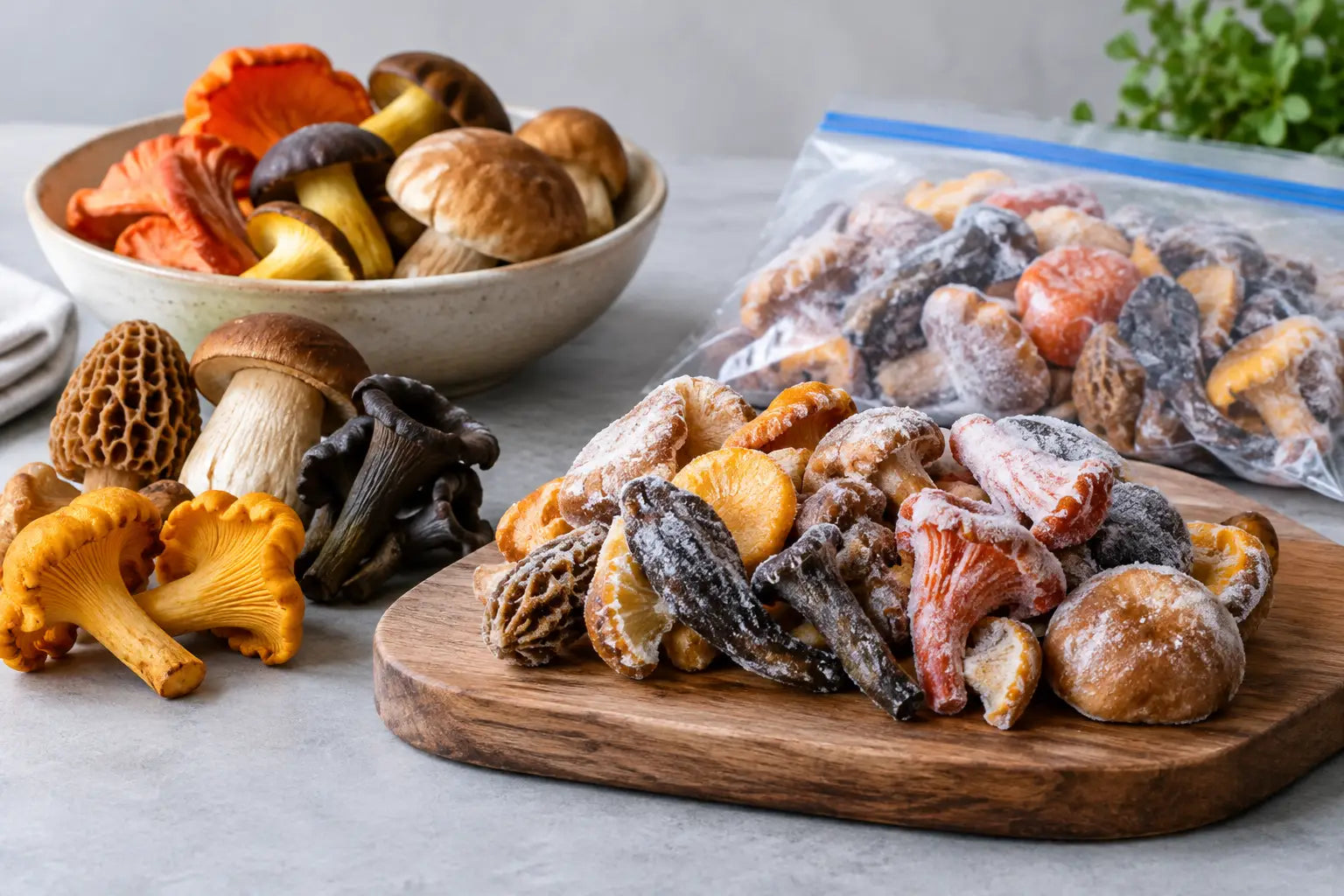
Freezing at peak quality gives home cooks access to wild mushrooms beyond a short fresh season. The standard here is timing. Mushrooms should be processed while their flavor and texture are still strong, then held consistently frozen through storage and shipping.
A quality frozen product will not always behave exactly like fresh. That is the trade-off. Frozen mushrooms are often best in hot preparations where their concentrated flavor can shine, such as soups, sauces, stuffing, egg dishes, and rice. In return, cooks gain reliable availability and less concern about using a delicate fresh ingredient immediately.
Cleaning Should Respect the Mushroom
Wild mushrooms require careful cleaning, but aggressive washing can be just as damaging as neglect. The right approach removes excessive debris while preserving the mushroom's structure. Delicate pieces can break, absorb water, or lose visual appeal when handled too roughly.
This is why cleaning standards should be matched to the variety and final format. A firm porcini can tolerate different handling than a thin black trumpet. The aim is a product that is clean enough for practical home cooking without being stripped of its natural character.
For customers, a small amount of final kitchen attention can still be normal, particularly with whole wild mushrooms. A quick visual check before cooking is sensible. What should not be normal is receiving a package with excessive debris, obvious damage, or product that requires extensive sorting before it can be used.
Cold-Chain Discipline Protects Fresh Quality
Fresh wild mushrooms are time-sensitive. After harvest, cooling helps slow natural breakdown and preserves texture. From there, refrigerated storage and shipping need to remain consistent. A beautiful harvest can lose value quickly if temperature control is treated as an afterthought.
Good cold-chain handling is less visible than a beautiful mushroom, but it is one of the strongest indicators of a dependable specialty supplier. It supports fresher aroma, firmer texture, and a better chance that the mushrooms arrive ready for the cooking plan you had in mind.
Shipping speed and packaging should fit the product, season, and destination. There is no single perfect approach for every order. Warm-weather transit, long distances, and fresh versus frozen formats all require different decisions. What matters is that the fulfillment plan is built around protecting the mushrooms, not simply moving a package.
Quality Is Also About Consistency Across Formats
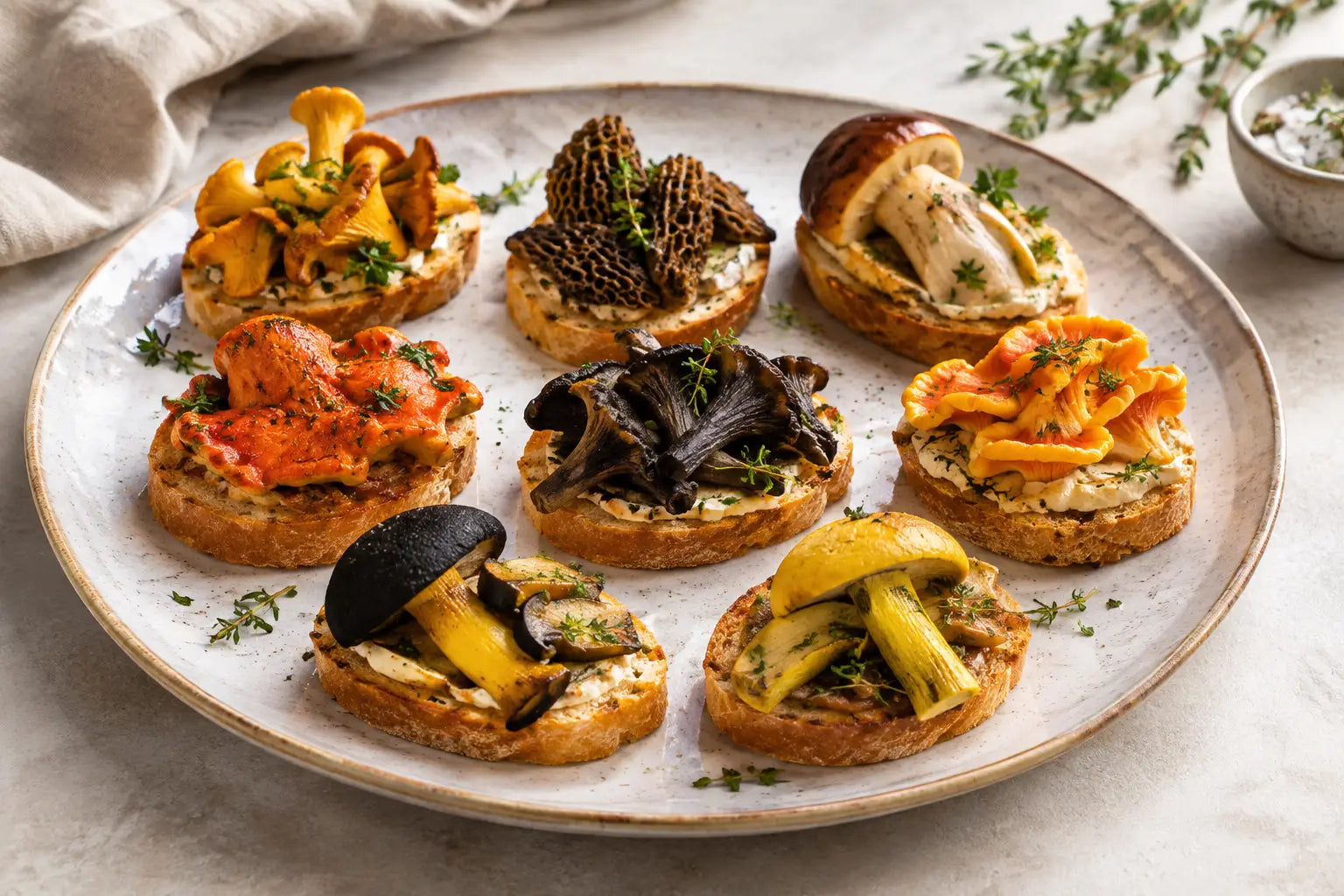
The best format depends on how you cook. Fresh mushrooms are ideal when you want their immediate texture and visual presence on the plate. Dried mushrooms offer concentrated flavor and the freedom to cook when inspiration strikes. Frozen mushrooms make it practical to keep premium wild ingredients ready for a weeknight sauce or a special dinner.
Each format should be judged on its own terms. Expecting frozen chanterelles to perform exactly like freshly harvested chanterelles is unrealistic. Expecting dried porcini to provide the same experience as a thick fresh slice misses their greatest strength. Quality means the product performs exceptionally for its stated format and intended use.
That clarity matters when buying rare ingredients online. A trusted source should make the format understandable, handle the product accordingly, and give you confidence that the mushrooms will earn their place in the dish.
What to Look for When Your Order Arrives
Start with the basics: the packaging should be intact, and fresh or frozen items should arrive at an appropriate temperature for their format. Fresh mushrooms should have a clean, variety-appropriate aroma and should not show widespread softness or excessive wetness. Frozen mushrooms should remain frozen or very cold, not thawed and warm. Dried mushrooms should feel dry and smell fragrant, never damp or stale.
Then consider whether the product suits your plan. Whole, firm pieces may be ideal for sautéing or a centerpiece dish. Smaller pieces can be excellent in sauces, fillings, stocks, and soups. A premium supplier grades for usability, but the best use still depends on the preparation.
Foraged mushroom quality standards are ultimately a promise that the ingredient has been respected at every handoff. Explore Crown Fungi's current seasonal offerings to bring carefully handled wild mushrooms into your next meal.