Cart
0
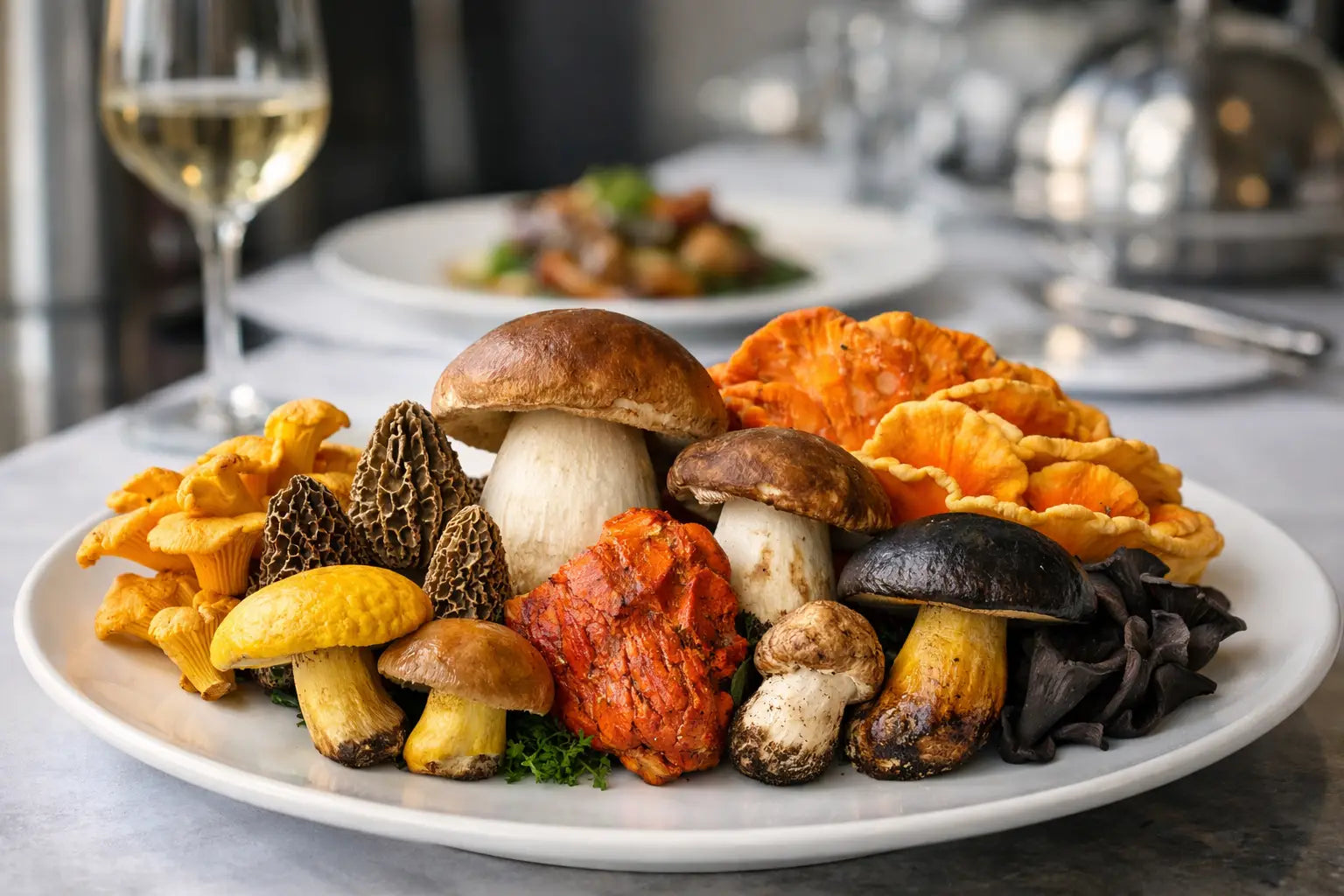
At Crown Fungi, mushrooms for fine dining are evaluated as service ingredients, not garnish. Their value comes from a precise combination of aroma, texture, yield, and reliability under heat. For a serious kitchen, a wild mushroom must do more than look exceptional in the walk-in. It has to hold its character through prep, fire, plating, and the pace of a busy service.
Wild mushrooms bring a range of savory, floral, woodsy, and roasted notes that cultivated alternatives rarely match. But they also require better buying decisions. Variety, format, menu role, and handling all determine whether a premium mushroom becomes a memorable component or an expensive afterthought.
What Fine-Dining Kitchens Need From Wild Mushrooms
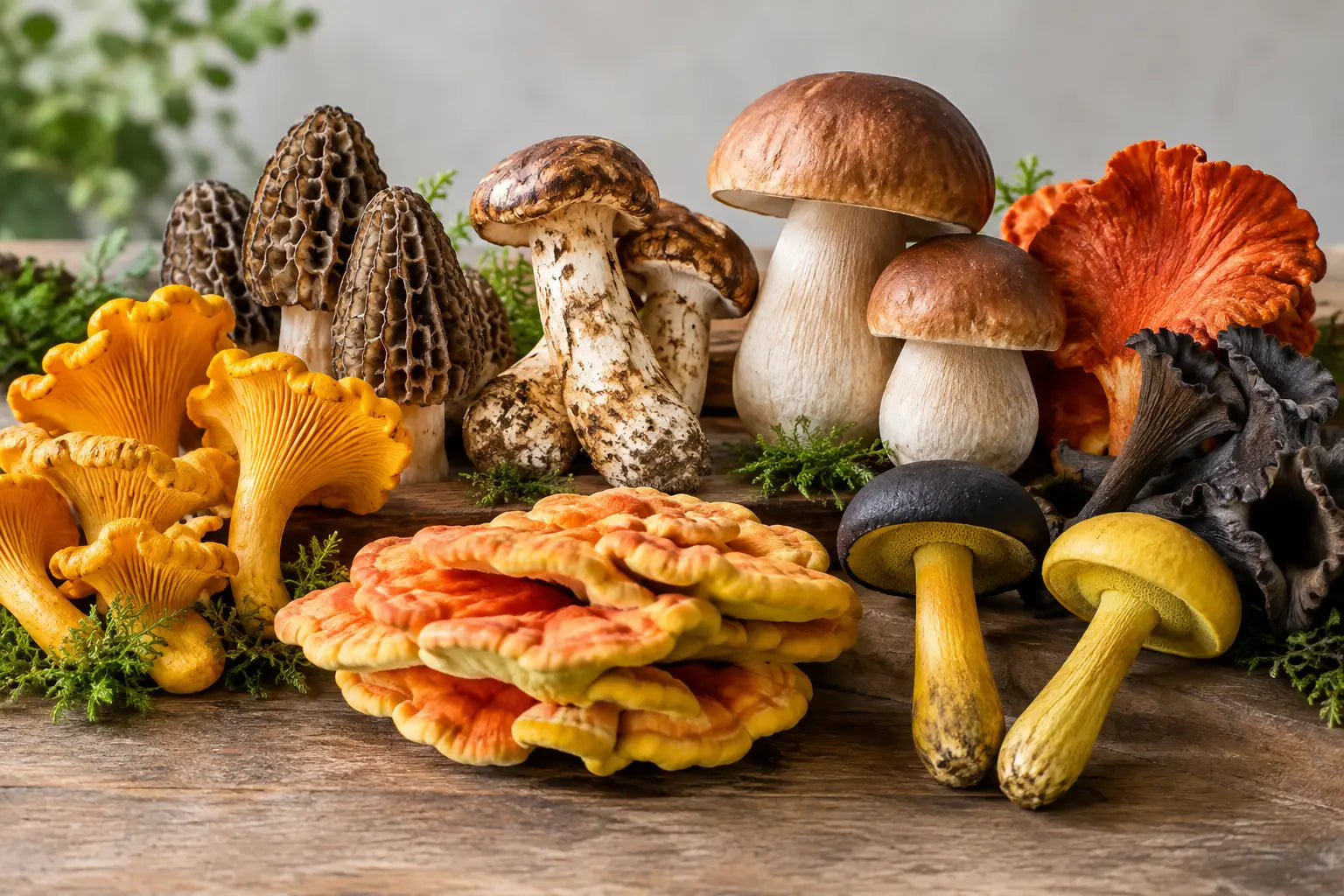
A fine-dining menu does not need every mushroom available. It needs the right mushroom for a defined culinary job. A delicate black trumpet can provide dark, perfumed depth in a sauce or stuffing. A substantial chicken of the woods can take on a more central role, with a firm, layered texture that responds well to high heat. Morels offer an unmistakable honeycombed structure and deep nutty character, while chanterelles bring a clean, apricot-like aroma that rewards restrained preparation.
This is why purchasing by species alone is incomplete. Chefs should assess how the mushroom will perform in the intended dish. Will it be roasted hard for a composed entrée? Folded through a velouté? Used to build a concentrated jus? Finished over a warm grain course? The correct answer affects not only the variety but also the format and pack strategy.
Consistency matters just as much as rarity. Wild mushrooms naturally vary in size, moisture, and appearance. Professional grading and careful cleaning help manage that variation so prep teams can work quickly without losing the visual and flavor standards expected on the plate.
Choosing Mushrooms for Fine Dining by Culinary Role
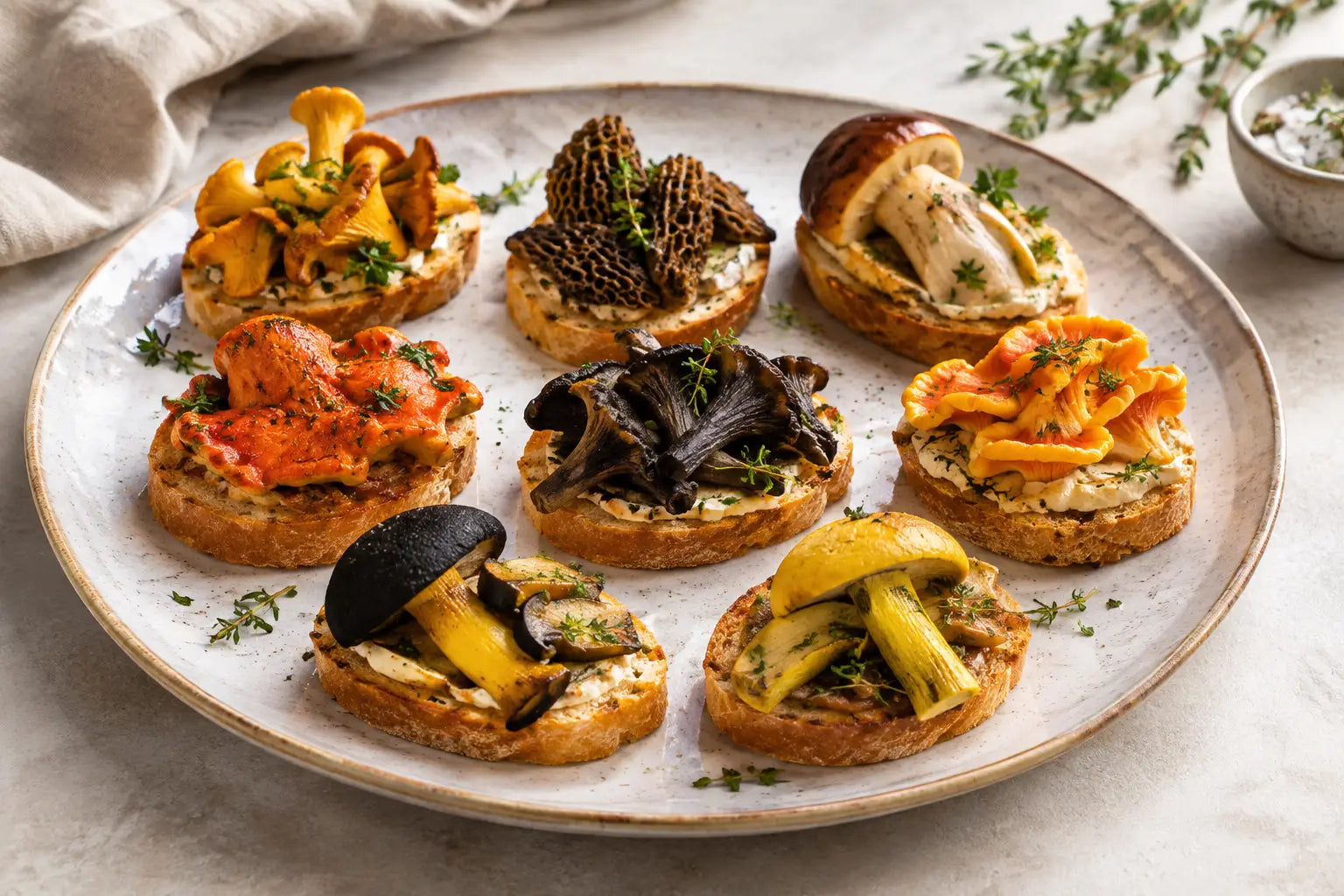
The strongest menus use wild mushrooms with intention. Rather than treating them as a generic “mushroom course,” build each application around a variety’s best qualities.
For aroma and delicate finishing
Chanterelles and black trumpets are particularly effective when their fragrance remains visible in the final dish. Chanterelles pair naturally with butter, cream, eggs, corn, poultry, and gentle herbs, but their character can disappear beneath aggressive spice or excessive char. Sauté them briefly over controlled heat, season late, and use enough fat to carry their aroma without making them heavy.
Black trumpets have a more shadowed profile: earthy, savory, and intensely aromatic. They are excellent in sauces, fillings, compound butters, and finely chopped garnishes. Their dark color can be an asset in a pale sauce or against seafood, but it may be less visually distinct in a dark braise. This is a case where flavor may be the priority over plate contrast.
For texture and centerpiece applications
Chicken of the woods and lobster mushrooms offer more physical presence. Chicken of the woods has a dense, layered bite that works well in roasted, grilled, or pan-seared preparations. Its texture makes it useful for plant-forward entrées, although it still benefits from a sauce, glaze, or accompanying fat that brings the dish together.
Lobster mushrooms deliver vivid color, a dense chew, and a rich seafood-adjacent savory quality. They can stand up to assertive preparations, including roasting, confit, and hearty sauces. Their color creates immediate plate impact, especially in autumn and winter menus, but balance is essential. Keep other strongly colored elements in check so the mushroom remains intentional rather than decorative noise.
For depth, sauces, and concentrated flavor
Porcini and morels are often chosen for their ability to build depth. Porcini bring a broad, nutty, umami-rich profile that fits risotto, pasta, sauces, braises, and meat accompaniments. Morels are more distinctive and often deserve a cleaner presentation. Their hollow structure holds sauce beautifully, while their nutty, toasted character pairs well with spring vegetables, cream, poultry, and rich proteins.
Matsutake occupy a different category. Their aroma is assertive, with spicy, resinous, forest-like notes that can define a dish quickly. They are best used in preparations that preserve their identity: clear broths, steamed rice, gentle sautés, or simply roasted treatments. A heavily reduced sauce may overwhelm the point of using them.
Fresh, Frozen, and Dried Are Different Kitchen Tools
Format should follow application, not perception. Fresh mushrooms offer immediate visual appeal and a sense of seasonality that suits tasting menus, à la carte features, and dishes where the mushroom is served in recognizable pieces. They also require disciplined storage and a realistic plan for use. Fresh product is at its best when the kitchen can receive it, inspect it, and put it into rotation promptly.
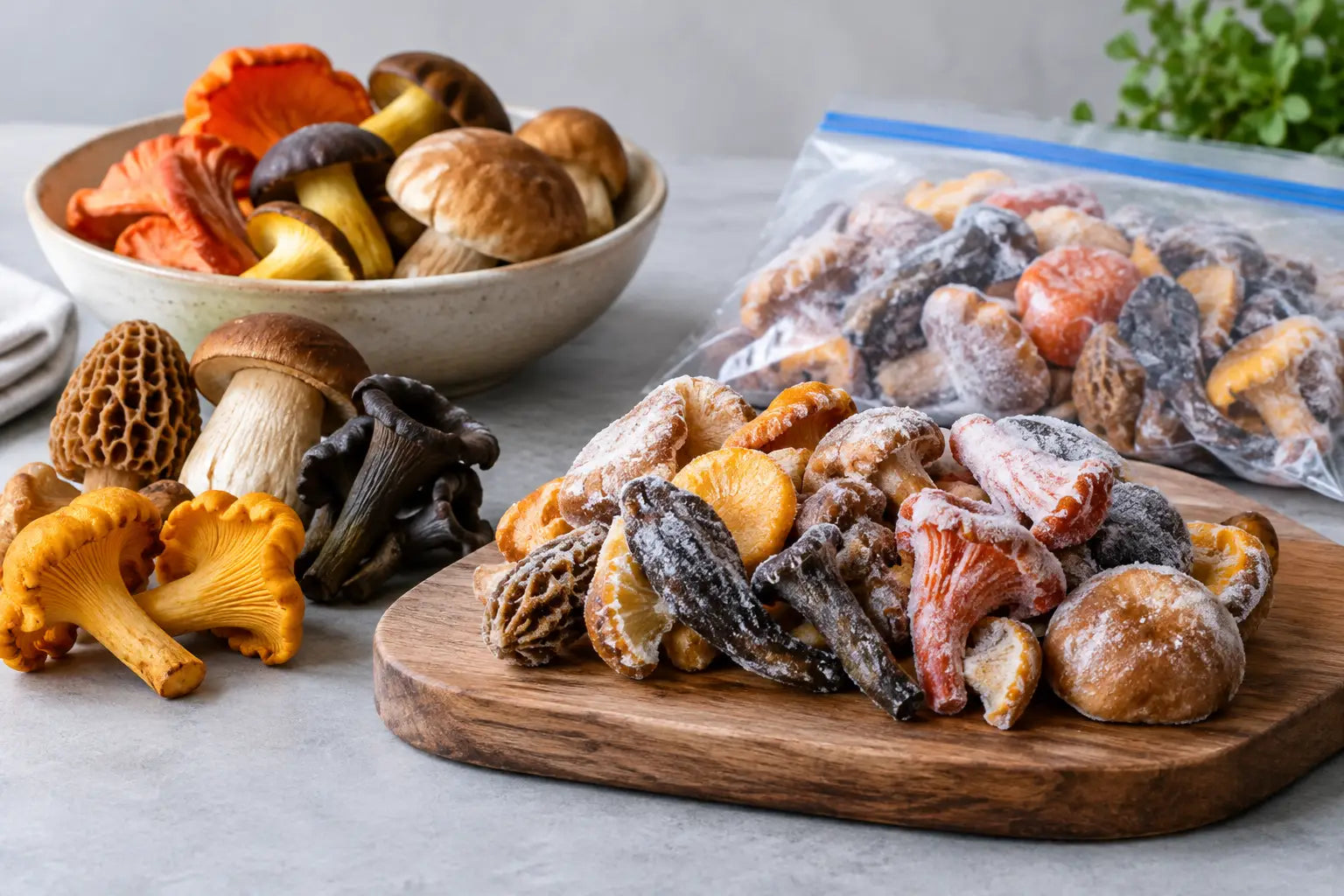
Frozen mushrooms preserved at peak quality give chefs a more dependable way to use seasonal wild flavor outside a narrow harvest window. They are particularly useful in sauces, purées, fillings, pasta work, soups, and cooked applications where exact fresh appearance is not the primary requirement. The key is to cook from frozen or thaw with purpose, depending on the application, and manage released moisture before browning.
Dried mushrooms are not a compromise. They are a concentrated pantry format with distinct advantages in stocks, broths, sauces, rubs, and ground seasonings. Dried porcini and black trumpets can create extraordinary depth with a small amount of product. Rehydration liquid should be strained carefully before use, as it can carry fine natural particles. In many dishes, that liquid is as valuable as the mushroom itself.
A well-planned kitchen may use all three formats. Fresh mushrooms carry the seasonal statement. Frozen inventory supports repeatable execution. Dried product protects flavor continuity and adds depth where a whole mushroom is not needed.
Handling Determines Plate Quality
Premium mushrooms are perishable ingredients, and rough handling shows quickly. Fresh mushrooms should be kept cold, dry, and protected from compression. Avoid sealing them in conditions that trap excess moisture. Moisture softens texture, dulls aroma, and makes high-heat browning more difficult.
Before cooking, inspect product for any remaining natural debris and trim only where needed. Overwashing is a common mistake. If cleaning is necessary, do it quickly and dry the mushrooms thoroughly before they hit the pan. Water on the surface delays browning and encourages steaming, which can flatten both texture and flavor.
Give wild mushrooms space in the pan. Overcrowding creates pooled moisture and prevents the caramelization that brings out their savory depth. Start with a hot pan, work in manageable batches, and add delicate herbs or finishing butter near the end. Salt timing depends on the mushroom and method, but early salting can pull moisture before browning has begun.
Yield should also be part of the purchasing calculation. A small, aromatic mushroom may have a different trim and cooked yield than a dense, meaty variety. Cost per pound is only one number. The more useful measure is cost per finished portion, including prep time, shrink, and the role the mushroom plays on the plate.
Build Menus Around Availability Without Losing Standards
Wild mushroom menus work best when chefs distinguish between a seasonal feature and a repeatable core dish. A fresh seasonal preparation can be written around the arrival of a particular variety and adjusted as harvest conditions change. A core dish should rely on a format and recipe that the team can execute consistently across service periods.
That distinction protects both creativity and margin. If a dish depends on a fleeting fresh item, price and position it accordingly. If it must remain on the menu for weeks, develop it around a preservation strategy that maintains flavor and portion control. Frozen and dried wild mushrooms make this possible without forcing a kitchen to substitute lower-character ingredients when fresh supply changes.
Communication between purchasing, prep, and the chef team matters here. A seasonal mushroom should arrive with a clear use plan, not an assumption that the menu will absorb it. When everyone understands the intended format, portion, and application, rare ingredients move with purpose rather than becoming an inventory problem.
The best wild mushroom dishes are not necessarily the most complicated. They let a distinctive variety perform, use the right format for the job, and respect the realities of service. For menus that demand that level of precision, explore current seasonal offerings and select wild mushrooms around the dishes your kitchen is ready to execute well.