Cart
0
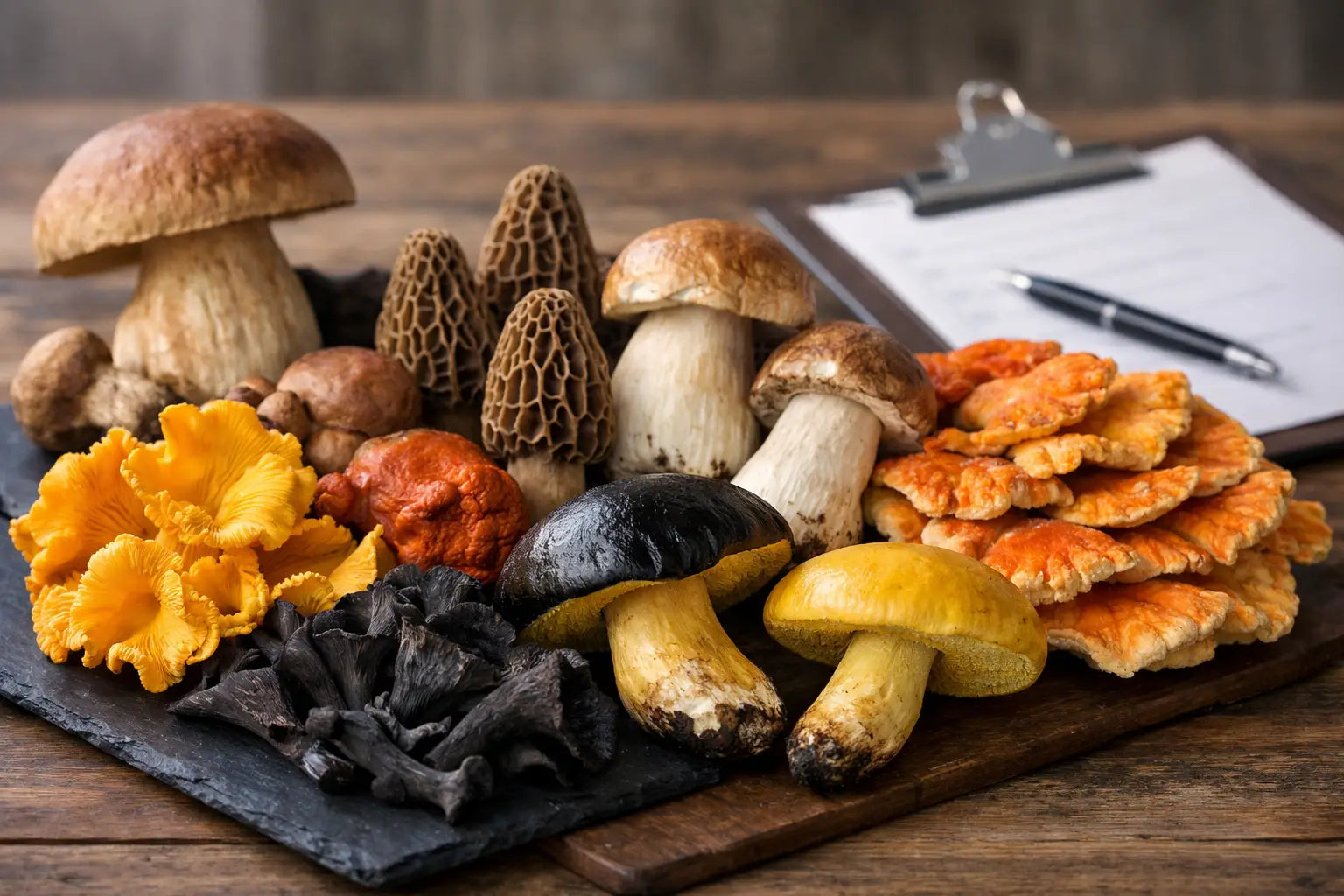
A restaurant mushroom procurement checklist is most useful before a menu is printed, not after a chef has built a dish around a delivery that cannot be repeated. Crown Fungi works with serious kitchens that need wild mushroom supply to perform under service conditions: clean flavor, correct format, dependable handling, and a plan for seasonal change.
Wild mushrooms are not a commodity purchase. A case of chanterelles, morels, porcini, black trumpet mushrooms, lobster mushrooms, matsutake, or chicken of the woods carries decisions about yield, trim, storage, delivery timing, and menu pricing. Treating procurement as a specification process protects both the plate and the margin.
Start With the Dish, Not the Mushroom Name
Begin by defining the mushroom's job on the menu. A garnish for a composed entrée has different requirements than a purée, pasta filling, sauce, or seasonal special. The variety matters, but so do cut, moisture level, portion size, and the labor required to put it into service.
For example, a fresh wild mushroom can be the right choice when texture and visual presence are central to the dish. Frozen mushrooms preserved at peak quality often make more sense for sauces, fillings, soups, and applications where a consistent supply matters more than a whole-mushroom presentation. Dried mushrooms deliver concentrated aroma, extended storage, and flexibility for broths, duxelles, seasoning blends, and rehydrated preparations.
Write the intended application into the purchasing spec. “Porcini” is not a complete requirement. “Dried porcini for stock production, clean aroma, uniform pieces, packed for weekly pars” is far more useful to both the buyer and supplier.
Restaurant Mushroom Procurement Checklist: Set the Specification
A clear purchasing specification prevents the most common disputes: product that is technically acceptable but wrong for the kitchen’s actual use. Confirm these points before placing a standing order or building a featured dish around a seasonal item:
- Species and culinary objective: Identify the mushroom and its intended use. Chanterelles may be selected for their fruit-forward aroma and shape, while black trumpets may be purchased for their deep, savory character in sauces or rice dishes.
- Format: Specify fresh, frozen, or dried. Do not treat these formats as substitutes without testing the recipe. Each has a different yield, storage profile, and best use.
- Grade and appearance: State whether whole pieces, larger caps, mixed sizes, or usable broken pieces are appropriate. Visual uniformity has value, but paying for it is only justified when the plate requires it.
- Pack size and order cadence: Match pack size to realistic weekly usage. Larger packs can reduce handling, but only if the kitchen can store and use the product at peak quality.
- Acceptable trim and cleaning level: Wild mushrooms require careful handling. Establish how much finishing work the kitchen expects to perform and account for that labor in recipe costing.
- Delivery condition: For fresh product, define temperature expectations and delivery windows. For frozen product, require solidly frozen arrival. For dried product, require intact packaging and protection from moisture.
- Substitution policy: Decide in advance whether the supplier may substitute format, grade, or species. For a signature dish, the answer is often no. For a sauce or staff meal, a preapproved alternative may be practical.
Build Seasonality Into Menu Planning
Wild supply changes with weather, region, and harvest conditions. That variability is part of the ingredient’s value, but it must be managed deliberately. The operational mistake is promising a mushroom-driven dish for months without an approved continuity plan.
Create a primary format and a fallback format for each key menu use. A fresh seasonal preparation can be supported by frozen or dried inventory for related applications, allowing the restaurant to retain a flavor profile when fresh availability changes. This does not mean forcing one format into every dish. It means designing menus that respect the strengths of each format.
For high-cost mushrooms such as morels or matsutake, consider whether the item should be a tightly controlled seasonal special rather than a permanent menu component. Shorter runs can support accurate pricing, cleaner purchasing, and stronger guest expectations. A permanent dish can still use wild mushrooms effectively when its recipe is designed around preserved formats that are appropriate for the application.
Forecast by Usable Yield
Case weight is not plate yield. Fresh mushrooms may need final inspection and finishing; dried mushrooms expand after rehydration but also require time and liquid; frozen mushrooms can release moisture during cooking. Recipe tests should establish usable yield for the exact product format being purchased.
Cost recipes from the usable portion, not the invoice weight. Include receiving loss, trim, rehydration behavior, and the labor needed to bring the ingredient to service-ready condition. This is particularly important for dishes where mushrooms are a primary flavor driver but not the largest visible component.
Evaluate Supplier Handling, Not Just Price
A low unit price can become expensive when delivery condition, cleaning quality, or fulfillment accuracy creates prep loss and service risk. Procurement teams should evaluate a specialty mushroom supplier on handling discipline as closely as they evaluate species selection.
For fresh mushrooms, ask how product is packed, protected, and moved through the cold chain. The goal is not simply cold product. It is product that arrives in a condition suitable for immediate inspection, proper storage, and predictable use. Excess condensation, compression, or delayed delivery can reduce quality quickly.
For frozen mushrooms, confirm that the product is packed and shipped to remain frozen throughout transit. A partial thaw can affect texture and makes inventory management more difficult. For dried mushrooms, packaging integrity is central. Product exposed to humidity loses the pantry stability the format is meant to provide.
Traceability also belongs in the conversation. Professional kitchens should be able to maintain receiving records that identify the product, format, lot information when provided, delivery date, and any quality observations. This gives the chef and buyer a factual basis for future purchasing decisions instead of relying on memory after a busy service.
Establish a Receiving Standard
The receiving team needs a short, repeatable inspection process. If the purchaser writes a detailed spec but the delivery is accepted without review, the system breaks at the door.
Inspect fresh mushrooms promptly for temperature, aroma, surface condition, obvious damage, and pack accuracy. Transfer them to appropriate storage without leaving them on a loading dock or crowded prep table. Check frozen packages for signs of thawing, broken seals, or excessive ice buildup. Check dried products for sealed packaging, dryness, and correct labeling.
Document exceptions immediately and communicate them with product photos, order details, and delivery timing when needed. The objective is not to create friction with a supplier. It is to establish a shared standard that keeps the next order accurate.
Protect Inventory After Delivery
The procurement decision continues in the walk-in. Fresh wild mushrooms should be stored to avoid moisture accumulation and crushing, then prioritized according to condition and planned use. Do not bury a delicate fresh item behind bulk produce and expect the original quality to hold.
Frozen inventory needs disciplined rotation and clear labeling by receipt date. It is useful to reserve frozen mushrooms for recipes developed around their texture rather than treating them as an emergency replacement for fresh garnish work. Dried mushrooms should be held in a cool, dry area with packaging closed tightly after opening.
Assign ownership for par levels. When no one owns the count, expensive ingredients get ordered twice, held too long, or discovered missing shortly before service. A chef, sous chef, or buyer should review on-hand quantities against upcoming events, menu changes, and expected covers at a defined interval.
Make the Checklist a Menu-Control Tool
The best restaurant mushroom procurement checklist does more than help place an order. It connects the chef’s intent to purchasing, receiving, prep, and cost control. Keep the document attached to the recipe or purchasing system, then revise it after the first few deliveries and services.
A supplier relationship performs best when feedback is precise. Report that the pack size did not match the prep rhythm, that dried pieces were better suited to stock than garnish, or that a frozen format delivered excellent results in a filling. Specific feedback creates better future specifications than broad requests for “better quality.”
Before committing your next mushroom feature, review the current seasonal offerings from Crown Fungi and select the format that supports the dish, the service window, and the kitchen’s storage capacity. The right wild mushroom is not just exceptional on the plate. It is one your team can receive, prep, and deliver with confidence.