Cart
0
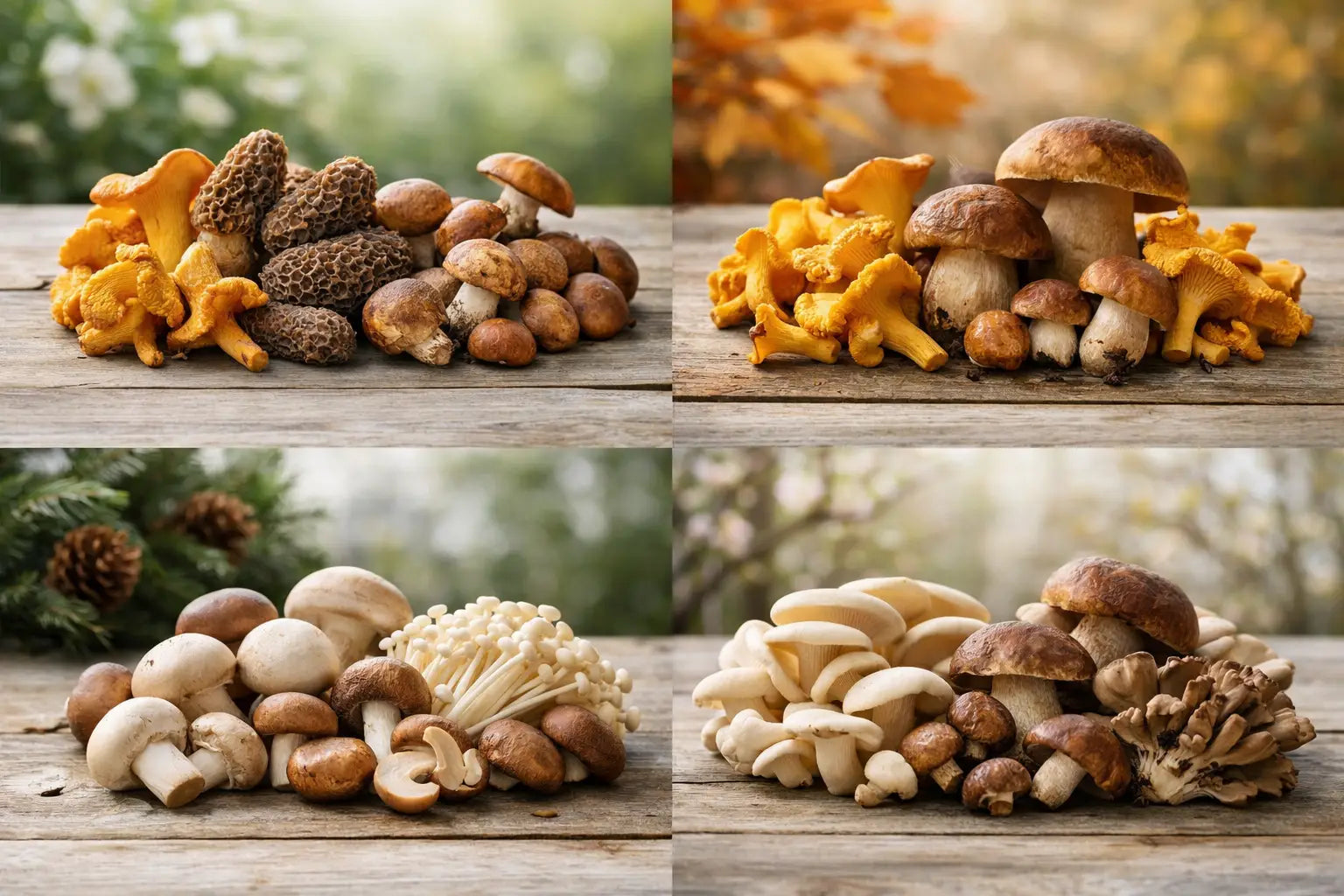
When a menu depends on wild mushrooms, timing is not a detail. It drives flavor, yield, labor, and whether a dish can stay on the board for two weeks or two months. A seasonal mushroom availability chart helps serious kitchens plan around real supply conditions, not broad assumptions about what should be available.
For chefs, buyers, and advanced home cooks, the value of a chart is not just knowing when a mushroom appears. It is knowing when fresh supply is strongest, when quality is most consistent, and when frozen or dried formats make better operational sense. Wild product does not move like commodity produce. Weather shifts, regional flushes vary, and handling discipline matters just as much as harvest timing.
Seasonal mushroom availability chart for US buyers
The chart below reflects typical US buying windows for premium wild mushrooms in formats that support kitchen performance.
| Mushroom | Fresh Availability | Frozen Availability | Dried Availability |
|---|---|---|---|
| Chanterelles | Summer through fall | Yes, year-round | Limited/select |
| Porcini | Late summer through fall | Yes, year-round | Yes, year-round |
| Lobster mushrooms | Summer through fall | Yes, year-round | Limited/select |
| Black trumpet | Summer through fall | Yes, year-round | Yes, year-round |
This is a planning tool, not a guarantee for every market in every week. Fresh wild mushrooms follow temperature, rainfall, elevation, and region. In practice, the chart is most useful when paired with format flexibility. If a kitchen only buys fresh, it accepts more volatility. If it uses fresh when the season is active and frozen or dried when it is not, menu planning gets much tighter.
How to read a seasonal mushroom availability chart
A buying chart is easy to misread if the goal is only seasonality. The better approach is to read it through a kitchen lens: peak fresh window, preservation strategy, and menu role.
Fresh availability marks the period when a mushroom is typically harvested and shipped with the strongest aroma, structure, and visual appeal. That matters for center-of-plate applications, raw bar garnishes where relevant, composed dishes, and menus that call out the variety by name. A summer chanterelle in prime condition performs differently than a frozen chanterelle folded into a farce or sauce. Both are useful, but they do different jobs.
Frozen availability matters because many wild mushrooms hold exceptionally well when preserved at peak quality. For production kitchens, frozen product often reduces trim loss, smooths out supply gaps, and protects menu consistency after the fresh flush softens. Dried availability serves a different purpose. It concentrates aroma, extends shelf life, and works well in broths, sauces, stuffings, compound butter, and pasta work where hydration is already part of the process.
This is where trade-offs become practical. Fresh gives immediacy and visual impact. Frozen gives consistency and speed. Dried gives pantry depth and cost control. The best choice depends on the dish, prep style, and how much volatility the kitchen can absorb.
What to expect by mushroom type
Chanterelles
Chanterelles are one of the clearest examples of why seasonality needs format planning. Fresh chanterelles typically run summer through fall, with the strongest supply tied to regional weather patterns. At their best, they offer a firm yet delicate texture, restrained fruit notes, and a clean finish that rewards simple handling.
For menu planning, fresh chanterelles are ideal when the mushroom is meant to be recognized on the plate. Once the season starts to narrow, frozen chanterelles become the more disciplined choice for sauces, sautés, fillings, and composed hot applications where consistency matters more than visual perfection. If the kitchen is writing a dish around chanterelles specifically, this is often the difference between a stable item and a short-lived special.
Porcini
Porcini are highly valued because they perform across all three major formats. Fresh porcini usually appear from late summer into fall. In peak condition, they bring deep savory character, broad culinary range, and enough physical presence to anchor a dish rather than simply support it.
That said, porcini may be the best example of a mushroom whose preserved formats are not a compromise. Frozen porcini maintain strong utility for sauté, risotto, ragù, and garnish work. Dried porcini are a standard for kitchens that need concentrated aroma and year-round access. If a buyer is planning with discipline rather than impulse, porcini are often the easiest variety to build into multiple menu cycles.
Lobster mushrooms
Lobster mushrooms are typically strongest from summer through fall. Their visual identity is distinctive, but what matters in the kitchen is density, color retention, and how they stand up in composed dishes. They can carry richer preparations well and maintain character in applications where more delicate mushrooms fade.
Because fresh windows can tighten quickly, frozen lobster mushrooms make sense for kitchens that want to preserve color and flavor continuity after the fresh market becomes less predictable. They are especially useful when consistency matters more than the romance of a fresh-only program.
Black trumpet
Black trumpet mushrooms usually show up from summer into fall, depending on region and weather. They are lighter in structure than porcini or lobster, but they bring high aromatic value and a dark, elegant visual profile that works especially well in sauces, folded egg dishes, compound butter, and refined garnish applications.
Dried black trumpet is often a smart buy because the mushroom’s aroma concentrates well and its use cases naturally suit rehydration. Fresh product is excellent when available and handled correctly, but dried and frozen formats can carry the category far beyond the active season without much sacrifice in culinary performance.
Why region and weather matter more than the calendar
A chart gives the broad window. Real buying decisions happen inside much narrower conditions. Two kitchens can be ordering in the same month and face different realities depending on where product is coming from, what weather has done to the flush, and how carefully the supply chain is managed.
Heavy rain can improve one region and disrupt another. Heat can shorten a fresh run. Transit conditions can also change the usable quality of wild mushrooms more than buyers expect. This is one reason chef-trusted supply matters. A mushroom that was harvested in the right week can still underperform if grading, cleaning, packing, or cold-chain execution is loose.
For that reason, a seasonal chart should not be used as a promise. It should be used as a planning framework. The closer a kitchen gets to the edge of a fresh season, the more format strategy matters.
Building menus around availability, not wishful thinking
The most reliable mushroom programs are built with format tiers. Fresh product leads when the season is active and quality is strong. Frozen product supports continuity when fresh becomes inconsistent or too volatile for daily service. Dried product fills in where concentration, shelf stability, and lower waste matter most.
This approach is especially useful for restaurants that want to feature wild mushrooms without rewriting dishes every time a flush changes. A chanterelle preparation might begin with fresh product in peak season, then move to frozen for a warm composed dish once the market tightens. A porcini sauce can shift between fresh, frozen, and dried depending on yield targets and labor. The guest still gets a focused result, and the kitchen avoids the quality swings that come from forcing a fresh-only philosophy.
Crown Fungi works within that exact reality. For serious kitchens, the question is rarely whether a mushroom is desirable. The question is whether it is available in a format that protects execution.
A better way to use the chart
The strongest use of a seasonal mushroom availability chart is not as a simple yes-or-no calendar. It is as a purchasing tool. Use it to decide when to feature fresh mushrooms aggressively, when to secure frozen inventory for consistency, and when to rely on dried product for depth and control.
That shift in thinking tends to improve more than sourcing. It sharpens prep planning, reduces waste, and makes seasonal menus more believable because they are built on what the market can actually support. For chefs and buyers working with wild mushrooms, that is usually the difference between a good idea and a dish that survives service.