Cart
0
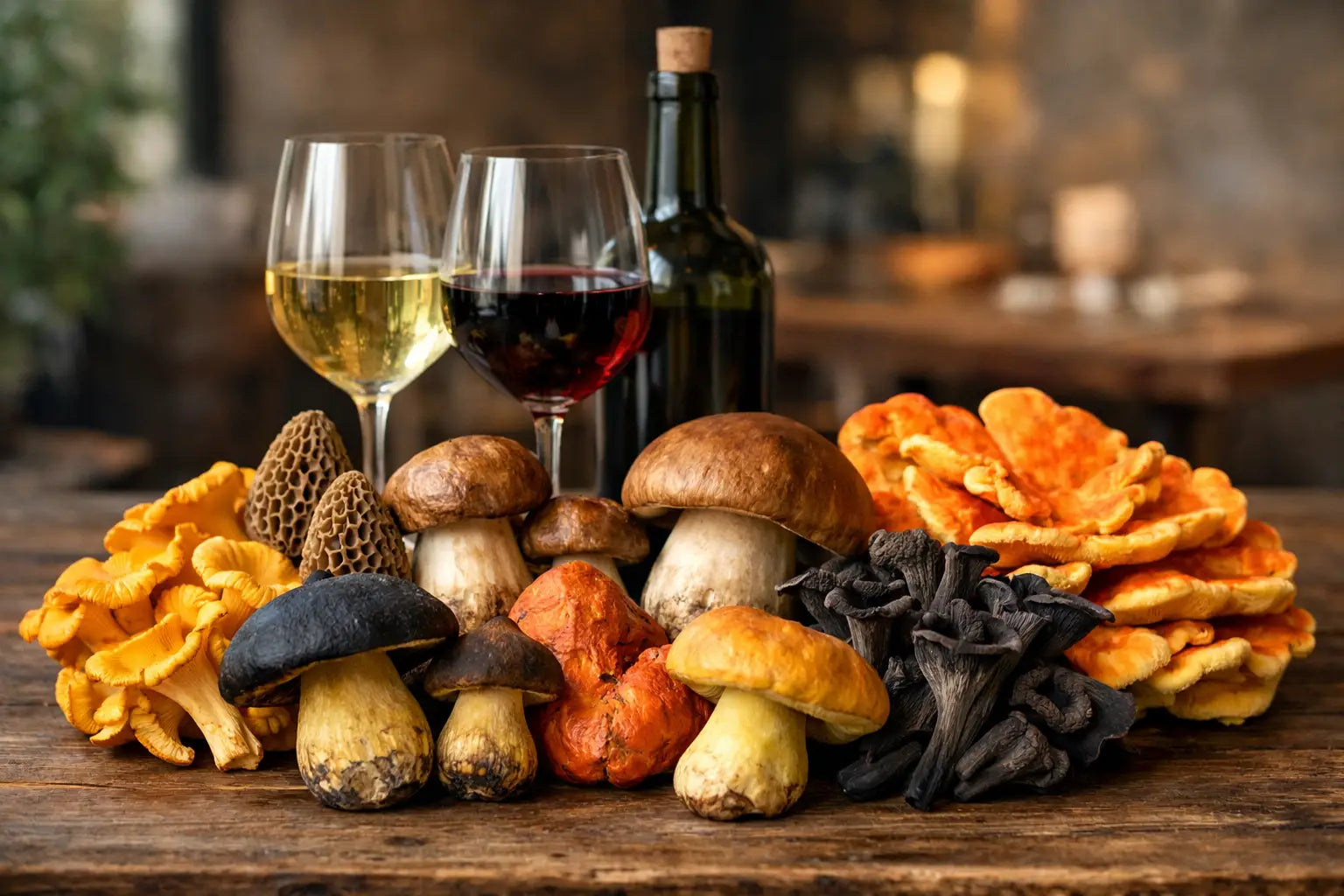
Chanterelles have a rare talent for making a simple dinner taste considered. Their apricot-like aroma, gentle pepperiness, and silky texture deserve a wine with enough character to respond, but not so much power that it buries the mushroom. At Crown Fungi, carefully handled wild chanterelles make it easier to build that kind of meal at home. The best chanterelle wine pairings begin with the preparation on your plate, not a rigid rule about mushroom dishes.
A lightly sauteed chanterelle needs a different bottle than chanterelles folded into cream sauce, spooned over polenta, or served alongside roast chicken. Think first about the dish's richness, acidity, herbs, and protein. Then choose a wine that either refreshes the palate or echoes the mushrooms' earthy, golden character.
Why Chanterelles Need a Thoughtful Wine
Chanterelles are not dark, intensely savory mushrooms in the way porcini or black trumpet mushrooms can be. Their flavor is brighter: buttery, woodsy, delicately fruity, and sometimes faintly floral. That means heavily oaked reds, aggressive tannins, and very sweet wines can make them seem flat or metallic.
The most reliable direction is a dry white with freshness, measured texture, and restrained oak. Still, reds have a place when the recipe includes browned meat, char, tomato, or deeper roasted flavors. The goal is balance. Your wine should leave room for the chanterelles to remain the most interesting thing in the bite.
The Best Chanterelle Wine Pairings by Dish
Chardonnay for buttery chanterelles
Chardonnay is often the first answer, and for good reason. A balanced, dry Chardonnay mirrors the mushroom's natural richness while carrying browned butter, cream, egg yolk, and roasted poultry with ease. Choose a bottle with bright acidity and moderate oak rather than one that tastes strongly of vanilla or toasted wood.
This is the bottle to open for chanterelles sauteed in butter and served on toast, chanterelle risotto, or a creamy pasta finished with Parmesan. If the dish leans especially rich, a cooler-climate Chardonnay is a particularly good choice because its citrusy lift keeps the meal from feeling heavy.
Pinot Noir for roasted or meatier preparations
Pinot Noir is the leading red among the best chanterelle wine pairings. Its low-to-moderate tannin and red-fruit freshness are gentle enough for the mushrooms, while its earthy undertones work beautifully with roast chicken, duck, pork tenderloin, and mushroom-forward stuffing.
Keep the sauce in mind. Pinot Noir shines when chanterelles are roasted, browned hard in a skillet, or cooked with thyme, shallots, and a little stock. It is less convincing with a very creamy, lemony chanterelle sauce, where a white wine will usually feel more natural.
Dry Riesling for bright, herb-forward dishes
Dry Riesling is an excellent, sometimes overlooked choice for chanterelles. Its acidity wakes up dishes made with fresh herbs, spring vegetables, leeks, or a squeeze of lemon. The wine's subtle stone-fruit notes can also pick up the mushroom's distinctive fruit-like aroma without turning the pairing sweet.
Pour dry Riesling with chanterelle omelets, roasted potatoes with chives, or chanterelles tucked into a savory tart. Look for "dry" on the label when you want the wine to stay crisp against buttery cooking fats.
Chenin Blanc for cream, corn, and golden flavors
Chenin Blanc has the acidity needed for rich food, plus a waxy texture that feels especially good with chanterelles. It is a smart middle ground for cooks who want more body than a lean white but less oak than many Chardonnays.
Try it with chanterelle polenta, corn dishes, roast squash, or chicken with a light cream sauce. A dry Chenin Blanc can also handle a little sweetness from caramelized onions or roasted carrots, making it useful for fall dinners.
Sparkling wine for fried or appetizer-style chanterelles
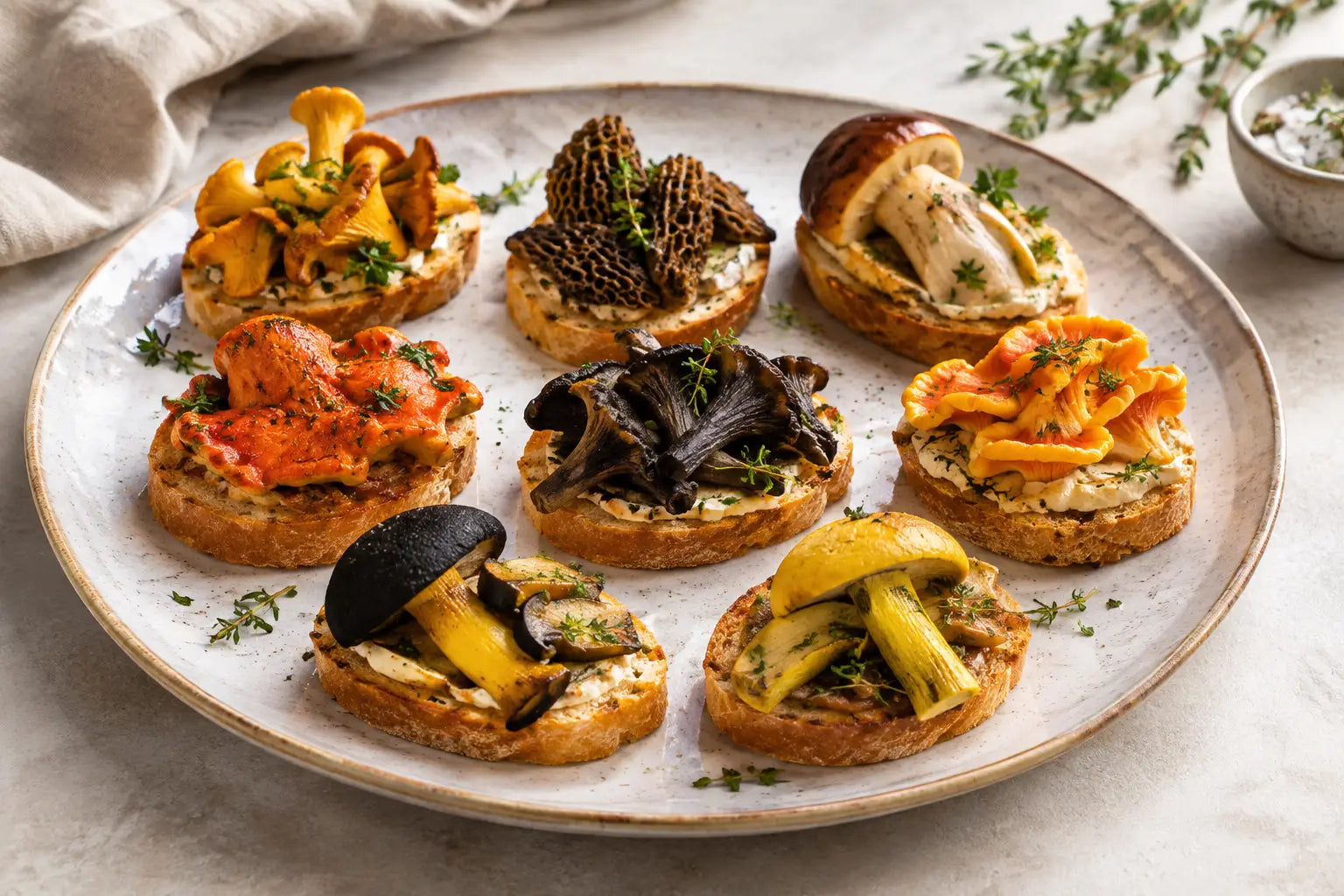
Sparkling wine brings contrast. Its bubbles cut through fried coatings, melted cheese, and butter, while high acidity keeps each bite lively. A dry traditional-method sparkling wine is especially good with crisp chanterelle crostini, fried chanterelles, or a warm mushroom tart shared before dinner.
This is not the most obvious route, but it is one of the most fun. When the chanterelles are part of a snackable, salty dish rather than the center of a heavy entree, sparkling wine often outperforms still wine.
> Cook With Wild Chanterelles
>
> Fresh and frozen wild chanterelles bring golden color, tender texture, and unmistakable forest aroma to weeknight pastas and special-occasion dinners alike. Check the current seasonal selection and price before planning your menu, then build the wine pairing around the way you plan to cook them.
Match the Wine to the Sauce, Not Just the Mushroom
A chanterelle dish changes dramatically with a few pantry ingredients. Butter and cream call for texture and acidity, which is why Chardonnay, Chenin Blanc, and dry Riesling are dependable. A pan sauce made with stock, thyme, and roast chicken juices opens the door to Pinot Noir.
Lemon changes the equation too. Lemon zest, white wine, or a sharp vinaigrette pushes the dish toward a higher-acid white. A softer wine can taste dull beside that kind of brightness. Conversely, a dish finished with nutty browned butter or a touch of truffle-like richness can support a fuller white with subtle oak.
If you are adding cheese, consider its intensity. Fresh goat cheese and ricotta work well with dry Riesling or sparkling wine. Parmesan, Gruyere, and aged cheeses have enough savory depth for Chardonnay or Pinot Noir, depending on whether the rest of the dish is creamy or roasted.
What to Avoid With Chanterelles
Big, tannic reds are usually a poor fit. Cabernet Sauvignon, young Nebbiolo, and very muscular Syrah can overwhelm chanterelles and make their delicate fruitiness disappear. That does not mean red wine is off limits. It simply means lighter tannin and fresher fruit are more useful than sheer power.
Very sweet wines can be difficult as well, unless the dish deliberately includes sweetness and spice. With a savory chanterelle pasta or a buttery saute, sweetness often feels disconnected. Strongly oaked whites deserve caution for a similar reason: too much barrel flavor can cover the mushroom's subtle perfume.
Temperature matters more than many home cooks expect. Serve white wine cool but not icy, around 45 to 50 degrees Fahrenheit, so its aroma and texture remain available. Serve Pinot Noir slightly chilled, around 55 to 60 degrees, for a cleaner, more graceful pairing.
Three Easy Chanterelle Dinner Plans
For the simplest possible pairing, saute chanterelles with butter, shallot, thyme, and a pinch of salt, then pile them onto toasted sourdough with a softly cooked egg. Choose dry Riesling if you add lemon or herbs, or Chardonnay if you finish with more butter and cheese.
For a dinner that feels generous without being complicated, fold chanterelles into creamy pasta with Parmesan and black pepper. A bright Chardonnay is the easy answer. If you prefer a bottle with less oak, dry Chenin Blanc has the structure to do the job well.
For a roast chicken dinner, cook chanterelles in the pan drippings with shallots and thyme, then serve them alongside crisp-skinned chicken and potatoes. Pinot Noir connects the browned flavors while staying light enough to respect the mushrooms.
A Final Rule for Choosing the Bottle
When deciding between two wines, choose the one that matches the richest element of the dish. If butter, cream, or cheese leads, reach for a textured white with acidity. If roasting, poultry, or a savory pan sauce leads, reach for Pinot Noir. If the dish is bright, green, and lemony, dry Riesling will rarely let you down.
Chanterelles do not need a rare or expensive bottle to taste extraordinary. They need a wine that is balanced, served at the right temperature, and chosen with the whole plate in mind.
Shop This Mushroom
Shop the current fresh or frozen wild chanterelle selection for a dinner worth opening something special.