Cart
0
Frozen chanterelles make a special dinner possible well beyond their brief wild season. Can you sauté frozen chanterelles? Absolutely. The key is to treat the first few minutes as a moisture-management step, not a browning step. Quality frozen chanterelles, such as those selected by Crown Fungi, retain their distinctive golden color, delicate texture, and lightly fruity woodland aroma when they are cooked with patience.
A crowded pan, low heat, or too much butter at the start can leave them soft and watery. Give them room in a wide skillet, let their ice melt and steam away, then add fat and seasoning once the mushrooms begin to sizzle. It is a small adjustment that makes the difference between limp mushrooms and chanterelles with real character.
The Short Answer: Sauté Frozen Chanterelles From Frozen
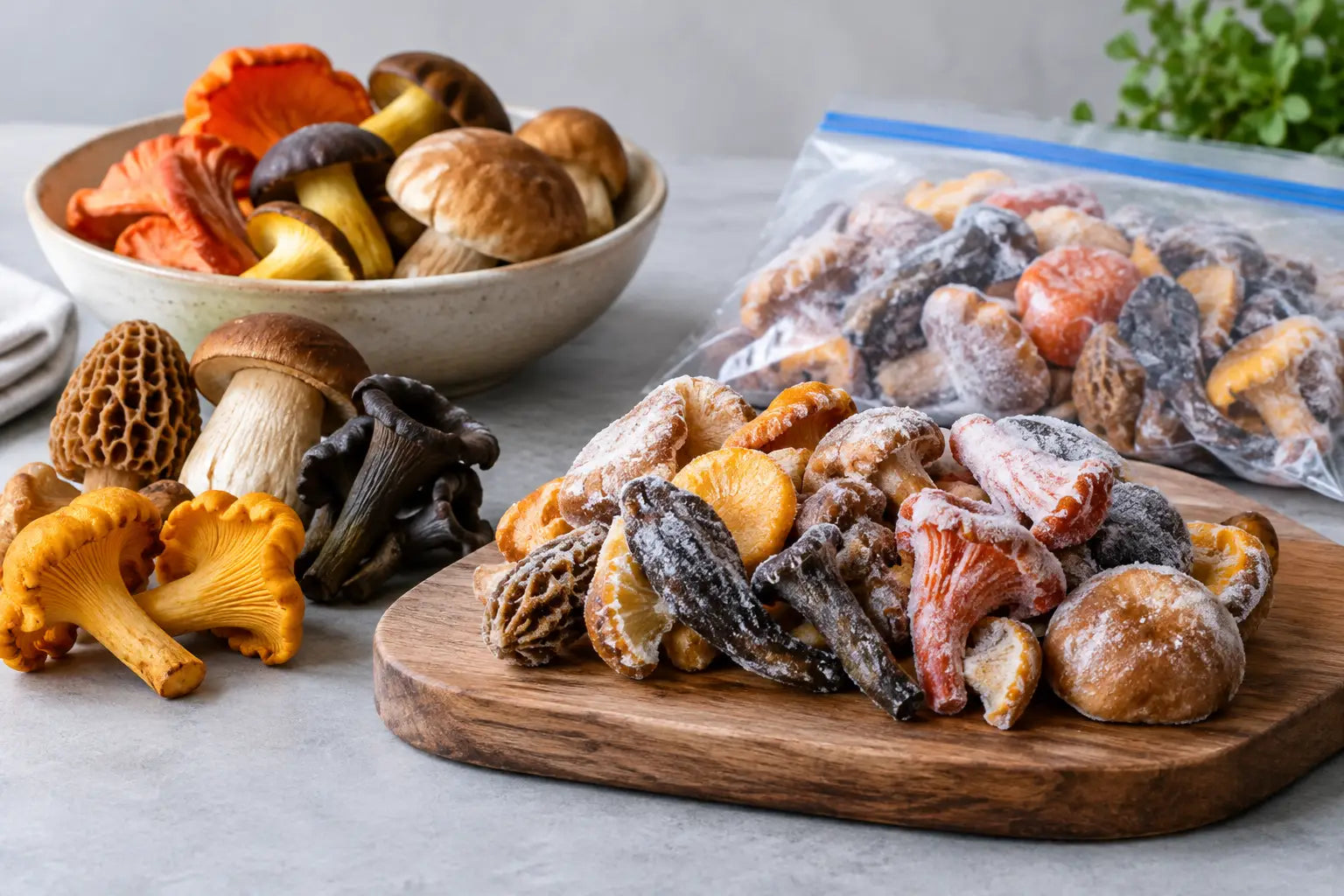
There is no need to thaw chanterelles on the counter before cooking. In fact, thawing can make it harder to control their texture. As the mushrooms defrost, they release liquid, and that liquid needs to evaporate before browning can begin. Starting from frozen puts that process directly in the skillet, where you can manage it.
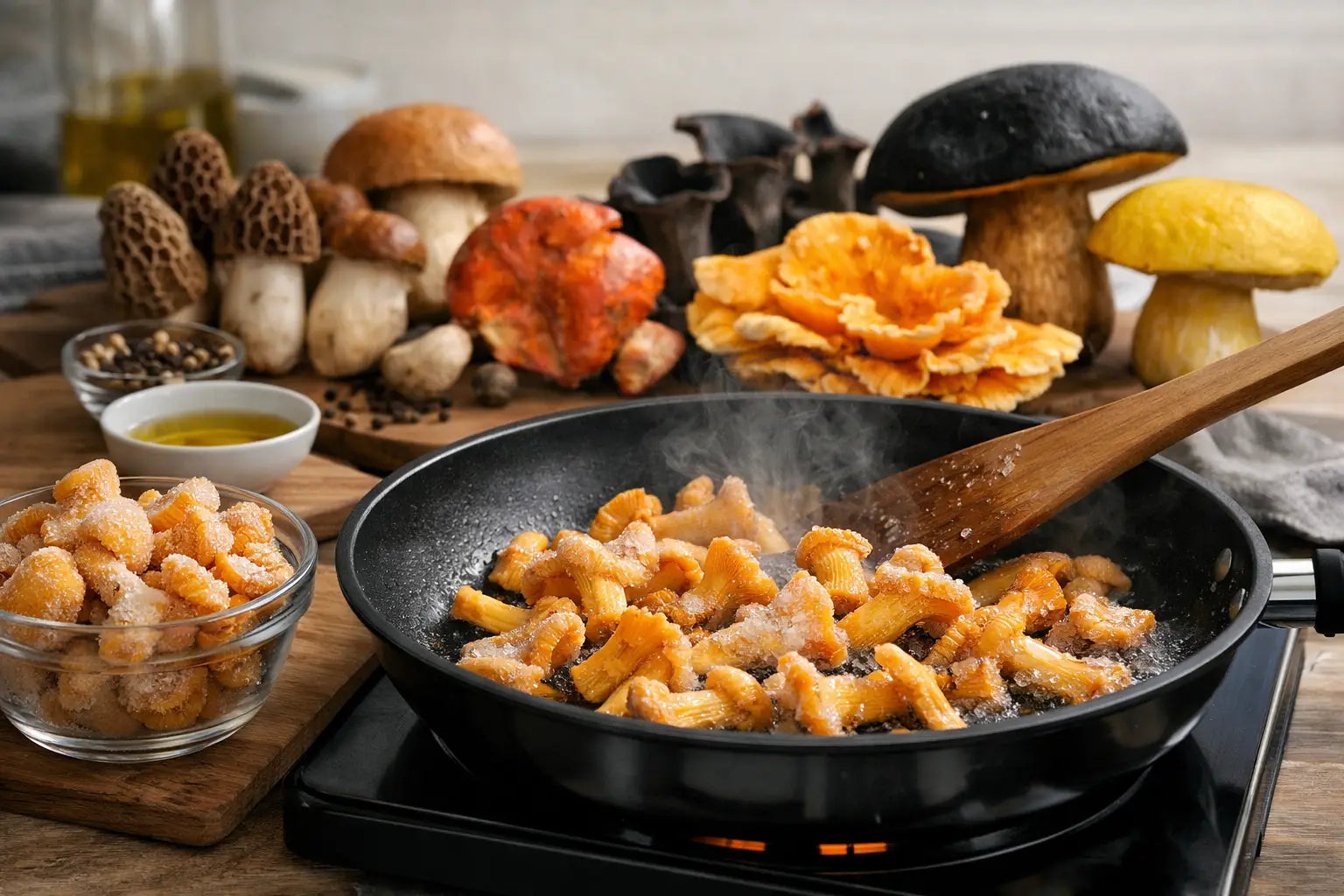
Use a heavy, wide pan with enough surface area to hold the mushrooms in a mostly even layer. A cast-iron or stainless-steel skillet works particularly well, but any substantial sauté pan will do. Heat it over medium-high heat before the mushrooms go in. The pan should be hot enough that moisture begins to evaporate promptly, but not so hot that the mushrooms scorch before they have thawed.
Add the frozen chanterelles to the dry pan first. Avoid adding oil, butter, garlic, onions, or wine at this stage. Each of those ingredients either cools the pan or adds moisture, which delays the browning you want.
How to Sauté Frozen Chanterelles Step by Step
Place the frozen mushrooms in the preheated skillet and spread them out. They may clump together at first. Let them sit for a minute, then use a wooden spoon or spatula to separate them as they loosen. A small amount of liquid will collect in the pan. That is normal.
Keep the heat at medium-high and stir occasionally, rather than constantly. Constant stirring prevents the mushrooms from making good contact with the hot surface. At the same time, do not walk away: frozen mushrooms can move from wet to browned quickly once the liquid is gone.
After roughly five to eight minutes, depending on the amount in the pan and the power of your stove, most of the released moisture should have evaporated. Listen for the change. The sound shifts from a gentle simmer to a clearer sizzle. The chanterelles will look more glossy than watery, and their edges may begin to take on a deeper gold.
Now add your cooking fat. For about 8 ounces of chanterelles, start with 1 tablespoon of butter, olive oil, or a combination of both. Butter gives a round, nutty finish, while olive oil keeps the mushroom flavor especially clear. Toss the chanterelles in the fat, season with a pinch of kosher salt, and let them cook another two to four minutes until lightly browned in spots.
Finish with black pepper and a small squeeze of lemon, if you like. Chives, parsley, thyme, or a little minced shallot can work beautifully, but use them with restraint. Chanterelles have an aroma that is often compared to apricots and damp forest air. A heavy hand with spices can cover the reason you bought them.
Why a Dry Pan Works Better First
The dry-pan method may seem counterintuitive if you normally begin sautéing vegetables in oil. Frozen chanterelles are different because they arrive carrying surface ice and naturally release water as they heat. Oil cannot make that water disappear. It simply coats the mushrooms while they steam.
When you let the water cook off first, the mushrooms become ready to brown rather than boil. Browning concentrates their savory flavor and gives their tender, slightly springy texture more definition. Adding butter after the pan has dried also reduces the chance of butter scorching while you wait for the liquid to evaporate.
This does not mean chanterelles need to become crisp. They are not meant to eat like fried mushrooms. The goal is a tender center with lightly golden edges and no puddle of liquid beneath them.
> Frozen Chanterelles for Home Cooking
> Keep a premium wild mushroom option on hand for pasta, eggs, risotto, and pan sauces. Frozen chanterelles are best cooked directly from the freezer in a hot, wide skillet.
The Most Common Mistakes
The biggest mistake is overloading the pan. If you are cooking more than about 8 to 10 ounces in a standard skillet, work in batches. A crowded pan traps steam, which means the mushrooms take longer to dry and are more likely to turn soft. Two quick batches usually produce better chanterelles than one large, watery batch.
Another common mistake is adding salt immediately. Salt draws out moisture, so it is best added after the initial liquid has mostly evaporated. You do not need to wait until the very last second, but seasoning too early can slow browning.
Skip the urge to rinse frozen chanterelles as well. They are ready to cook. Extra water works against the texture you are trying to achieve. If a piece of packaging ice is visible, simply brush it away before the mushrooms hit the pan.
Finally, do not expect frozen chanterelles to behave exactly like fresh ones. Freezing changes the cell structure slightly, so the texture will be more tender than a just-picked chanterelle. That is not a flaw. It simply makes them especially well suited to dishes where their flavor can mingle with butter, eggs, cream, stock, or pasta.
Best Ways to Use Sautéed Chanterelles
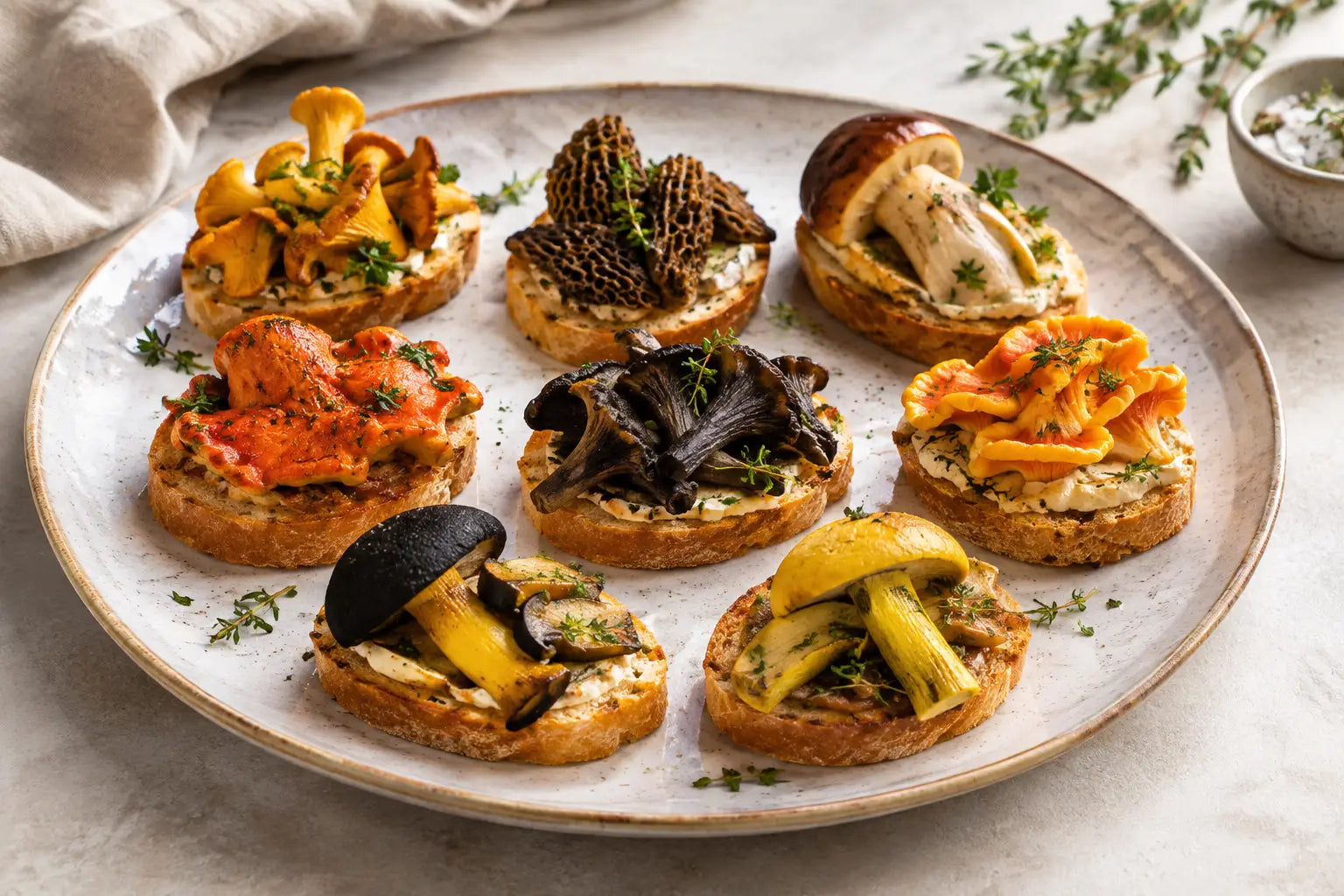
Once browned, frozen chanterelles are ready for simple dishes that let them lead. Spoon them over buttery toast with a soft egg, fold them into an omelet, or toss them with tagliatelle and a splash of pasta water. They are also excellent over polenta, alongside roasted chicken, or stirred into a risotto near the end of cooking.
For a quick chanterelle pasta, sauté the mushrooms using the method above, then add a spoonful of minced shallot after they brown. Pour in a modest splash of white wine or stock and let it reduce almost completely. Add cooked pasta, a little pasta water, butter, and finely grated Parmesan. The sauce should coat the noodles without drowning the mushrooms.
For eggs, keep the preparation even simpler. Sauté the chanterelles with butter and thyme, season them, then fold them into softly scrambled eggs just before serving. Their savory depth makes an ordinary breakfast feel considered without requiring a complicated recipe.
Do You Need to Cook Them All at Once?
Not necessarily. Take out only what you plan to use and return the rest to the freezer promptly. Keeping the bag tightly sealed helps protect the mushrooms from freezer odors and surface drying. If the chanterelles have formed a solid frozen block, do not force them apart with a knife. Let the pan heat loosen them naturally.
For the best result, cook frozen chanterelles within a few months of purchase and keep your freezer consistently cold. They are a valuable ingredient, but they are not precious in the kitchen. A hot pan, a little attention, and a simple finishing touch are enough to show why wild chanterelles are worth saving for a good meal.
Shop This Mushroom
Explore Crown Fungi's current frozen chanterelle offerings and keep a golden, deeply flavorful wild mushroom ready for your next pasta, egg dish, or quiet dinner at home.