Cart
0
A bag of frozen wild mushrooms should make a special dinner easier, not leave you guessing what is inside. At Crown Fungi, careful sourcing and preservation matter because choosing premium frozen mushrooms begins long before the mushrooms reach your freezer. The right package gives home cooks dependable access to remarkable wild varieties when a fresh seasonal find is not on the table.
Frozen mushrooms are not a compromise when they are handled well. They are a practical way to keep the deep woodsiness of porcini, the apricot-like lift of chanterelles, or the rich savory character of morels ready for a weeknight pasta, holiday stuffing, or a quiet dinner worth lingering over.
Start With the Mushroom Variety
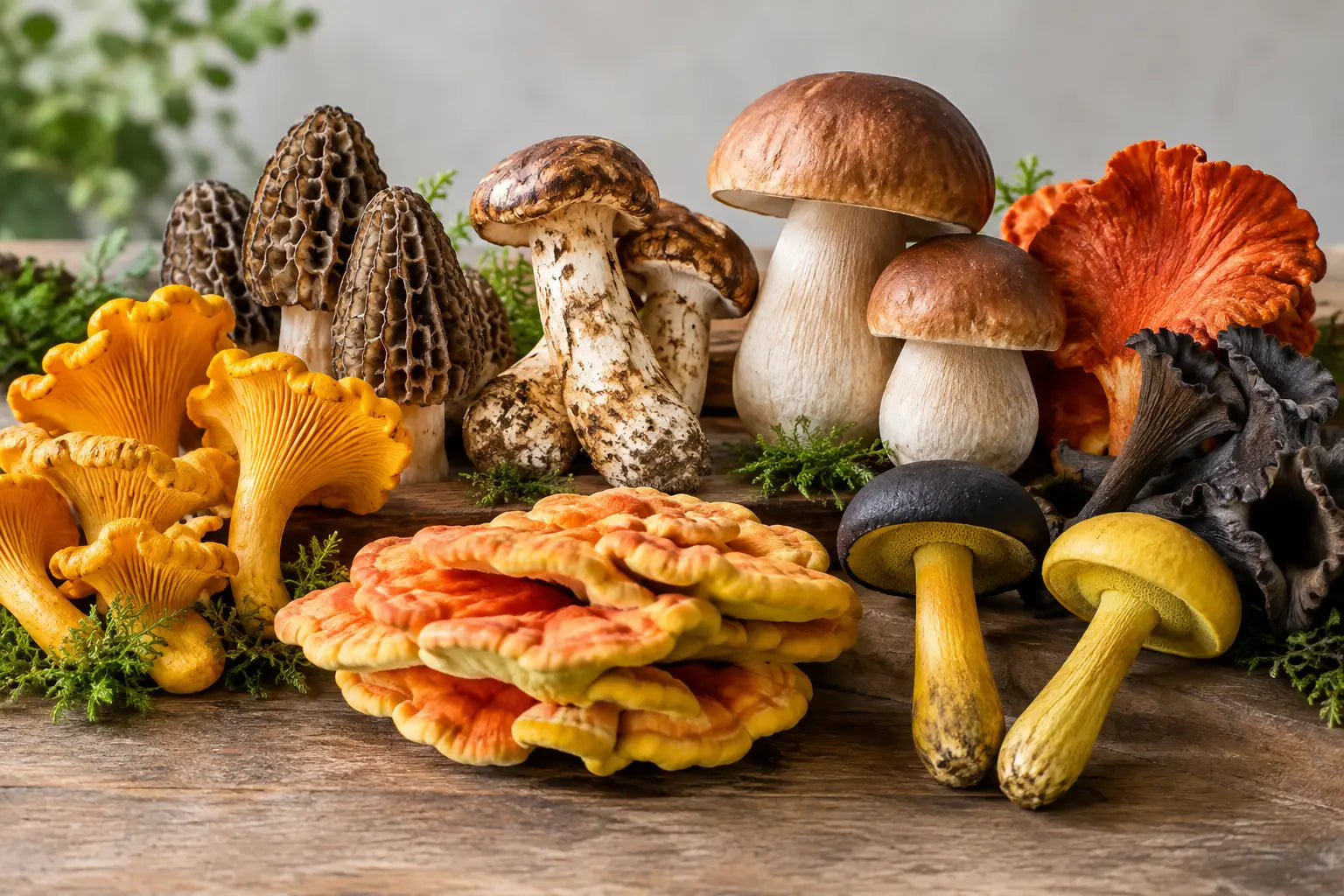
The most useful question is not simply, “Are these mushrooms premium?” It is, “What flavor do I want this mushroom to bring to my meal?” Wild varieties have distinct personalities, and the package should clearly tell you what you are buying.
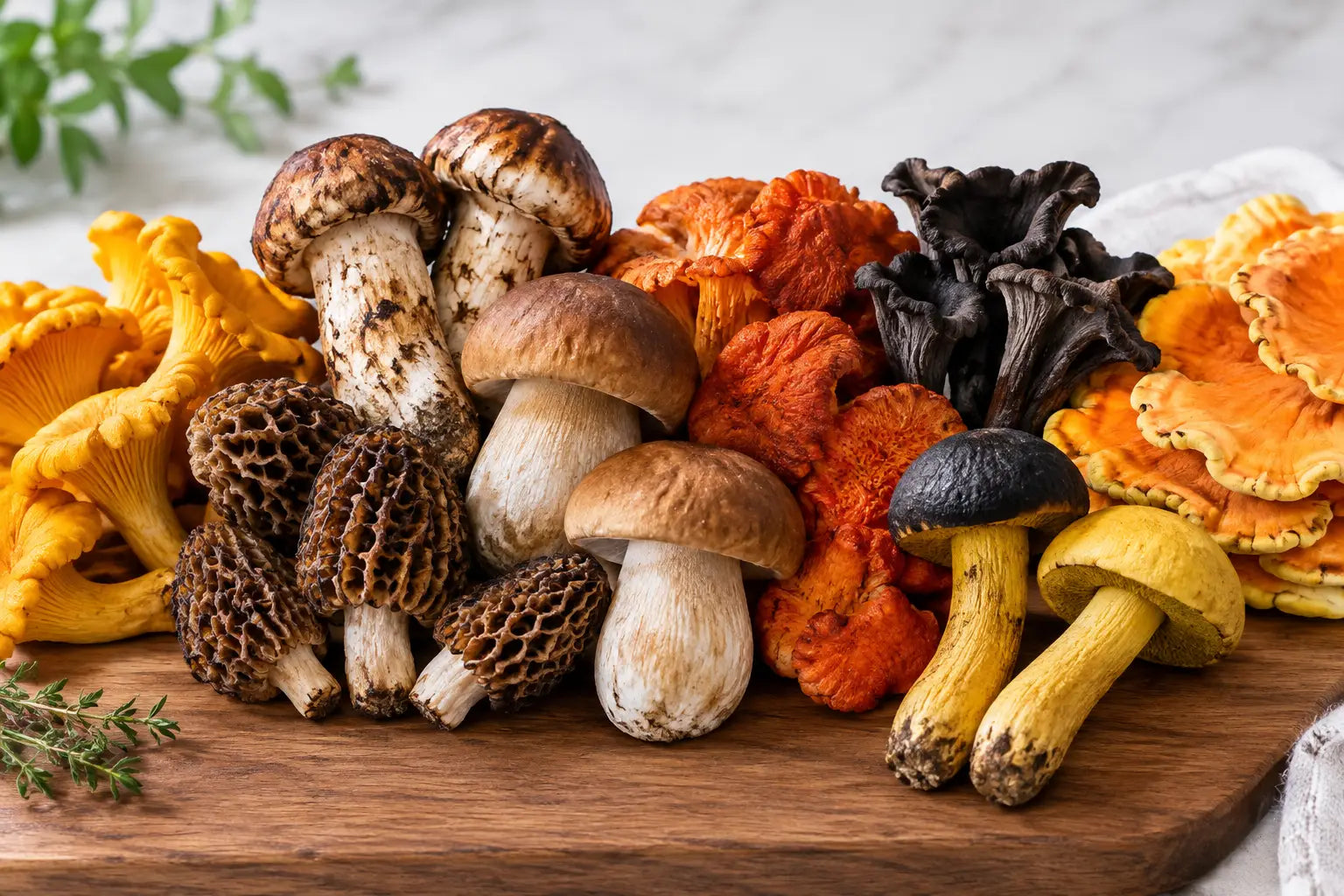
Frozen porcini are a natural choice for dishes that need depth: risotto, creamy polenta, gravy, ragù, or a simple pan sauce for roasted chicken. Their flavor is earthy and concentrated, so a modest amount can carry a whole dish. Chanterelles are brighter and more delicate, with a gentle fruitiness that works beautifully with eggs, cream, fresh herbs, corn, and pasta. Morels bring a honeycombed texture and a darker, nutty savor that feels especially at home with butter, shallots, poultry, and spring vegetables.
Other wild mushrooms deserve the same attention. Lobster mushrooms offer a firm bite and seafood-like sweetness. Black trumpet mushrooms bring a dramatic, dark color and a woodsy perfume that can transform a sauce or compound butter. Chicken of the woods has a substantial, layered texture that makes it satisfying in tacos, sautéed preparations, and hearty grain bowls.
A premium product does not blur those differences into a generic “wild mushroom mix.” A blend can be wonderful when you want complexity, but a named variety gives you more control over flavor, texture, and recipe planning.
Look for a Clean, Purposeful Cut
Frozen mushrooms should look like ingredients you can cook with immediately. Pieces do not all need to be identical, especially with wild mushrooms, but they should be cleanly trimmed and cut with an obvious purpose. Large porcini slices are ideal when you want their meaty shape to show in a sauté. Smaller pieces make sense for sauces, stuffing, soups, and fillings.
Avoid packages that appear to contain mostly tiny fragments. Some breakage is normal during freezing and shipping, but a premium selection should still offer recognizable pieces. You are paying for a wild mushroom’s flavor and its character on the plate.
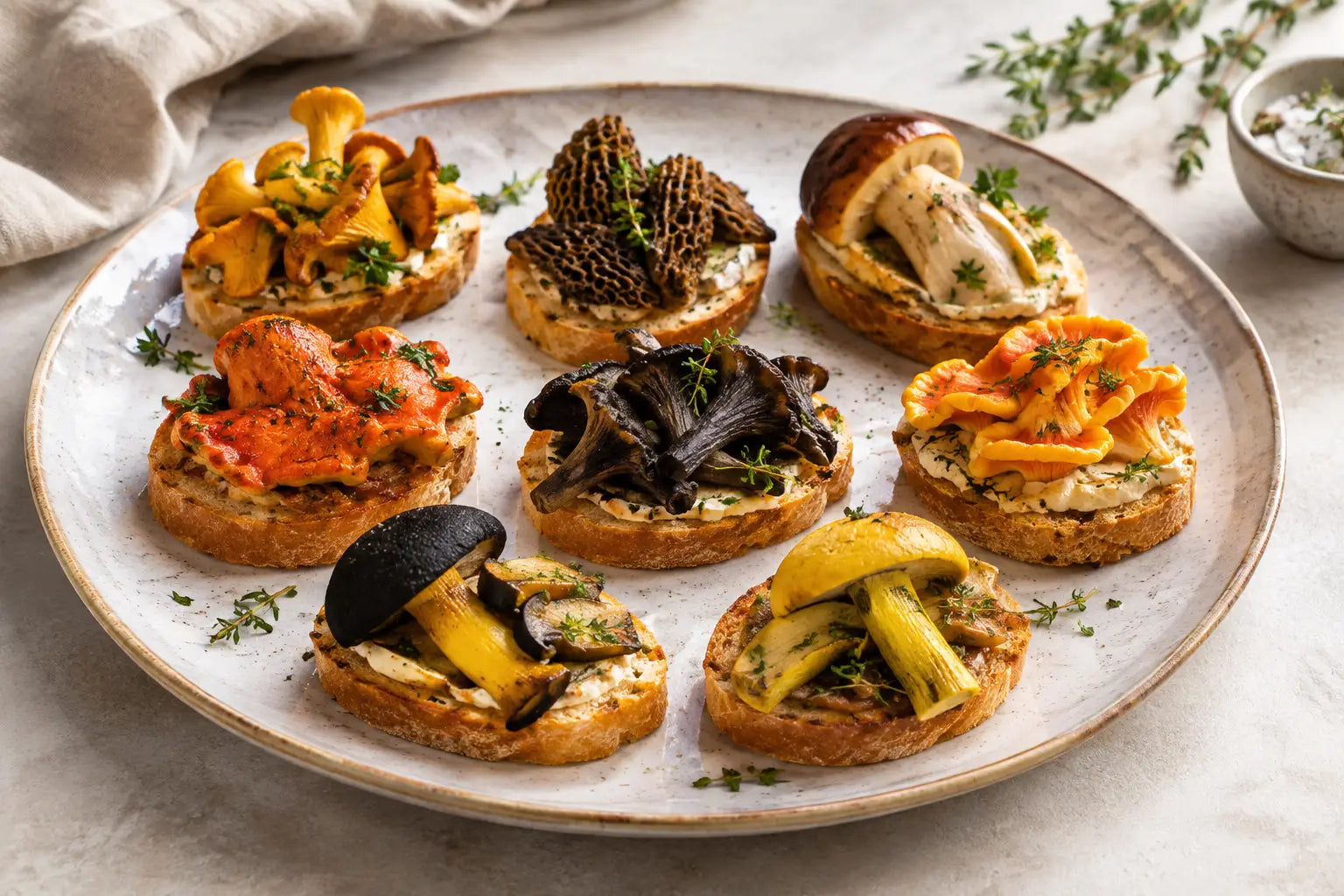
The best cut depends on the meal. If you are folding mushrooms into risotto or using them in a sauce, smaller pieces are not a drawback. If the mushrooms are the centerpiece of toast, a tart, or a simple butter sauté, look for more substantial pieces with a shape you will be happy to serve.
Read the Package for Signs of Care
Choosing premium frozen mushrooms is partly about what you can see and partly about what the package tells you. Look for a clearly named variety, a straightforward ingredient statement, and packaging that protects the mushrooms from excess air and moisture.
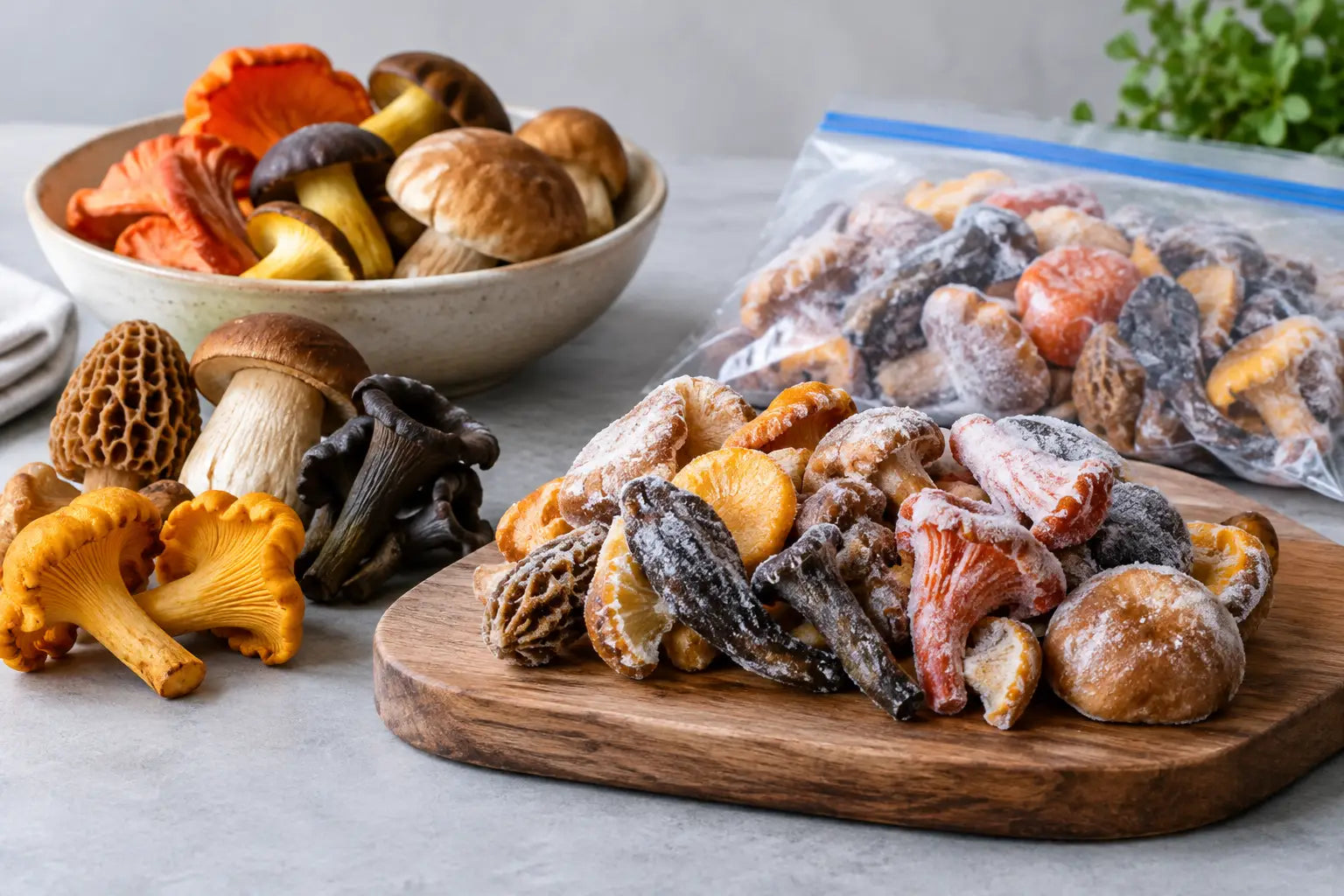
Heavy frost inside the bag is worth noticing. A light dusting can happen in any freezer, but thick ice crystals or mushrooms trapped in a solid frozen block may signal that the product has warmed and refrozen. That can leave the finished mushrooms watery and dull their texture. The package should be tightly sealed, without tears, punctures, or loose closures.
Color matters too, although wild mushrooms naturally vary. Chanterelles should retain their golden presence, black trumpets should look deeply dark rather than gray and faded, and porcini should look naturally tan to brown. Frozen mushrooms will not look exactly like fresh ones, but they should look clean, intact, and true to their variety.
A Premium Freezer Staple: Frozen Porcini
When you want one versatile wild mushroom to keep on hand, frozen porcini are an especially smart choice. Their savory flavor stands up to garlic, wine, cream, tomatoes, and hearty grains, while their satisfying texture keeps them from disappearing into the dish.
Use them for a quick porcini pasta with butter and thyme, fold them into a baked polenta, or add them to a pan of roasted potatoes near the end of cooking. Because their flavor is naturally assertive, porcini can make a simple meal feel considered without requiring a long ingredient list.
Understand What Freezing Does Well
Freezing preserves wild mushrooms at a moment of excellent quality, but it does change how they behave in the pan. Once heated, frozen mushrooms release moisture. That is normal, and it is not a reason to avoid them. It simply means that a little cooking technique makes a major difference.
For most sautéed dishes, cook frozen mushrooms directly from the freezer in a wide, hot skillet. Do not crowd the pan. Let the mushrooms release their liquid, then continue cooking until that liquid has evaporated and the mushrooms begin to sizzle in their own natural richness. Add butter or oil after the excess moisture cooks away, then season and build the rest of the dish.
Thawing can work when a recipe calls for chopped mushrooms in a filling or sauce, but drain any released liquid and use it thoughtfully. That liquid often carries flavor. Stir it into stock, sauce, or gravy rather than pouring it down the sink, as long as the recipe has room for the added moisture.
Match the Package Size to Your Cooking Style
A larger package can be an excellent value if you cook with wild mushrooms often, make dinner for several people, or plan to use them across several recipes. For occasional use, a smaller portion may be more practical. The goal is to avoid repeatedly opening a bag, taking out a handful, and leaving the rest exposed to humid freezer air.
Once opened, keep the remaining mushrooms tightly sealed and return them to the freezer promptly. Use a dry utensil when portioning. These small habits help preserve texture and reduce frost over time.
It also helps to think beyond one recipe. A package of chanterelles might become scrambled eggs one morning, a creamy pasta later in the week, and a mushroom toast lunch after that. A bag of morels can anchor a celebratory meal, then add depth to a simple pan sauce on another night. Premium mushrooms earn their place in the freezer when they inspire more than one occasion.
Price Should Reflect the Experience, Not Just the Weight
Wild mushrooms are not interchangeable with everyday grocery-store varieties. Their flavor, seasonality, and careful preparation are part of what you are buying. A lower price is not always a better value if the package is mostly ice, broken pieces, or an unnamed mix that does not suit the meal you had in mind.
Instead, consider what the mushrooms can do in your cooking. A small amount of premium porcini can add more flavor to a pot of risotto than a much larger amount of ordinary mushrooms. A handful of chanterelles can turn eggs, toast, and herbs into something memorable. The value lies in the intensity, character, and reliability of the ingredient.
When comparing options, choose the mushroom variety you genuinely want to cook, a package that shows care in its contents, and a size you will use well. That is the clearest path to bringing a rare wild ingredient into your kitchen with confidence.
Shop This Mushroom
Explore the current frozen wild mushroom selection and choose the variety that fits your next meal. Keep one exceptional option in the freezer, and an ordinary dinner can have a far more interesting destination.