Cart
0
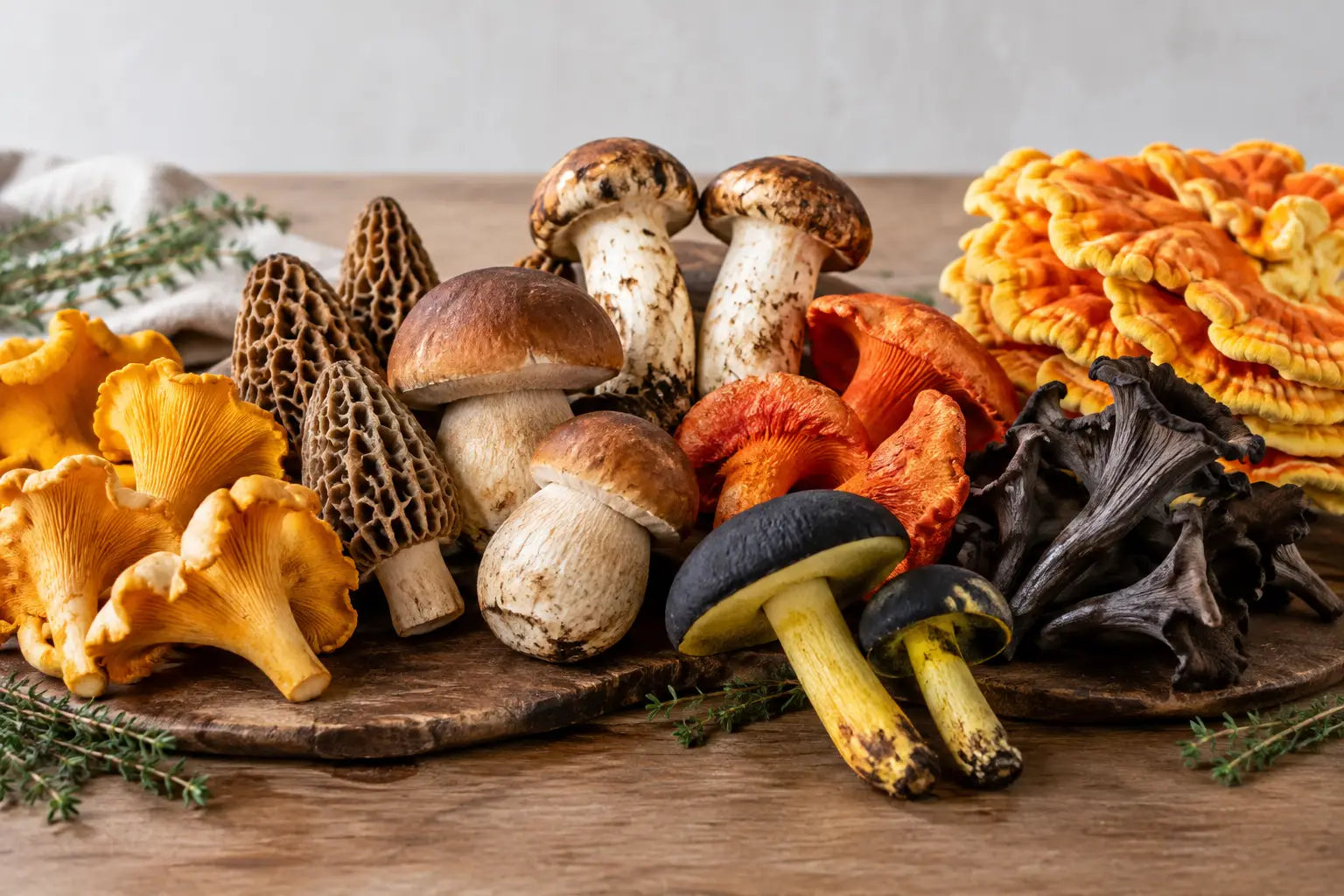
A memorable stuffing needs more than butter, herbs, and good bread. The best mushrooms for holiday stuffing bring the deep, woodsy flavor that makes every spoonful feel complete. Crown Fungi makes that choice easier with carefully handled wild mushrooms that give home cooks access to exceptional seasonal flavor, whether they are cooking for a small gathering or a full holiday table.
Mushrooms are not interchangeable in stuffing. Some melt into the bread and enrich the whole dish; others hold their shape and deliver a distinct bite. The right variety depends on whether you want a classic, savory stuffing, a luxurious centerpiece side, or a brighter, more aromatic version built around a special wild mushroom.
Best Mushrooms for Holiday Stuffing
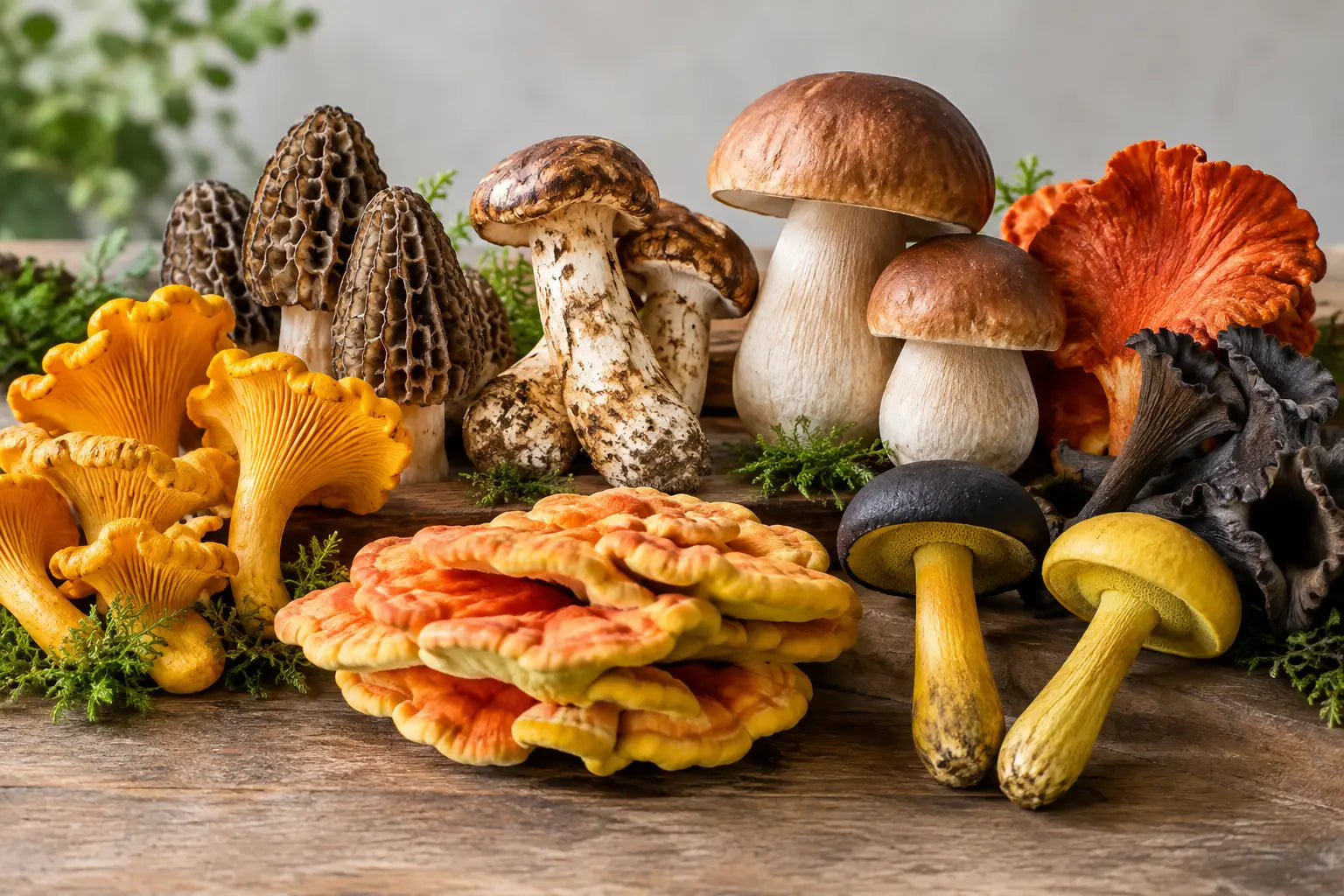
Porcini are the strongest all-around choice for traditional holiday stuffing. Their flavor is dark, nutty, and unmistakably woodsy, with a savory depth that works beautifully beside roast turkey, chicken, prime rib, or a simple winter vegetable main. When sautéed well, porcini lend the stuffing a rounded, almost brothy character without overwhelming sage, thyme, celery, or onion.
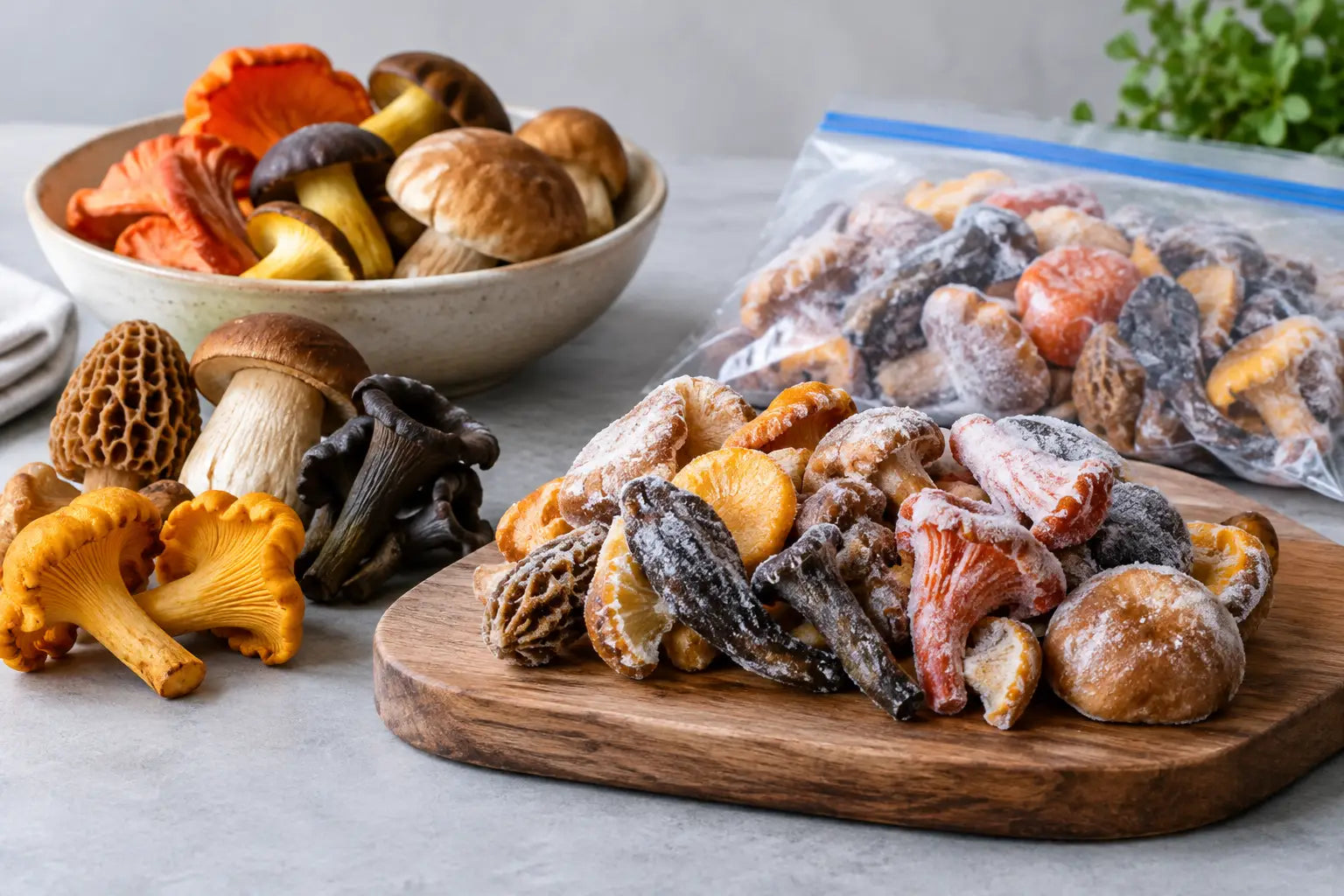
Frozen porcini are especially useful for holiday cooking because they offer dependable flavor without asking you to plan an entire menu around a short fresh season. Cook them directly from frozen in a wide, hot skillet, allowing their moisture to cook away before adding butter or olive oil. That step concentrates their flavor and prevents a wet stuffing.
Morels are the pick for a more refined, delicate stuffing. Their honeycomb caps catch bits of shallot, herbs, and butter, while their flavor lands somewhere between toasted nuts and spring woods. Morels pair particularly well with leeks, fennel, tarragon, and mild breads such as brioche or country loaf. They are special enough for a holiday meal, but their texture is tender, so avoid stirring them aggressively once the bread is added.
Chanterelles bring a gentler, golden character. They have a subtle fruitiness along with a peppery, apricot-like aroma that can lighten a stuffing that might otherwise feel rich and heavy. Use chanterelles when your menu includes bright elements such as cranberry, citrus, white wine, apples, or fresh parsley. Their flavor is less forceful than porcini, so let them lead rather than burying them beneath too much sausage or strong cheese.
Black trumpet mushrooms are the choice for concentrated aroma. They are intensely savory but also carry a faint smoky, floral quality that makes a simple stuffing taste unusually layered. A modest amount goes a long way. Fold black trumpets into a base of sautéed onion and celery, then balance them with plenty of butter and a good stock. They are excellent in stuffing served with duck, game, or a deeply roasted poultry dish.
Lobster mushrooms offer a firmer, more substantial bite and a mild seafood-like sweetness. They are not the classic choice, but they make sense when stuffing is being served with a coastal holiday menu or alongside roasted fish. Their vivid color also adds visual interest, though it softens during cooking. Keep the seasoning clean with shallots, parsley, lemon zest, and a restrained hand with dried herbs.
Chicken of the woods can work beautifully for guests who want a satisfying mushroom-forward stuffing. Its texture stays pleasantly substantial when sautéed, giving the dish more presence than softer varieties. It is especially good in a cornbread stuffing with roasted squash, pecans, and thyme. Because chicken of the woods has a mild flavor, brown it thoroughly before it meets the bread.
The Best Choice Depends on Your Stuffing Style
For a classic bread stuffing with turkey, choose porcini. Their flavor is familiar enough for traditional holiday menus while still giving the dish a clear wild-mushroom upgrade. If you are adding sausage, porcini can stand up to it. If you are keeping the stuffing vegetarian, they provide much of the savory depth that meat would otherwise bring.
Choose morels when the stuffing is a featured side rather than an afterthought. Their distinctive shape and elegant texture are worth preserving, so build the recipe around them with restrained seasoning and good butter. Chanterelles are best when you want lift and fragrance, particularly with fruit, herbs, or a lighter roast.
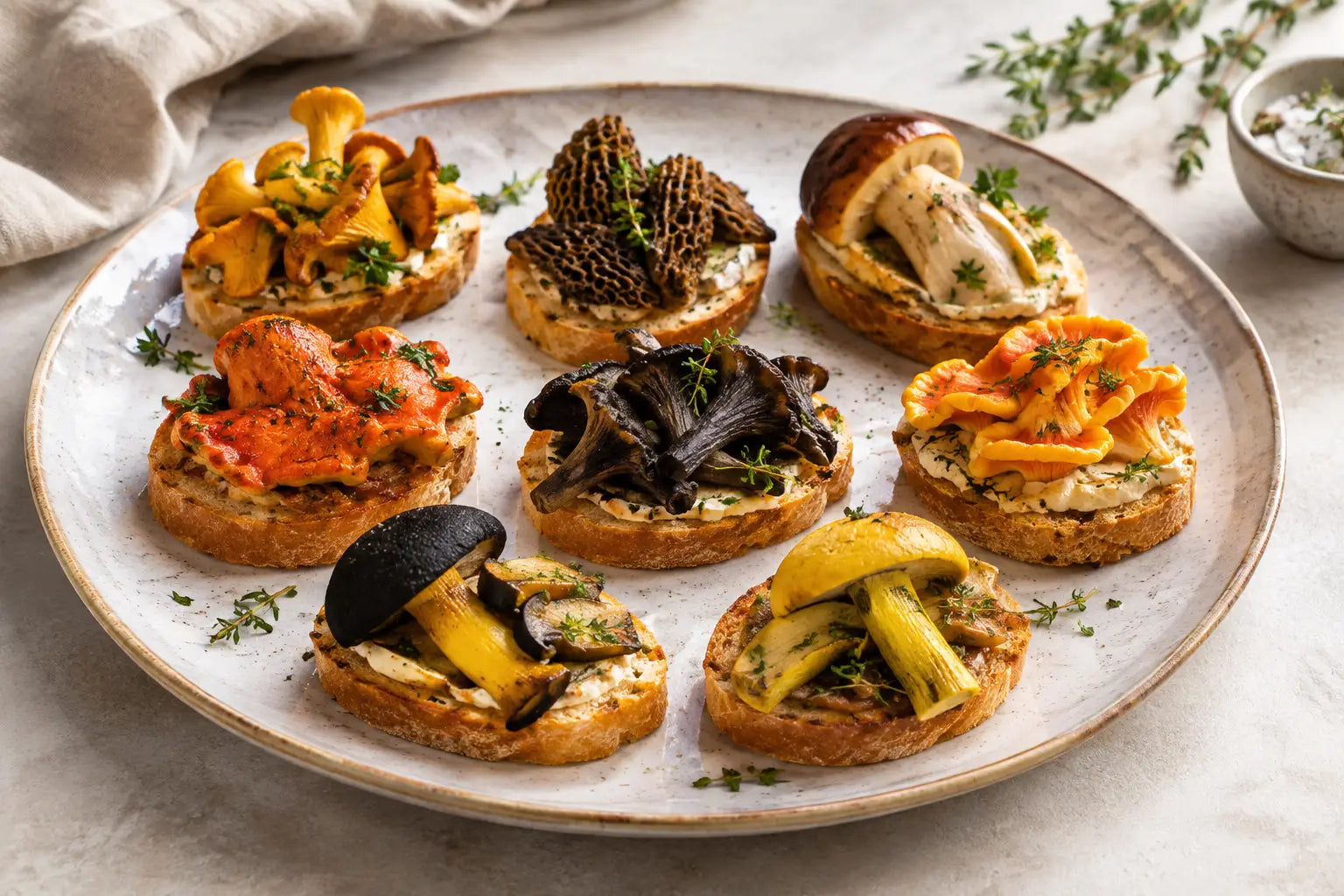
For cooks who want maximum mushroom character, combine two varieties rather than relying on one. Porcini and black trumpets make a deeply savory pairing, while chanterelles and morels create a softer, more nuanced stuffing. The trade-off is clarity: a blend can be delicious, but using too many varieties at once can make it difficult to taste what makes each mushroom special.
> Holiday stuffing pick: Frozen porcini mushrooms
> Their bold, savory flavor holds up to bread, stock, herbs, and long holiday cooking. They are the most versatile wild mushroom choice for a rich, dependable stuffing.
How Much Mushroom to Use
For a stuffing made with about one standard loaf of bread, plan on roughly 8 to 12 ounces of mushrooms. Use the lower end if mushrooms are one flavor among sausage, chestnuts, fruit, or cheese. Use the higher end when you want the mushroom flavor to define the dish.
Wild mushrooms cook down, sometimes dramatically. Start with more than seems necessary, especially with fresh mushrooms, but do not crowd the skillet. Cook in batches if needed. A crowded pan steams mushrooms instead of browning them, and steamed mushrooms release water into the stuffing rather than delivering concentrated flavor.
Frozen mushrooms need the same attention. Add them to a hot pan without thawing, then give the moisture time to evaporate. Once the pan is nearly dry, add fat and continue cooking until the mushrooms develop browned edges. That is where their best flavor appears.
Build Flavor Before the Bread Goes In
The mushroom step should happen before you combine the stuffing. Sauté the mushrooms separately until browned, then season with salt and pepper. Remove them from the pan and cook the onion, celery, or leeks in the remaining flavorful fond. Combine everything only after the vegetables have softened and the herbs have become fragrant.
Bread choice matters, too. A sturdy sourdough or country loaf is a reliable foundation for porcini and black trumpets because it absorbs stock without collapsing. Cornbread works well with chicken of the woods, while a softer white loaf or brioche lets morels and chanterelles stay in focus. Whatever bread you choose, dry it first. Bread that is lightly stale or toasted absorbs flavor evenly and gives stuffing structure.
Add stock gradually. The mixture should look moist before baking but never soupy. Mushrooms contribute their own moisture, so a recipe that is perfect without mushrooms may need less liquid once they are included. If you prepare stuffing ahead, hold back a little stock until just before it goes into the oven, then assess the texture again.
Herbs and Add-Ins That Let Wild Mushrooms Shine
Sage, thyme, parsley, and black pepper are dependable companions for nearly every wild mushroom stuffing. Rosemary should be used carefully, especially with chanterelles or morels, because its piney flavor can take over. Garlic is welcome, but a small amount is usually enough. The mushroom should remain the main aroma when the dish reaches the table.
For porcini, try toasted walnuts, Italian sausage, chestnuts, or a splash of dry white wine. Morels pair naturally with leeks and a little crème fraîche, though keep dairy modest so the bread still bakes with a crisp top. Chanterelles are lovely with apple, toasted hazelnuts, or a touch of lemon zest. Black trumpets need little more than butter, thyme, and a rich stock.
If you are serving vegetarian guests, use a full-flavored vegetable stock and be generous with browned mushrooms. The goal is not to imitate meat. It is to build a stuffing with enough savory depth that no one misses it.
Timing Your Holiday Stuffing
You can cube and dry the bread a day or two ahead, and you can cook the mushrooms and vegetables the day before. Cool those components fully before refrigerating them. On the day of the meal, combine with bread, herbs, eggs if your recipe uses them, and stock, then bake until the center is hot and the top is crisp.
For the best texture, bake stuffing uncovered for most of the cooking time. Cover only if the top is browning too quickly. Let it rest for 10 minutes after it comes out of the oven. This gives the stock time to settle into the bread and makes serving cleaner.
A holiday stuffing does not need a long list of ingredients to feel generous. Start with one excellent wild mushroom, brown it patiently, and give its flavor enough room to be noticed.
Shop This Mushroom
Explore current fresh and frozen porcini selections for a holiday stuffing with unmistakable wild-mushroom depth.