Cart
0
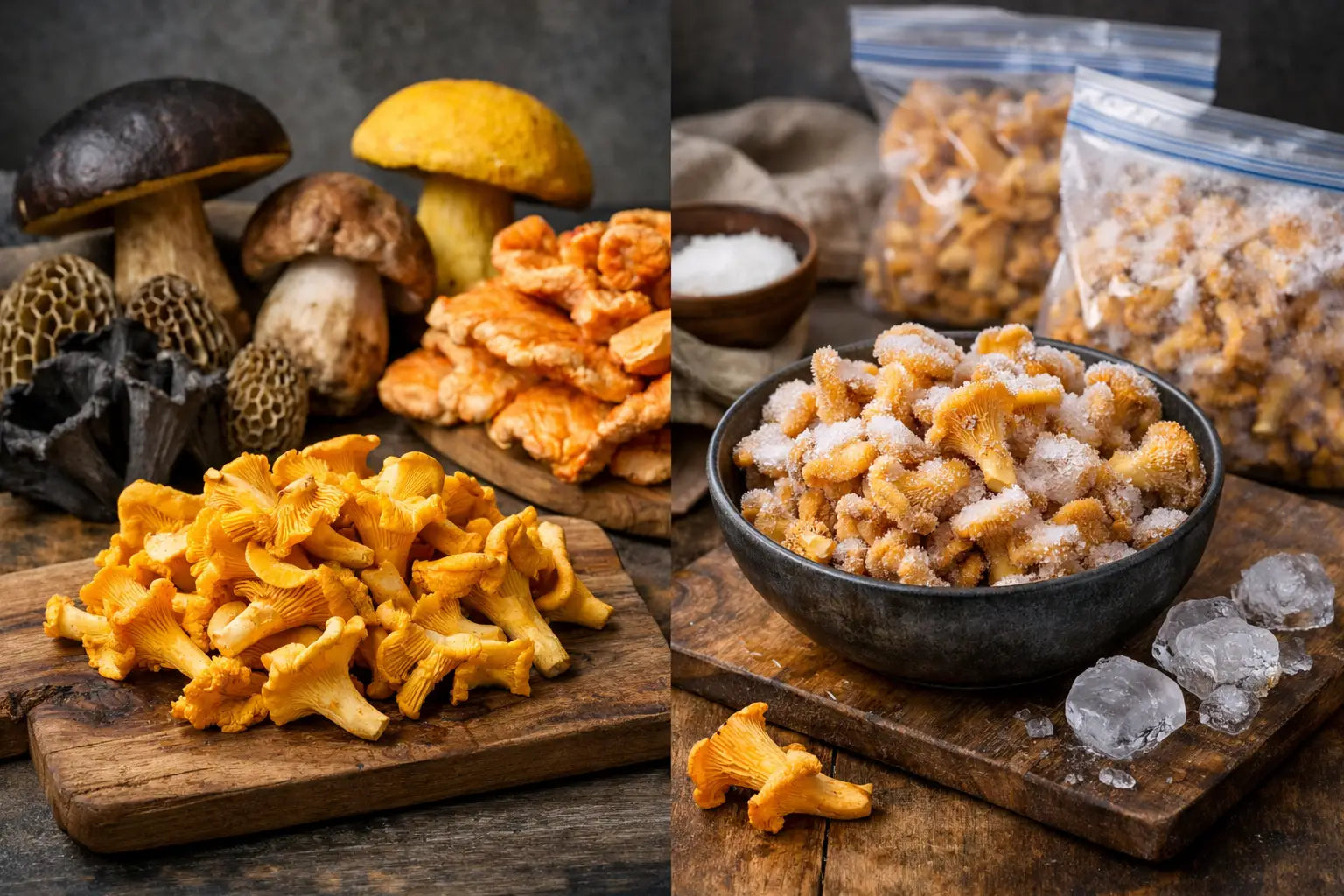
A chanterelle dinner usually starts with a small decision that has a big effect on the plate: fresh vs frozen chanterelles. At Crown Fungi, seasonality and careful preservation make both formats worth cooking, but they are not interchangeable. Fresh chanterelles shine when their delicate shape and lively texture are central to the dish. Frozen chanterelles bring dependable wild-mushroom flavor when you want to cook them without waiting for a brief harvest window.
The right choice comes down to how you plan to use them. If you are building a simple sauté where every golden, trumpet-shaped mushroom is visible, choose fresh. If you are making a sauce, risotto, pasta, soup, or stuffing, frozen can be the smarter, more practical choice. Neither is a lesser version of the other. Each has a place in a thoughtful home kitchen.
Fresh vs Frozen Chanterelles: The Real Difference
Fresh chanterelles have a firm yet tender bite, a faintly fruity aroma, and a beautiful golden color that deserves to be seen. When they are in season, their appeal is immediate: a quick sauté in butter or olive oil, a little shallot, thyme, and a final spoonful of cream can turn them into the centerpiece of supper. Their texture remains distinct, especially when cooked in a wide skillet over enough heat to let moisture evaporate rather than pool.
Frozen chanterelles are preserved when their flavor is at its best. Freezing changes their texture somewhat, which is normal. Once thawed, they release more moisture and become softer than fresh mushrooms. That makes them less ideal when you want crisp edges or perfectly intact pieces, but exceptionally useful when their rich, woodsy flavor matters more than a firm bite.
Think of fresh chanterelles as the choice for presence and texture. Think of frozen chanterelles as the choice for depth, convenience, and cooking flexibility. A frozen chanterelle folded into a velvety sauce can taste every bit as compelling as a fresh one, because the sauce welcomes the mushroom juices that would be a drawback in a dry sauté.
When Fresh Chanterelles Are Worth Choosing
Fresh chanterelles are the best fit for simple preparations with little competition on the plate. They excel on toast with soft eggs, alongside roast chicken, spooned over creamy polenta, or tucked into an omelet. In these dishes, their shape, color, and gentle chew contribute as much as their flavor.
To cook them well, avoid crowding the pan. Use a wide skillet and cook in batches if needed. Start with a lightly oiled pan, then add butter once the mushrooms have begun to release their moisture. Salt near the end. This approach helps the chanterelles brown instead of steam, preserving their character.
Fresh mushrooms also make sense for a special meal when you want the ingredient itself to do the talking. Serve them with a few supporting flavors rather than a long ingredient list. Garlic can work, but use it sparingly. Heavy spices, strong smoke, or too much acid can easily cover the subtle apricot-like notes that make chanterelles distinctive.
Fresh chanterelles do ask for timely cooking. Store them cold in a breathable container rather than sealed tightly in plastic, and plan to use them soon after they arrive. They are a seasonal pleasure, meant for the nights when cooking feels like an occasion.
When Frozen Chanterelles Are the Better Buy
Frozen chanterelles earn their place when a recipe has liquid, cream, stock, eggs, or a starchy base to absorb their juices. They are especially good in risotto, mushroom pasta sauces, savory bread pudding, potato gratin, and creamy soups. They also bring an easy wild-mushroom note to a weeknight pan sauce.
The key is to manage moisture. Do not treat frozen chanterelles as though they were fresh from the basket. For many recipes, cook them directly from frozen in a hot, wide skillet. Let the ice melt and the liquid cook away before adding butter, aromatics, or wine. This concentrates their flavor and prevents a watery final dish.
If you need to thaw them first, do it in the refrigerator and drain any excess liquid. Patting them dry can help, but do not press aggressively. Those mushroom juices carry flavor, and they can be added to a soup, sauce, or risotto instead of discarded.
Frozen chanterelles are also the calmer choice for meal planning. You can keep them on hand for the evening when a plain pasta needs more than Parmesan, or when a simple chicken dinner deserves a more memorable sauce. The convenience is not about cutting corners. It is about having a rare wild ingredient ready when inspiration strikes.
> Product Callout: Chanterelles for Home Cooking
> Choose fresh chanterelles for seasonal, texture-forward dishes, or frozen chanterelles for sauces, grains, and comforting meals. Check the current Crown Fungi selection for available chanterelle options and pricing.
How Flavor Changes in the Pan
Both formats deliver the recognizable chanterelle profile: buttery, earthy, gently peppery, and often reminiscent of stone fruit. The difference is where that flavor lands. Fresh chanterelles offer aroma and texture in separate bites. Frozen chanterelles tend to give up more of their flavor to the surrounding dish.
That distinction can help you build a recipe. With fresh chanterelles, use a restrained sauce or no sauce at all. A splash of white wine, a little cream, and herbs are often enough. With frozen chanterelles, lean into dishes that benefit from a concentrated mushroom base. Their cooking liquid can deepen a risotto or turn a modest amount of stock into something more luxurious.
This is also why frozen chanterelles can be excellent in compound butter. Cook them down until concentrated, cool them, then fold them into softened butter with salt and chopped parsley. A slice melting over steak, roasted potatoes, or grilled bread brings a powerful chanterelle finish without requiring a complicated recipe.
Best Recipes for Each Format
Fresh chanterelles are at their best in dishes where the mushroom is visible and lightly cooked. Try them on ricotta toast, in a soft scramble, with seared scallops, or over a bowl of buttered noodles. They are also exceptional simply sautéed and served beside roast meat or spooned onto warm polenta.
Frozen chanterelles belong in recipes that reward their softness and concentrated flavor. Stir them into risotto after the rice has begun to cook, add them to a cream sauce for tagliatelle, or simmer them briefly in stock before blending part of the mixture into soup. They work beautifully in a savory tart as well, provided you cook off their moisture first.
For a reliable dinner that suits either format, make chanterelle cream pasta. Sauté the mushrooms according to their format, add shallot and a small splash of wine, then stir in cream and grated Parmesan. Toss with pasta and finish with black pepper and parsley. Fresh mushrooms will give the dish more defined pieces; frozen mushrooms will create a deeper, more integrated sauce.
The Choice Is About the Dish, Not a Ranking
Fresh chanterelles are not automatically better because they are fresh, and frozen chanterelles are not merely a backup. The best option is the one that matches the texture, timing, and style of the meal you want to make.
Choose fresh when the golden shape, delicate aroma, and satisfying bite deserve center stage. Choose frozen when you want the confidence of chanterelle flavor ready for a sauce, a comforting grain dish, or an impromptu dinner worth lingering over. Keeping both in mind makes it easier to cook with the season and still enjoy wild mushrooms beyond it.
Shop This Mushroom
Explore the current selection of fresh and frozen chanterelles from Crown Fungi, and choose the format that fits the meal you are planning.