Cart
0
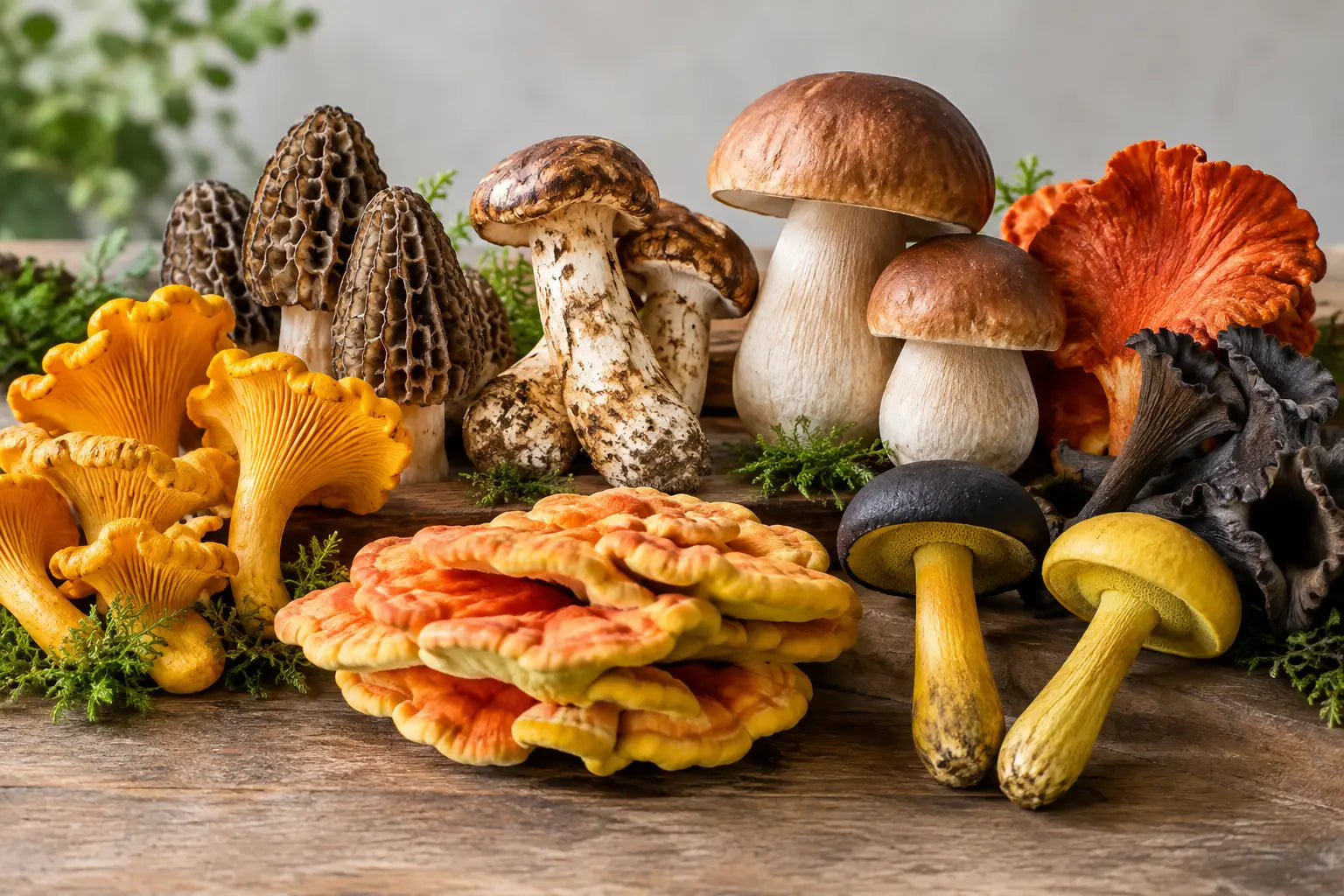
A case of wild mushrooms can lose value fast if it is handled like standard produce. Excess moisture, sealed plastic, warm prep areas, and delayed processing all shorten shelf life and flatten aroma. If you want to know how to store wild mushrooms correctly, the first rule is simple: match the storage method to the format you have, and protect texture as carefully as flavor.
How to store wild mushrooms by format
Wild mushrooms do not behave the same across fresh, frozen, and dried formats. Serious kitchens get better results when they stop looking for one universal rule and start storing each format for its intended use.
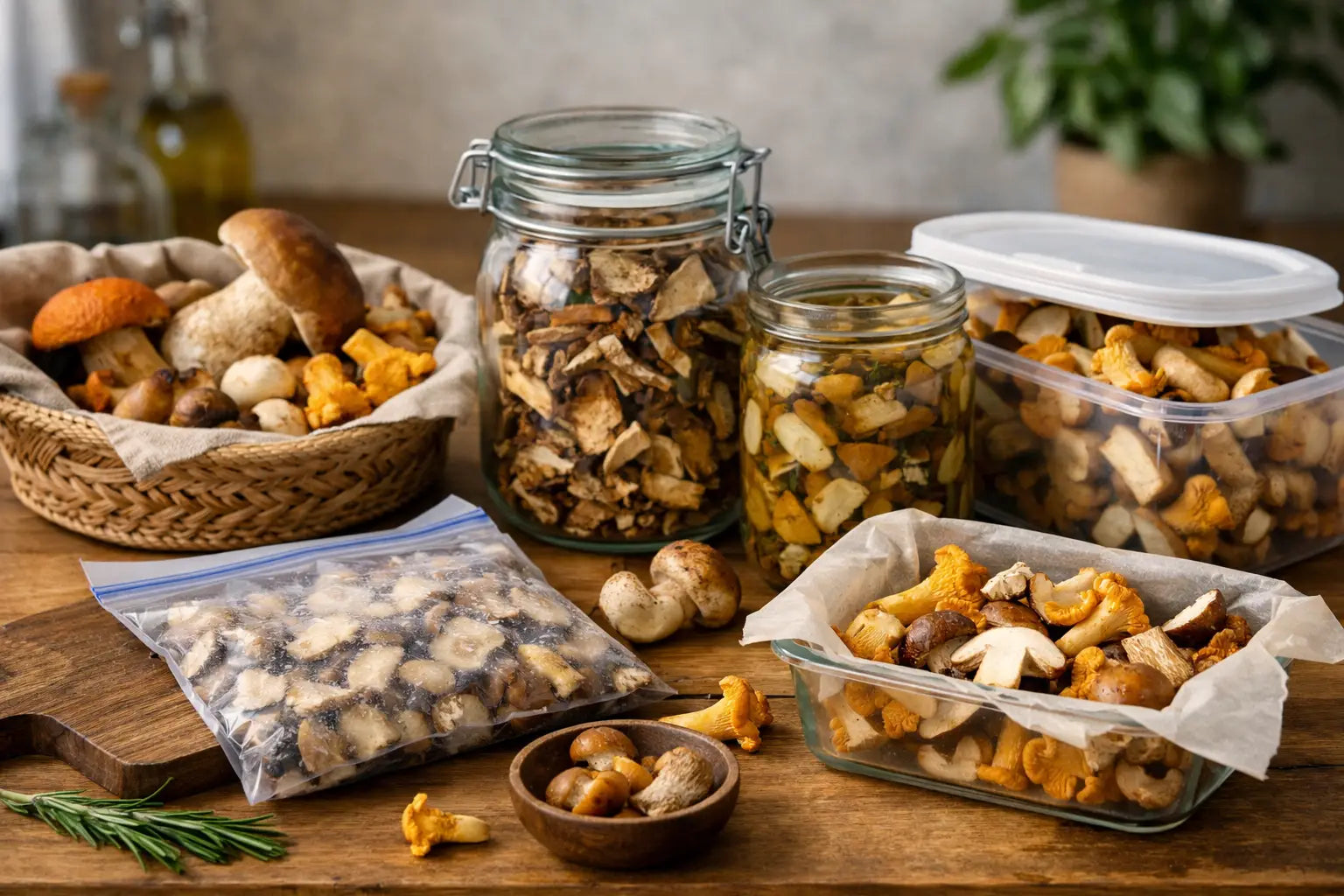
Fresh wild mushrooms need airflow, cold temperatures, and minimal moisture. Frozen wild mushrooms need a stable freezer environment and disciplined thawing. Dried wild mushrooms need dryness above all else, with protection from humidity, light, and strong ambient odors. The product itself determines the protocol.
That matters because wild mushrooms are highly variable. A delicate, moisture-sensitive mushroom will break down faster than a denser one. A professionally frozen mushroom may outperform mediocre fresh inventory in both consistency and yield. Dried product offers the longest holding window, but only if it stays fully dry from receiving through service.
Fresh storage: cold, dry, and breathable
For fresh wild mushrooms, the target is controlled refrigeration with airflow. Store them in the coldest practical part of the refrigerator that does not freeze, ideally in breathable packaging such as paper or a vented container lined with absorbent material. The goal is to let excess moisture escape rather than condense around the product.
Sealed plastic is the most common mistake. It traps humidity, encourages slime, and accelerates spoilage. Even excellent mushrooms will deteriorate quickly if condensation builds in the package. If product arrives with any surface moisture, transfer it promptly to a dry paper-lined container and hold it uncovered or loosely covered until the surface stabilizes.
Do not wash fresh wild mushrooms before storage. Clean only what you need, close to service or prep. Water shortens shelf life, and many varieties absorb moisture readily. If there is field debris, brush it off gently or trim the stem ends as needed, but keep handling restrained.
Short holding times are part of the equation. Fresh wild mushrooms are a high-performance ingredient, not a pantry item. Use them with a first-in, first-out system, check them daily, and move the most delicate lots first. If a shipment will not be used within its best fresh window, freezing or drying may preserve more value than waiting for quality to decline.
What good fresh storage looks like
Properly stored fresh mushrooms should feel dry to the touch, smell clean and woodsy, and retain structure. They should not feel tacky, soft, or compressed from stacking. If towels or liners become damp, replace them. That small step often extends usable life more than adjusting temperature by a degree or two.
Capacity matters too. Overpacking a walk-in or cramming mushrooms into deep containers reduces airflow and creates pressure damage. In a professional kitchen, shallow storage and quick rotation usually outperform dense packing, even when space is tight.
How to store wild mushrooms in the freezer
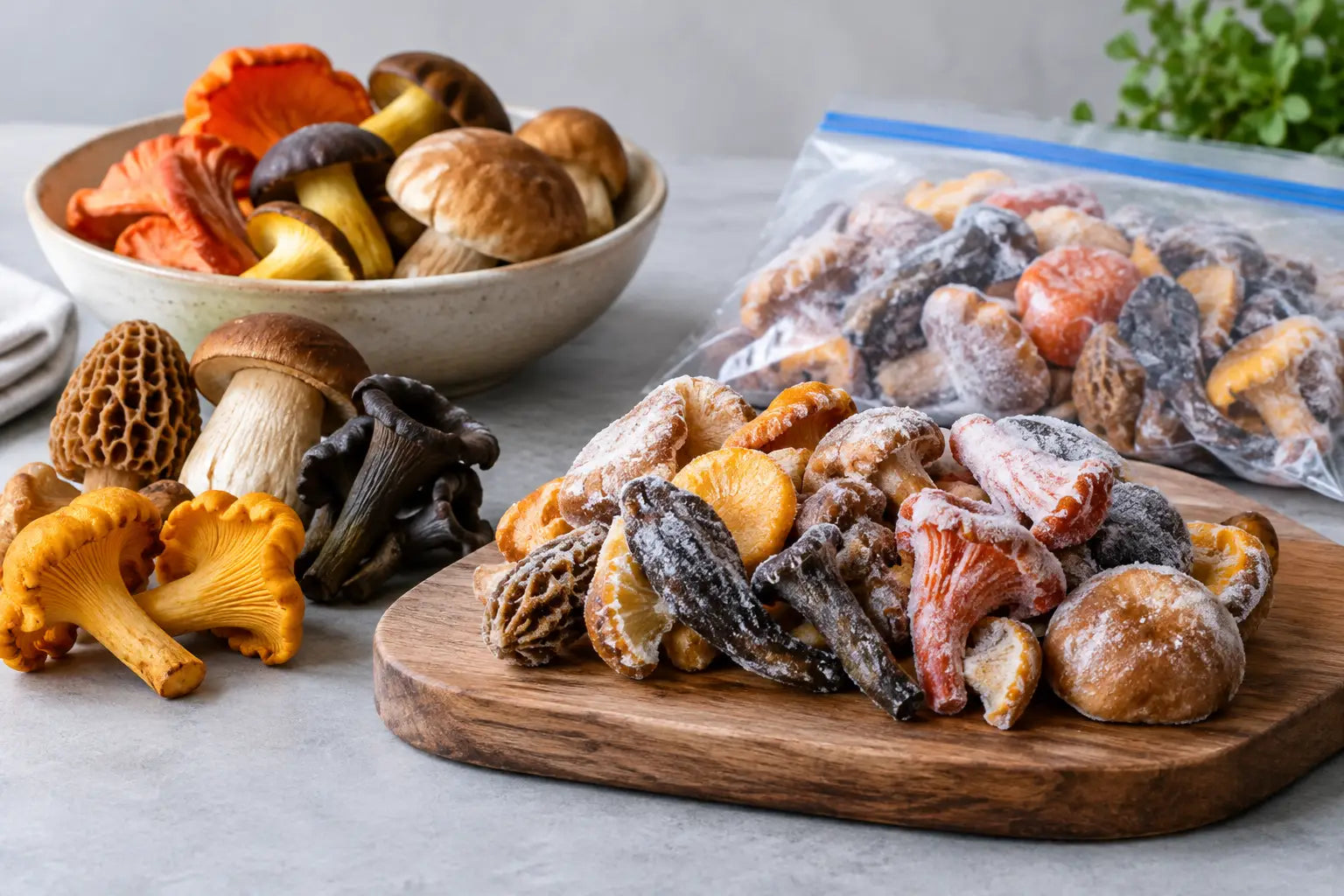
Frozen wild mushrooms are often the most practical answer when consistency matters more than the romance of fresh seasonality. When product has been preserved at peak quality, freezing gives kitchens a longer planning horizon without forcing compromise on menu execution.
Store frozen mushrooms at a steady freezer temperature and keep them sealed against dehydration. Temperature fluctuation is the real enemy. Product that partially thaws and refreezes loses texture, sheds moisture unevenly in the pan, and develops freezer burn along exposed surfaces.
Once a bag is opened, re-close it tightly or transfer the contents to an airtight freezer-safe container. Portioning helps. Instead of opening a master bag repeatedly during service, break product into usable quantities for the station or recipe. That reduces exposure to warm air and limits ice crystal buildup over time.
Thawing depends on the mushroom and the application. Some frozen wild mushrooms can go directly into a hot pan or sauce base with excellent results, especially when you want to preserve structure and avoid excess standing water. Others benefit from a controlled thaw under refrigeration. What matters is avoiding countertop thawing and avoiding long holds in liquid runoff.
When frozen can outperform fresh
This is one of the more useful trade-offs for buyers to recognize. Fresh product offers immediacy, but it also carries tighter timing, variable field conditions, and higher handling risk. Professionally frozen mushrooms provide steadier inventory, lower waste, and more predictable prep scheduling. For many kitchens, especially those building menus around reliable execution, frozen is not a fallback format. It is the operationally stronger one.
Dried storage: stable, dry, and protected
Dried wild mushrooms are straightforward to store, but only if you respect humidity. Keep them in a tightly sealed container in a cool, dark, dry area away from steam, line heat, dish stations, and any source of ambient moisture. A dry pantry is appropriate. The top shelf above a hot prep line is not.
The product should remain crisp or leathery according to the variety, never soft from humidity pickup. If dried mushrooms start feeling pliable in a way they did not before, they are absorbing moisture from the environment. That does not always mean immediate spoilage, but it does mean quality is moving in the wrong direction.
Odor control matters here as well. Dried mushrooms can absorb surrounding aromas over time, particularly if stored near spices, coffee, cleaning chemicals, or alliums. Use dedicated containers and keep lids tight.
Once rehydrated, dried mushrooms should be treated like a fresh prepared ingredient and refrigerated promptly. Do not rehydrate more than service requires unless you have a clear production plan. Extended holding after rehydration erases much of the advantage of the dry format.
Receiving and day-one handling matter more than most people think
A lot of storage problems begin before product ever reaches long-term holding. On receipt, inspect immediately. Fresh mushrooms should be cool, dry, and intact. Frozen product should arrive fully frozen with no signs of thaw and refreeze. Dried mushrooms should be dry, aromatic, and securely packed.
Then make a decision fast. Fresh product should be transferred into its proper refrigerated setup without sitting in a warm receiving zone. Frozen product should go straight to freezer storage. Dried product should be moved out of humid prep areas and into sealed pantry containers if the original pack is not ideal for repeated use.
This is where disciplined suppliers make a difference. Product that has been graded carefully and handled through a reliable cold chain gives kitchens a much better starting point. Crown Fungi builds around that principle because storage success is never only about what happens in your refrigerator or freezer. It starts with how the mushrooms were preserved and moved in the first place.
Common storage mistakes that reduce quality
Most loss comes from a short list of preventable errors. Washing fresh mushrooms before storing them is one. Holding them in sealed plastic is another. So is leaving frozen product in a high-traffic freezer where the door opens constantly and temperatures swing all day.
With dried mushrooms, the typical issue is casual storage in a partially open bag near heat or steam. With fresh inventory, another frequent problem is overbuying without a format strategy. If your usage rate does not support fresh turnover, frozen or dried may be the smarter buy from the start.
That is the larger point. Good storage is not only about extending shelf life. It is about buying the right format for the way your kitchen actually works.
A practical standard for serious kitchens
If you need the shortest version of how to store wild mushrooms, it is this: keep fresh mushrooms cold, dry, and breathable; keep frozen mushrooms consistently frozen and tightly sealed; keep dried mushrooms dry and protected from humidity. Then build your prep schedule around the format, not around wishful thinking.
Wild mushrooms reward precision. A small handling adjustment can preserve aroma, improve yield, and reduce waste across the board. Treat them like the premium ingredient they are, and they will perform that way on the plate.