Cart
0
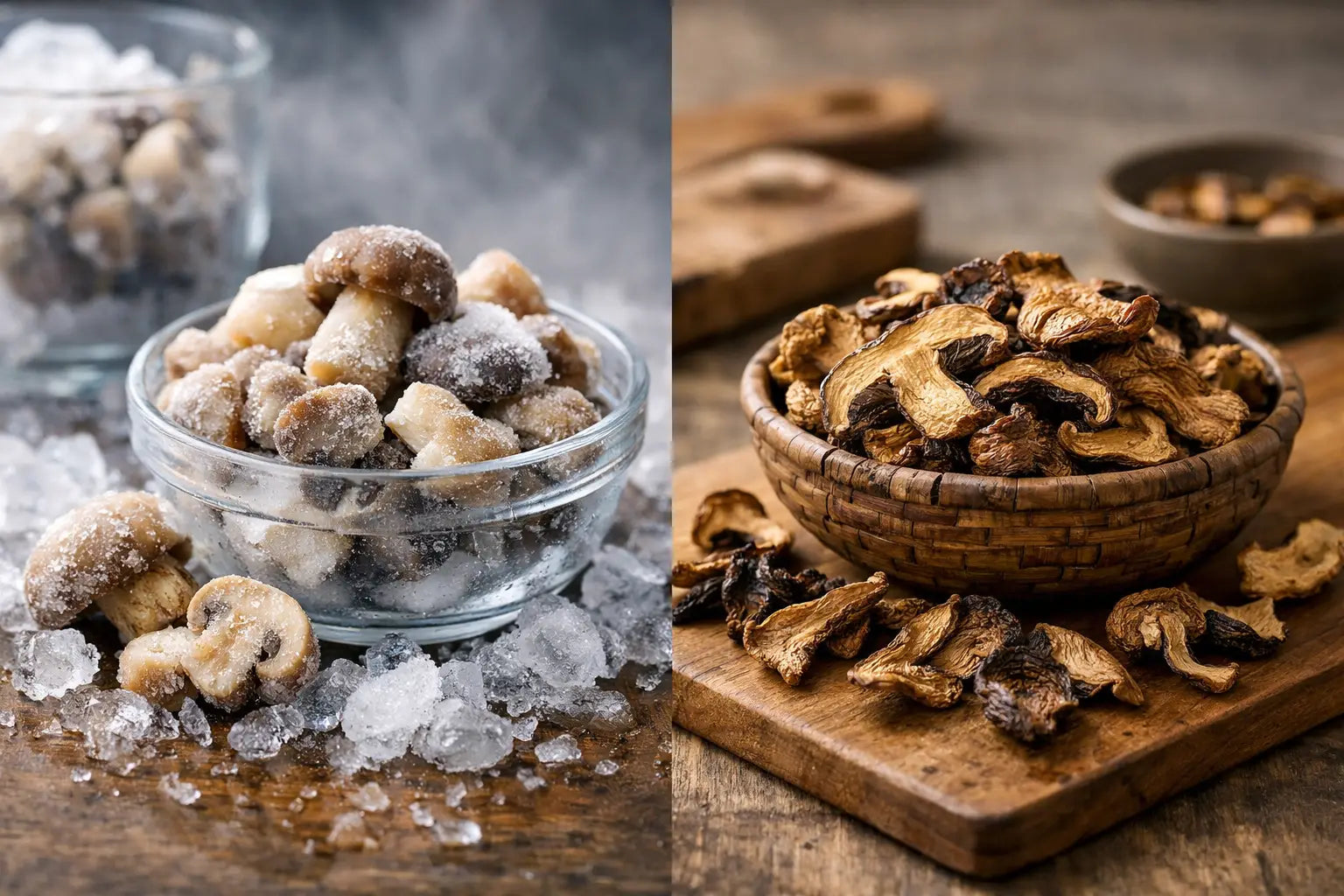
Choose frozen mushrooms when a recipe benefits from ready-to-cook mushroom pieces and you have freezer space. Choose dried mushrooms when concentrated flavor and compact pantry storage matter more. Neither format replaces fresh mushrooms in every recipe, and neither is universally better.
Compare Crown Fungi's frozen mushroom collection and dried mushroom selection. Each product page identifies the variety, cut, pack size, current price, and availability.
Frozen Versus Dried: The Practical Difference
Frozen mushrooms remain a cold-chain product and require freezer storage. Dried mushrooms have had moisture removed and need protection from humidity. Those differences affect preparation, shipping, storage space, and how the mushrooms behave in a finished dish.
Both formats can support cooking beyond a fresh harvest season, but you should expect differences in texture. Freezing can soften a mushroom and increase the liquid it releases during cooking. Drying changes texture and concentrates flavor; rehydration does not restore every quality of a fresh mushroom.
When to Choose Frozen Mushrooms
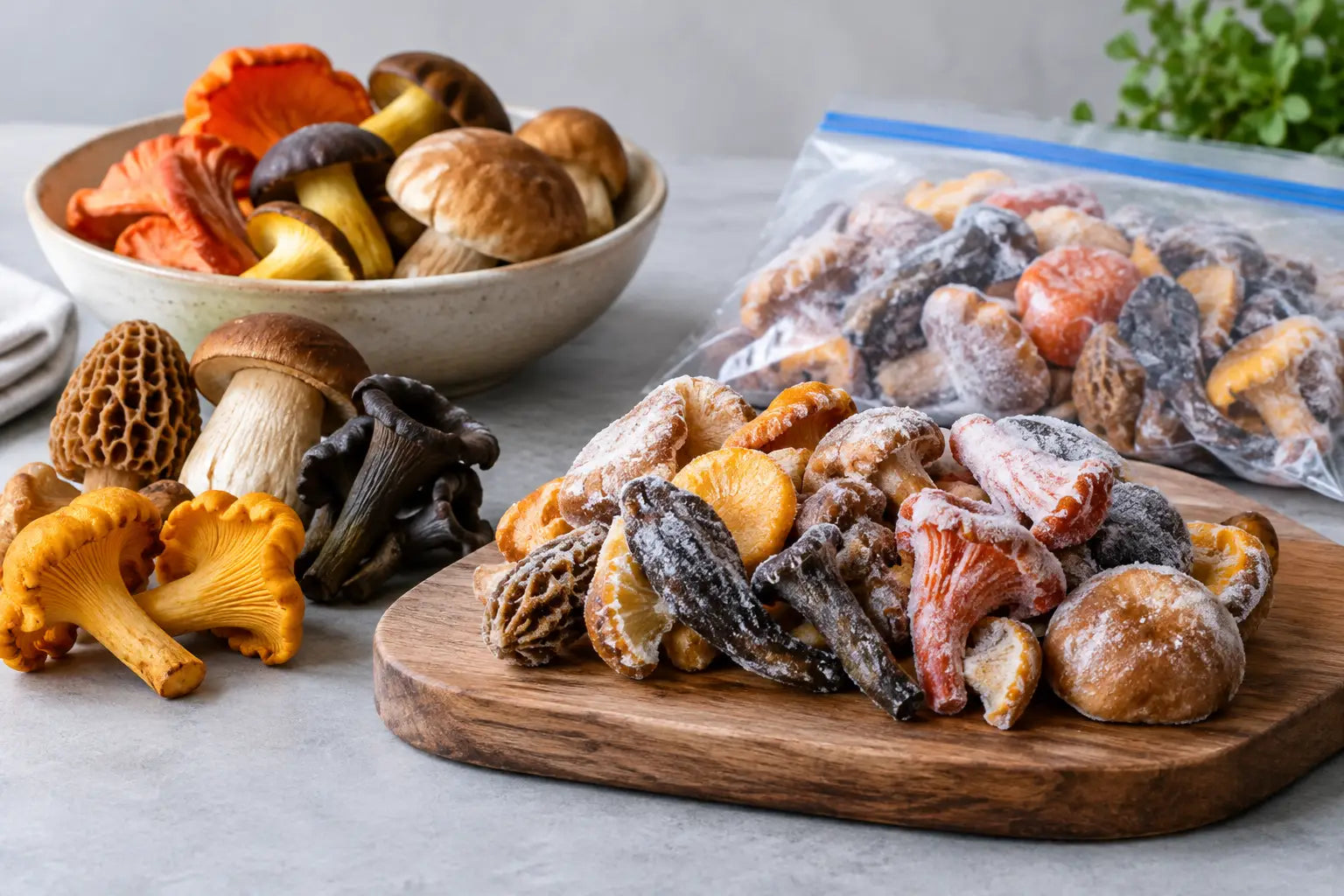
Frozen mushrooms are useful when you want recognizable pieces for pasta, rice dishes, soups, sauces, braises, or a cooked mushroom side. They avoid a dried-mushroom rehydration step, although some products or recipes call for refrigerator thawing before preparation.
Frozen porcini cubes are convenient for risotto and sauces. Frozen chanterelles bring a fruity character to cream-based dishes. Frozen lobster mushrooms suit chowders and savory fillings, while frozen morels offer a nutty character for thoroughly cooked sauces and mushroom dishes.
Manage Moisture, Not Just Heat
Give frozen mushrooms enough pan space for released moisture to evaporate. An overcrowded pan steams instead of browning. Work in batches when needed and follow the individual product's preparation instructions rather than applying one method to every mushroom.
Frozen mushrooms are not a pantry product. You need freezer capacity and a plan to receive the delivery promptly. Read our frozen mushroom handling overview and the shipping policy before ordering.
When to Choose Dried Mushrooms
Dried mushrooms are useful for building a flavorful stock, cream sauce, gravy, filling, braise, or seasoning for a cooked dish. They take up less storage space than the equivalent fresh ingredient, but the appropriate quantity depends on the mushroom and recipe.
Dried porcini slices are a practical starting point for rich sauces. Choose whole dried morels when appearance matters or sliced dried morels when pieces need to be distributed throughout a dish.
Allow for Rehydration and Inspection
Follow the package instructions, allow the mushrooms to soften as needed, and inspect them before cooking. Strain retained soaking liquid carefully to remove sediment and use it in a cooked preparation. Morels must be cooked thoroughly after rehydration; soaking alone is not cooking.
Not every product in a dried mushroom collection is used the same way. Woody ingredients such as turkey tail and antler reishi are prepared as strained infusions rather than eaten as solid mushroom pieces. Always read the instructions for the specific variety.
Match the Format to the Recipe
For visible mushroom pieces, compare the cut and texture of the actual products available rather than assuming all frozen mushrooms are firm or all dried mushrooms are soft. For background depth in a stock, sauce, or filling, dried mushrooms can be particularly useful.
Many kitchens use both: one format supplies mushroom pieces, while another deepens the sauce or stock. The goal is to make the dish work, not to choose one format for every application.
Compare Costs Fairly
A 1 lb pack of dried mushrooms is not interchangeable with a 1 lb pack of frozen mushrooms. Evaluate the amount needed per recipe, expected preparation work, storage requirements, and delivery charges. Use current product pages for prices rather than old articles or search snippets.
Restaurants should also consider how quickly an opened pack will be used. Buying for a realistic service window can be more useful than simply choosing the largest quantity.
Storage and Preparation
Keep frozen mushrooms frozen at 0°F (-18°C) or below and follow package instructions. Thaw in the refrigerator when thawing is required, not on the counter. Store dried mushrooms sealed in a cool, dry place away from heat and sunlight. Protect both formats from moisture exposure and rotate purchases.
Cook culinary mushrooms thoroughly before serving. Preservation is not a substitute for cooking.
Find the Right Format
Browse frozen mushrooms, dried mushrooms, and seasonal fresh mushrooms. For professional kitchen quantities or product specifications, contact Crown Fungi about wholesale supply.