Cart
0
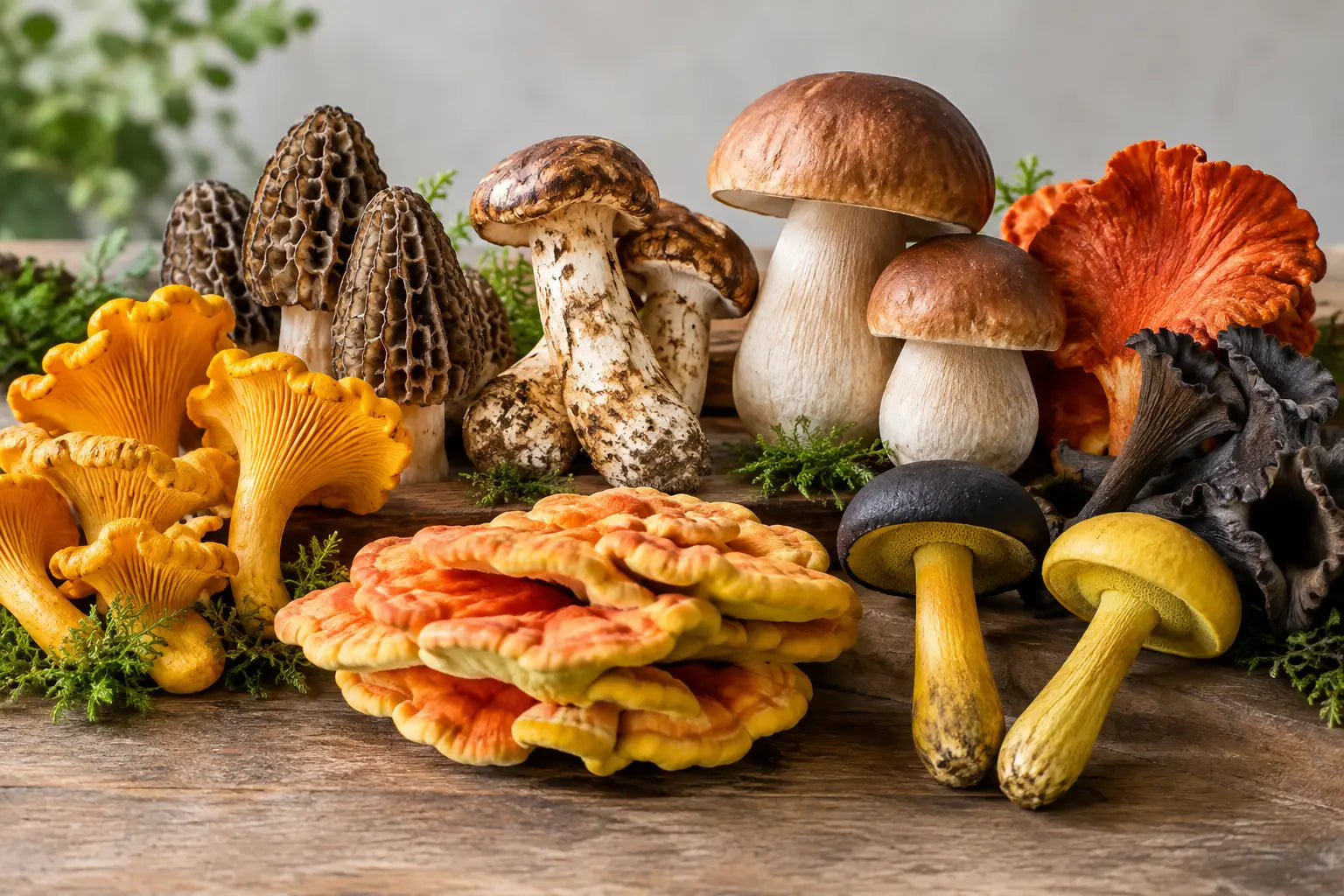
A wild mushroom is only as valuable as its condition when it reaches the kitchen. That is why wild mushroom sourcing trends now center on more than access to rare species. For Crown Fungi and the serious kitchens it serves, the work is sourcing with discipline: evaluating quality at origin, protecting flavor through handling, and giving buyers usable options when fresh harvests are naturally limited.
The market is moving away from opportunistic purchasing toward planned supply strategies. Chefs still want the singular perfume of fresh chanterelles, the deep savory character of porcini, and the visual impact of morels. But they also need formats that hold their standard through changing weather, uneven harvest windows, and menu cycles that do not pause when a season ends.
Wild Mushroom Sourcing Trends Are Becoming More Operational
Wild mushrooms remain a seasonal ingredient by nature. Rainfall, temperature, regional conditions, and harvest timing all affect what enters the supply chain and when. The trend is not to force wild ingredients into a commodity model. It is to manage that variability with better grading, preservation, inventory planning, and communication.
For restaurant buyers, this changes the sourcing conversation. Availability is still important, but it is no longer the only question. A more useful set of questions is: What is the product's grade? How was it cleaned? How quickly was it cooled? What format best supports the dish? And can the supplier maintain a reliable standard as orders scale?
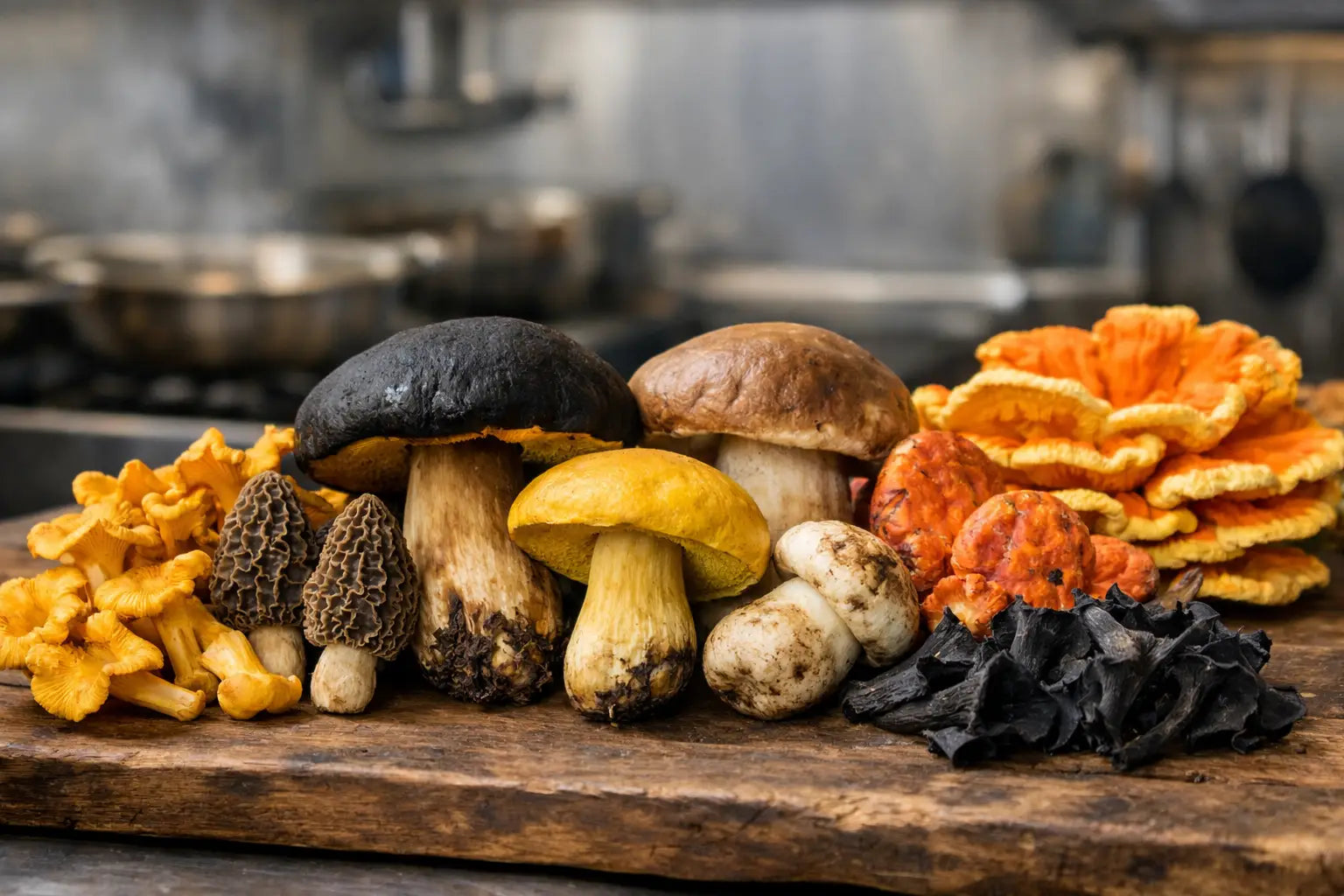
That operational focus separates chef-grade wild mushrooms from loosely handled product moving through generic produce channels. A case may contain the same named species, yet perform very differently on the station. Moisture, breakage, debris, maturity, aroma, and consistency of sizing all influence labor, yield, and final plate quality.
Fresh Is Still the Signal of Season
Fresh wild mushrooms remain the most direct expression of a harvest. Their appeal is immediate: chanterelles with their firm, apricot-like aroma; black trumpet mushrooms with a delicate, smoky depth; chicken of the woods with a substantial texture that holds up in composed dishes. For short seasonal menus, fresh product gives chefs a reason to write a special, refine a garnish, or build a limited run around an ingredient at its peak.
The sourcing trend is toward tighter fresh handling rather than broader, less controlled distribution. Fresh mushrooms are highly perishable, and their quality can decline quickly when they are packed too warm, held too long, or exposed to excess moisture. Cold-chain discipline and careful packing are not secondary logistics details. They preserve the usable life of the product and protect the performance a chef expected when placing the order.
Fresh buying works best when a kitchen can adapt its menu to the harvest and use the product promptly. A tasting-menu restaurant, hotel kitchen, or specialty retailer may be positioned to take advantage of short supply windows. A high-volume operation with fixed menus may need a different approach. Neither model is better in isolation. The right choice depends on whether the kitchen needs immediacy, consistency, or both.
Grading Has Become a Kitchen Standard
Professional buyers increasingly expect mushrooms to arrive graded for culinary use, not simply gathered and shipped. A clean, well-selected lot reduces prep time and gives cooks more predictable portions. That matters especially with premium species, where unnecessary trim or inconsistent sizing can erase margin quickly.
Foraging expertise remains essential, but the supply chain does not end with the harvest. Receiving standards, sorting, cleaning, temperature management, and fulfillment determine whether a rare mushroom becomes a reliable ingredient or a costly uncertainty.
Frozen-at-Peak Supply Is Moving Into Menu Planning
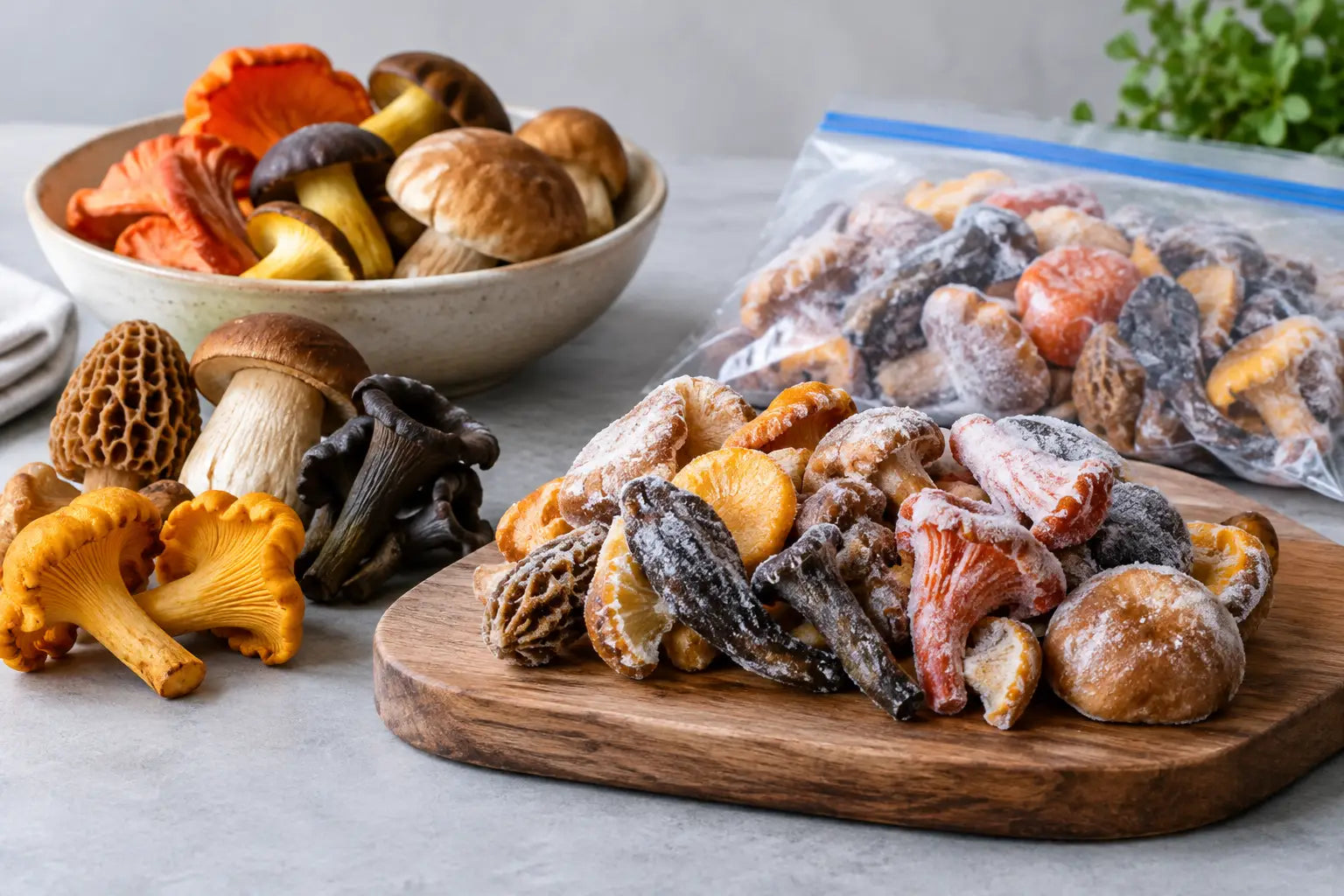
One of the most practical wild mushroom sourcing trends is the broader use of frozen product as a planned inventory tool. When handled correctly, freezing at peak quality gives kitchens access to the character of seasonal mushrooms beyond the narrow period when they are available fresh.
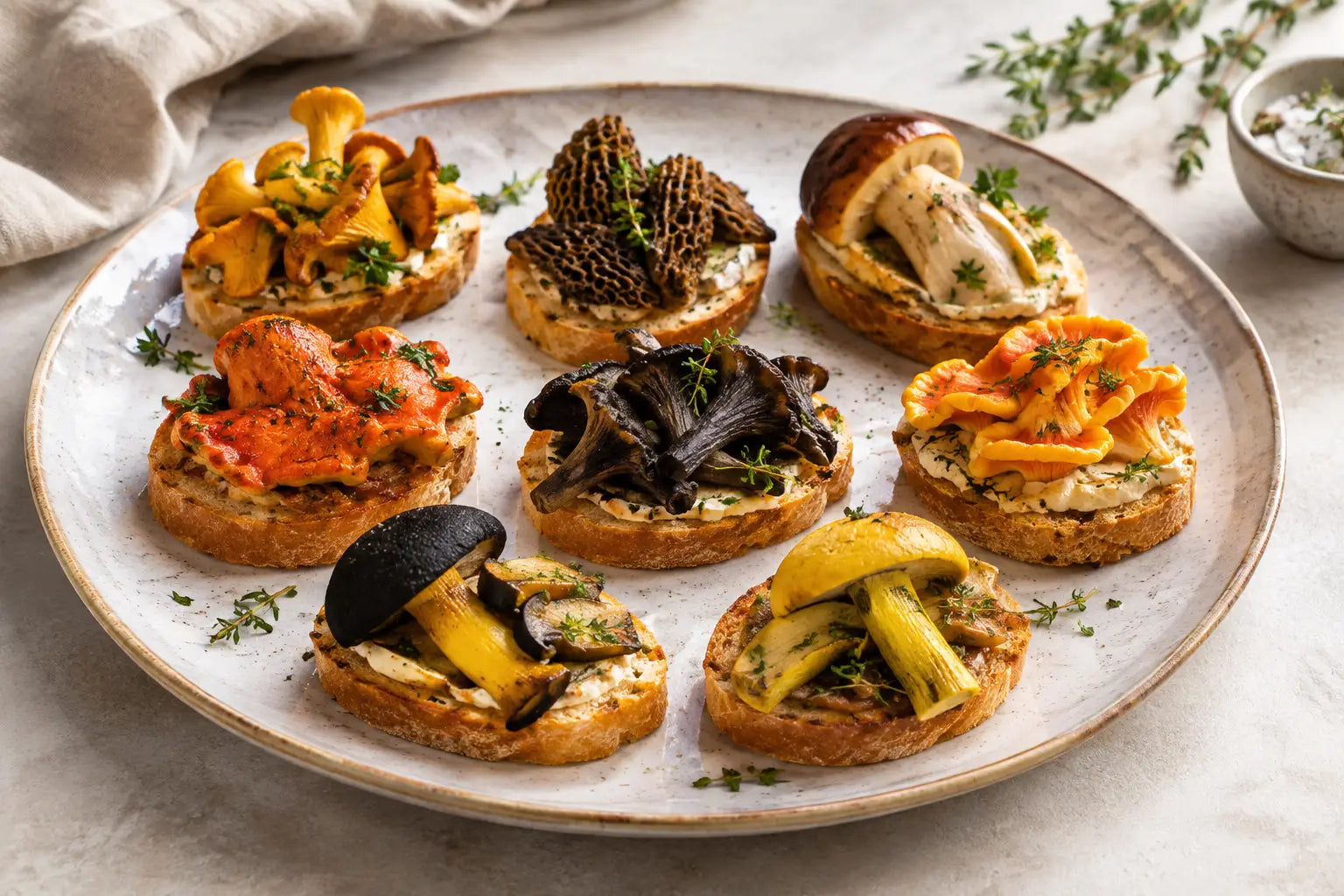
This is particularly relevant for chefs who want to preserve a menu component through multiple services, locations, or months. Frozen wild mushrooms can bring dependable flavor and texture to sauces, fillings, risottos, pasta preparations, braises, soups, and mushroom-forward stocks. They also allow a kitchen to write dishes around a known inventory position rather than chase a fresh market that may change week to week.
Frozen formats are not a replacement for fresh in every application. A dish built around the crisp edge and intact presentation of a sautéed fresh mushroom may call for fresh product. But when the mushroom is folded into a preparation or used for its depth, frozen inventory can be the more operationally sound choice. The key is matching the format to the technique rather than treating preservation as a compromise.
For multi-unit culinary teams, frozen supply can also simplify specification. A standardized mushroom component supports more consistent execution across locations while keeping a wild ingredient's distinctive flavor in the menu.
Dried Mushrooms Are Being Used With More Precision
Dried mushrooms have long been a pantry staple, but serious kitchens are using them more deliberately. The value is not just shelf life. Drying concentrates aroma and makes it possible to build intensity with measured portions, even when fresh supply is unavailable.
Porcini are a clear example. Their concentrated savory profile can deepen a jus, enrich a cream sauce, or add dimension to grains and pasta dough. Dried morels can bring their distinctive earthy character to sauces and stuffing applications. The soaking liquid, when properly strained, can become a useful flavor component rather than a byproduct.
The trade-off is application. Dried mushrooms require rehydration and perform differently from fresh mushrooms in appearance and bite. For a dish where the mushroom is a centerpiece, fresh or frozen may be the better fit. For foundational flavor, dried product offers control, consistency, and low waste.
Buyers Are Prioritizing Species-Specific Planning
“Wild mushrooms” is no longer a useful enough purchasing category for a serious kitchen. Each species behaves differently and deserves its own plan. Matsutake are prized for an assertive, spicy aroma that can dominate a delicate preparation if used without restraint. Lobster mushrooms bring dense texture and vivid color. Black trumpets excel when their fragrance can carry through a sauce or stuffing. Morels command attention as a focal ingredient and demand careful portioning.
This species-specific approach affects format selection, menu language, labor planning, and food cost. It also helps chefs avoid buying a rare mushroom simply because it is available. The better question is whether its flavor, texture, and visual identity have a defined role on the menu.
For specialty grocers and wholesalers, clear species-level sourcing also improves merchandising. Customers who understand the difference between chanterelles and porcini are looking for a product with a distinct culinary use, not a generic assortment.
Traceable Handling Builds Buyer Confidence
As demand for premium wild ingredients grows, buyers are placing more value on accountability throughout the chain. They want confidence that product has been sourced by experienced partners, evaluated for quality, and handled with a clear standard from receiving through shipment.
Traceability does not eliminate seasonal uncertainty. Wild harvests will always vary. It does create a more dependable buying relationship because the supplier can communicate honestly about format, condition, and timing. That transparency helps chefs make better decisions before a product arrives at the back door.
The strongest supplier relationships are built around realistic expectations. A professional supplier should not present wild mushrooms as infinitely available. It should offer practical options when fresh supply changes, whether that means a frozen-at-peak format, dried inventory, or a different approved wild species that suits the dish.
Build a Sourcing Program, Not a One-Time Purchase
The most effective kitchens treat wild mushrooms as part of an ingredient program. They reserve fresh product for moments when seasonality and presentation matter most, keep frozen inventory for dependable execution, and use dried mushrooms to build concentrated flavor with minimal waste. This layered approach gives chefs more creative freedom because it reduces the pressure to solve every menu need through a single fresh delivery.
It also improves purchasing discipline. Rather than reacting to a short-lived harvest, buyers can define which preparations require fresh mushrooms, which are suited to frozen formats, and where dried product offers the best return. The result is a menu that respects the season without becoming vulnerable to it.
For chef-trusted wild mushrooms handled with precision, explore Crown Fungi's current seasonal offerings and preserved formats built for serious kitchen planning.