Cart
0

A restaurant menu can be built around the fleeting aroma of a wild mushroom, but service cannot be built around uncertain sourcing. At Crown Fungi, that distinction shapes how chef-grade wild mushrooms are handled, preserved, and shipped. So, can restaurants buy mushrooms online? Yes - provided the supplier treats product condition, format, timing, and fulfillment as seriously as the kitchen does.
Buying online is no longer limited to pantry goods or commodity produce. For serious kitchens, it can be a practical route to wild mushrooms that are difficult to source consistently through a local market. The value is not simply access. It is access with enough product information and operational discipline to make a purchasing decision with confidence.
Can Restaurants Buy Mushrooms Online Without Compromising Quality?
They can, but not every online purchase is suited to restaurant use. Wild mushrooms are highly perishable, variable by season, and sensitive to handling. A supplier must know the difference between selling an ingredient and supplying a kitchen.
For a restaurant buyer, the first question is not whether an online catalog has an attractive photograph. It is whether the product arrives in a condition that supports the intended dish. Fresh wild mushrooms should be professionally graded, carefully cleaned, protected from excess moisture, and shipped on a delivery schedule that preserves their texture and aroma. Frozen mushrooms should be processed at peak quality, not treated as a fallback for tired inventory. Dried mushrooms should have a clear culinary purpose, with the aroma and integrity required for stocks, sauces, braises, and reconstitution.
Online purchasing works best when the supplier provides a dependable standard for each format. That gives chefs a basis for menu development rather than forcing them to make last-minute substitutions after a case arrives.
The Real Advantage Is Better Access to Wild Supply
Many restaurants have strong relationships with produce distributors, yet specialty wild mushrooms can remain difficult to secure through conventional channels. Supply moves with weather, harvest windows, regional availability, and the realities of careful foraging. A broadline order may offer convenience, but it may not offer the depth, seasonality knowledge, or product handling required for rare wild ingredients.
An online specialty supplier can close that gap by building its inventory around wild mushrooms and the formats that make them useful in professional kitchens. Instead of relying solely on a short fresh window, a restaurant can evaluate fresh seasonal product alongside frozen-at-peak and dried options. That approach gives culinary teams more control over how they use a particular flavor profile across the year.
This does not mean fresh, frozen, and dried mushrooms are interchangeable. They perform differently, and the right choice depends on the plate. Fresh mushrooms offer immediacy, delicate texture, and visual impact. Frozen product is particularly useful for cooked applications where preserved flavor and dependable inventory matter more than a raw or lightly cooked presentation. Dried mushrooms bring concentration and long holding capability, making them a disciplined choice for bases, fillings, sauces, and finishing powders.
What Restaurant Buyers Should Verify Before Ordering
A restaurant should treat an online mushroom purchase as a sourcing decision, not a retail transaction. The supplier’s product and shipping standards should answer the questions a chef, purchaser, or receiving manager would ask before committing menu space.
Start with the product format and pack size. A kitchen that needs mushrooms for a weekend tasting menu has different requirements from a hotel operation producing banquet sauces or a specialty grocer building a seasonal retail set. Confirm whether the quantity supports projected covers, expected trim, and the role of the mushroom in the dish. Premium wild mushrooms are often used strategically, so an accurate yield expectation matters more than buying the largest available pack.
Next, look for clarity around harvest condition and preservation. Fresh product should be shipped with cold-chain discipline and realistic delivery expectations. Frozen product should be held and shipped in a way that protects it from thawing during transit. Dried product should be packaged to prevent moisture exposure and preserve aroma. These are basic requirements, but they are also where low-cost sourcing often breaks down.
Finally, confirm order timing and receiving procedures. A kitchen should know when an order is expected, who will inspect it, and where it will be stored immediately. There is little value in paying for precision handling if a shipment sits unrefrigerated at a back entrance during prep.
Match the Mushroom Format to the Menu
The strongest purchasing programs do not ask one mushroom format to solve every problem. They use each format where it performs best.
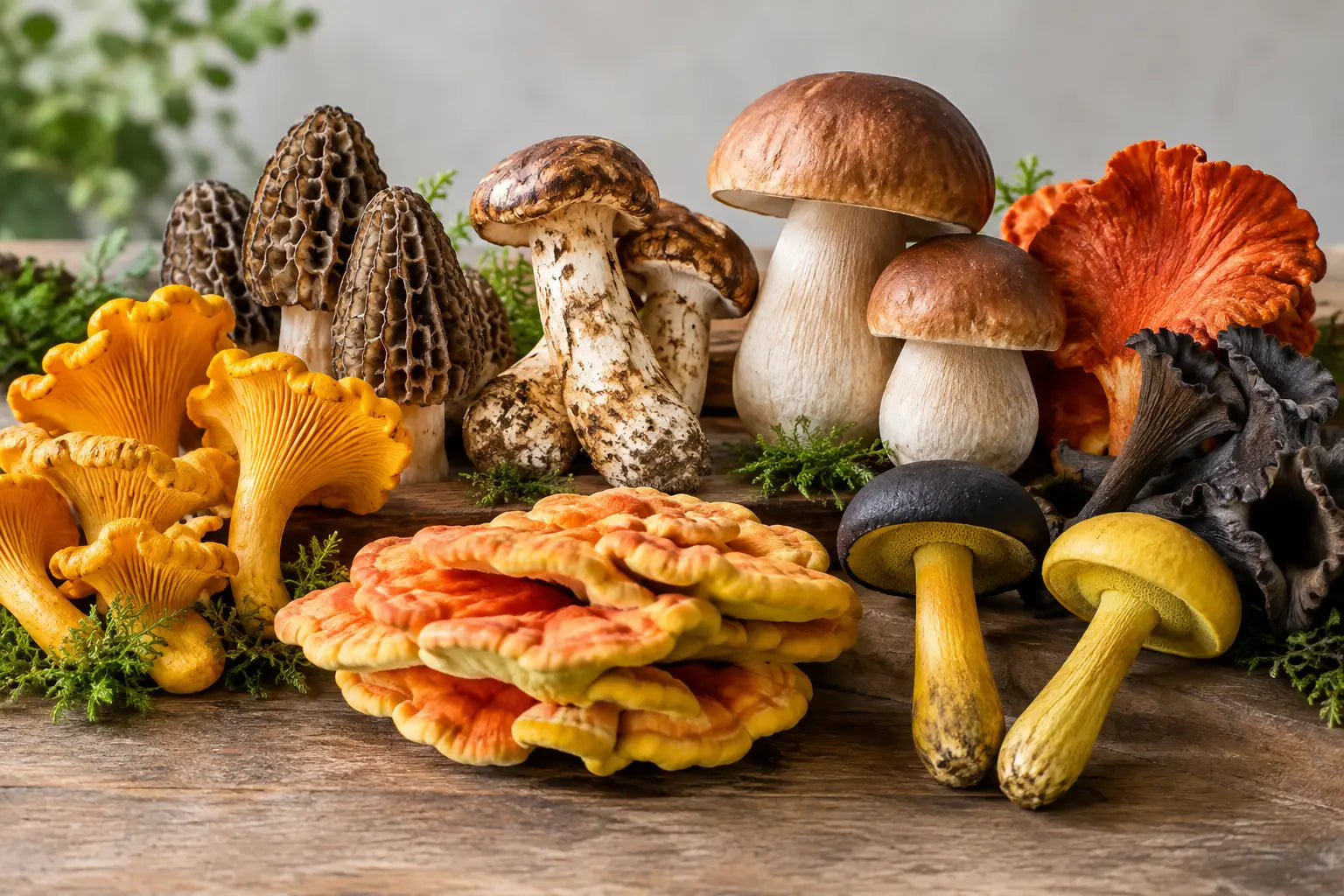
Fresh seasonal wild mushrooms are ideal when their character is meant to be visible on the plate. Think composed entrées, restrained pastas, warm salads, or garnish work where texture and shape are part of the experience. Because fresh supply is seasonal, chefs should view it as an opportunity for focused menu moments rather than an ingredient that must remain available indefinitely.
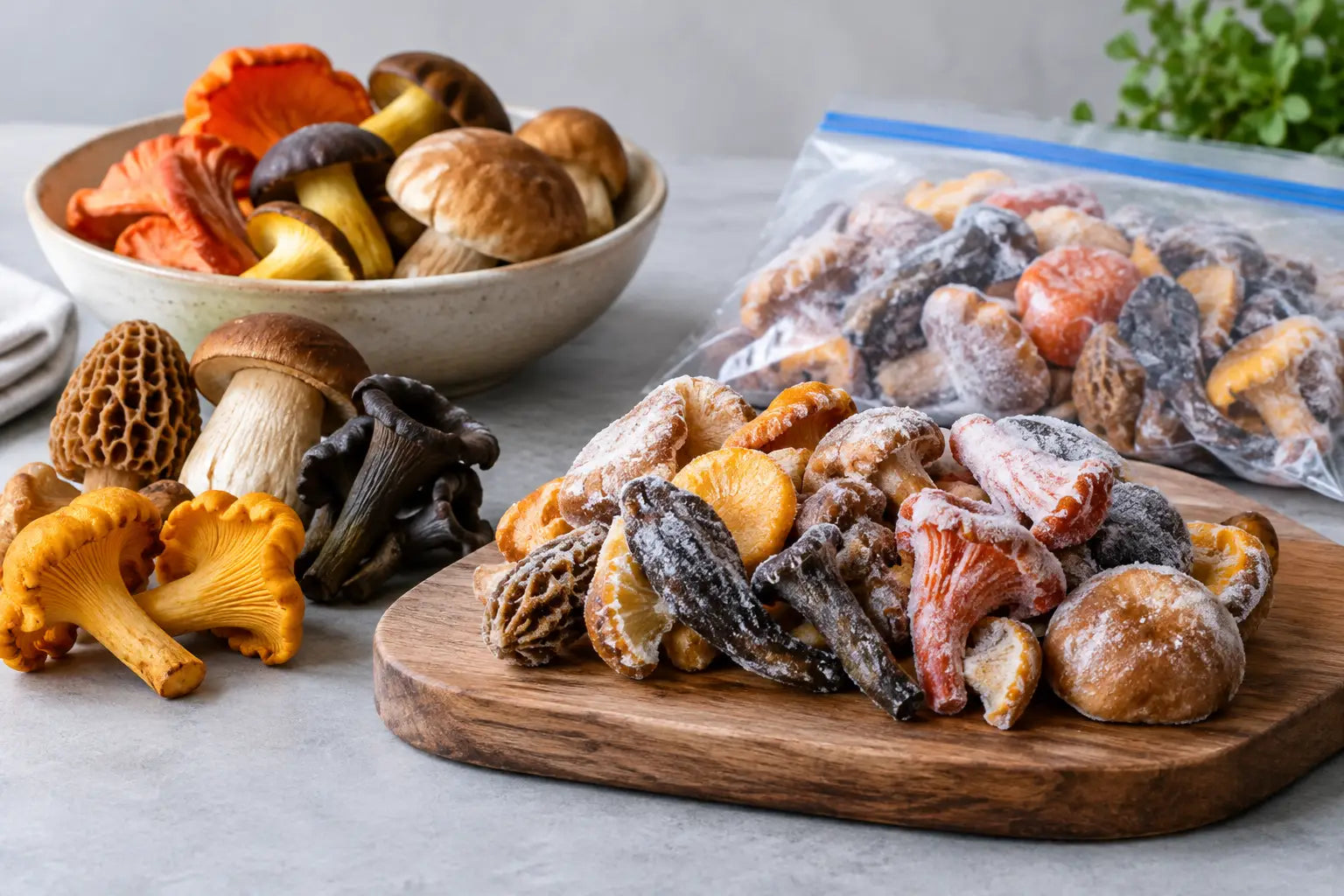
Frozen wild mushrooms give kitchens a different kind of freedom. When preserved at peak quality, they can support sauces, risottos, stuffings, ragùs, soups, and other cooked applications with far less exposure to the uncertainty of a fresh harvest window. They also allow a chef to retain a distinct wild-mushroom flavor in a menu system without depending on weekly fresh availability.
Dried wild mushrooms are the pantry format with the greatest concentration. They reward intentional use. Rehydrated mushrooms can add depth to a dish, while the soaking liquid can become part of a sauce, stock, or glaze when properly strained. In many kitchens, dried mushrooms are the most efficient way to maintain a signature savory note while controlling food cost and storage space.
Logistics Matter as Much as Flavor
A restaurant can buy exceptional mushrooms online and still have a poor result if logistics are treated as an afterthought. Delivery windows, weather conditions, packaging, and staffing all affect whether product reaches the walk-in in prime condition.
For fresh orders, schedule delivery around receiving coverage whenever possible. Inspect the shipment promptly for temperature, package integrity, and overall condition. Move it into proper refrigeration without delay, then use it according to the product’s practical shelf life rather than an optimistic assumption. Wild mushrooms are not a product to order early and forget.
Frozen orders require equally disciplined receiving. The goal is to keep the product fully frozen through transfer and storage. If frozen mushrooms are intended for a cooked preparation, portioning them before service can reduce waste and prevent repeated temperature changes.
Dried mushrooms are more forgiving, but they still deserve organized storage. Keep them sealed, dry, labeled, and rotated. A well-managed dried inventory gives a restaurant a reliable reserve for dishes that need concentrated wild flavor without requiring a rush purchase.
Price Should Be Measured Against Performance
Wild mushrooms are premium ingredients, and restaurant buyers should expect the price to reflect expert sourcing, grading, labor, preservation, and careful fulfillment. The more useful comparison is not price per pound alone. It is the cost of usable product, flavor intensity, consistency, labor saved in prep, and confidence that the ingredient will perform as expected.
A lower-priced shipment that arrives with weak aroma, excessive moisture, poor handling, or unreliable availability can create a much higher cost on the line. It can force a menu change, disappoint a guest, consume prep labor, or leave a chef scrambling before service. Conversely, a properly handled specialty product can justify its price by reducing uncertainty and allowing the kitchen to execute a dish as designed.
That calculation changes by operation. A fine-dining restaurant may value fresh seasonal presentation above all else. A hotel culinary team may prioritize frozen or dried formats that support volume and consistency. A specialty grocer may need clear product identity, dependable packaging, and delivery timing that aligns with merchandising. Online buying can serve each model, but the order must be matched to the operation.
Build Online Ordering Into Your Sourcing Plan
The best time to evaluate an online mushroom supplier is before the menu depends on one. Place thoughtful orders, assess condition on arrival, test yields, and document how each format performs in your own recipes. That process turns a specialty purchase into a dependable sourcing relationship.
For chefs and buyers who need wild mushrooms handled with precision, explore current seasonal offerings and preserved formats that fit the way your kitchen plans, preps, and serves.