Cart
0
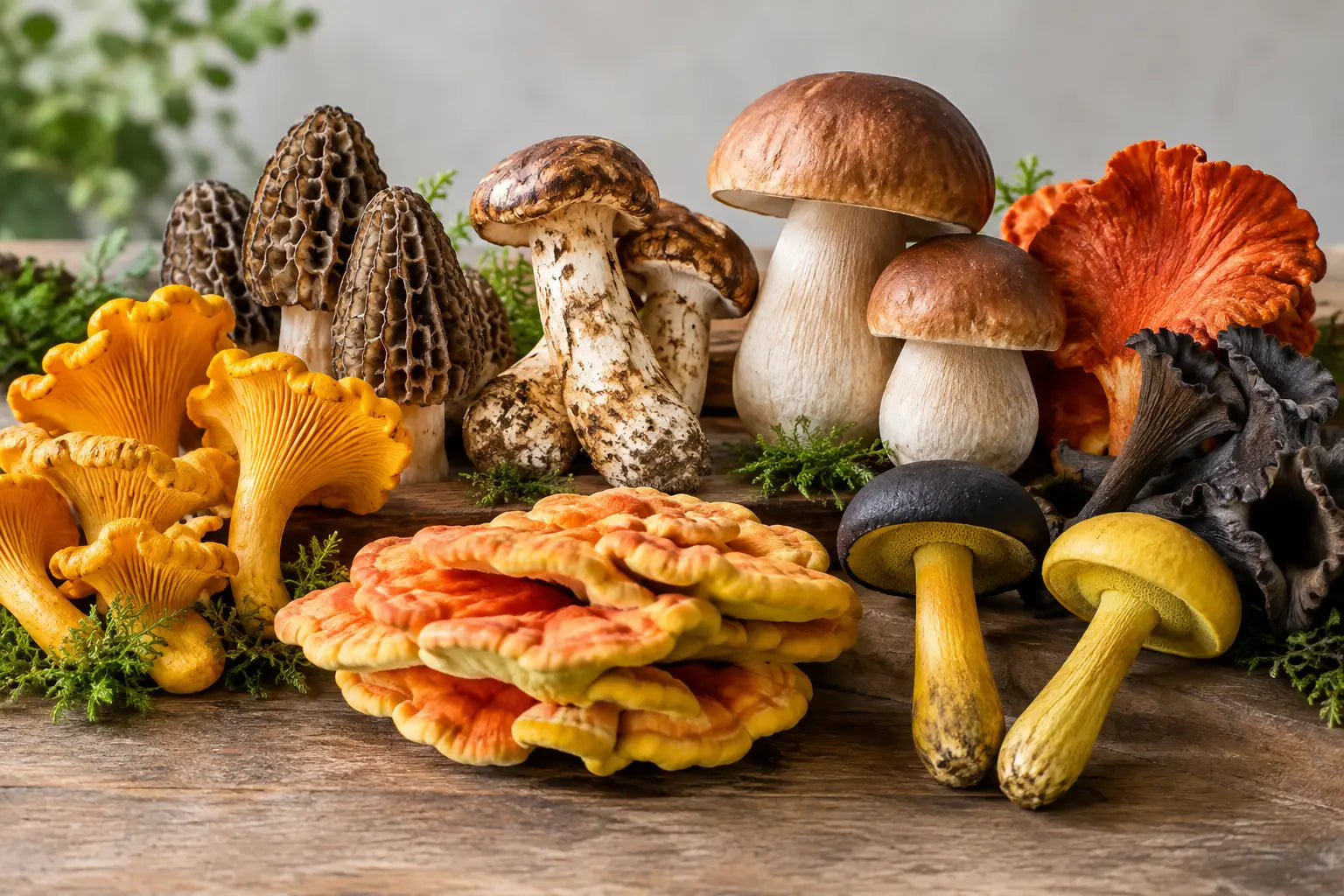
A chanterelle feature can create demand in a single service, then disappear from the market just as quickly. That is why wild mushroom inventory planning at Crown Fungi begins with seasonality, format, and the operational reality of the kitchen - not with a hopeful purchase order. Serious kitchens need the flavor and distinction of wild mushrooms, but they also need to know what can be served next week, next month, and through a menu change.
Wild Mushroom Inventory Planning Starts With the Menu
The most effective inventory plan begins by separating mushrooms into two roles: menu anchors and flexible accents. A menu anchor is a mushroom whose character is central to a dish, such as morels in a spring sauce or porcini in a composed risotto. Flexible accents can shift between applications without compromising the plate, including black trumpet folded into a farce, dried porcini added to a jus, or frozen wild mushrooms used in a filling.
This distinction determines how much risk a kitchen can carry. If a mushroom is named directly on the menu, purchasing should support the projected number of covers, expected yield, and a reasonable service buffer. If it is part of a changing garnish, sauce, or special, the kitchen can buy more selectively and adjust the application as inventory changes.
Avoid building a permanent menu around a brief fresh window unless there is an approved alternative format or a planned replacement dish. That does not mean reducing the importance of fresh wild mushrooms. It means using them when their quality and availability justify a focused seasonal moment, then protecting the menu from an abrupt shortage.
Forecast by Covers, Yield, and Plate Position
Forecasting wild mushrooms by case count alone leads to expensive surprises. Build forecasts from the number of projected covers and the actual portion required for each dish. A six-ounce fresh mushroom garnish behaves very differently from a two-ounce component in a sauce, and both will yield differently after trimming, cooking, and moisture loss.
Keep a simple record of received weight, usable weight, cooked yield, and portions produced. Over several deliveries, this gives the culinary team a more accurate par level for each variety and format. It also exposes where a dish may be consuming premium product without delivering enough flavor or visual value to the guest.
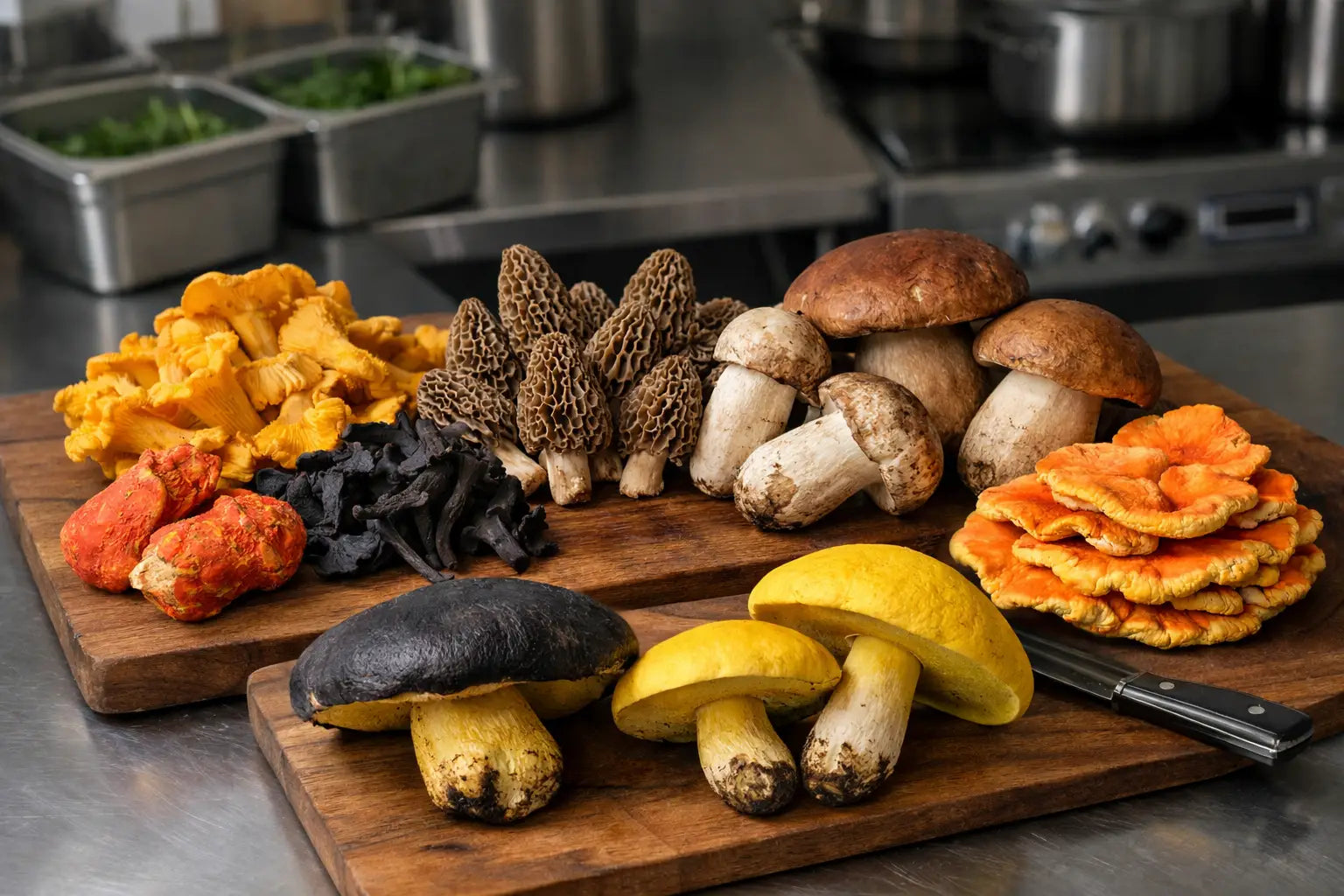
For high-cost varieties such as morels, matsutake, and porcini, plate position matters as much as portion size. A small, intentional use in a sauce, stuffing, or compound butter can carry aroma across the dish. A larger sautéed portion may be exactly right for a seasonal special, but it should be priced and forecast accordingly.
Build Inventory Across Fresh, Frozen, and Dried Formats
Fresh, frozen, and dried wild mushrooms are not interchangeable. They are complementary tools. A disciplined purchasing plan assigns each format a clear job instead of treating frozen or dried product as a last-minute substitute.
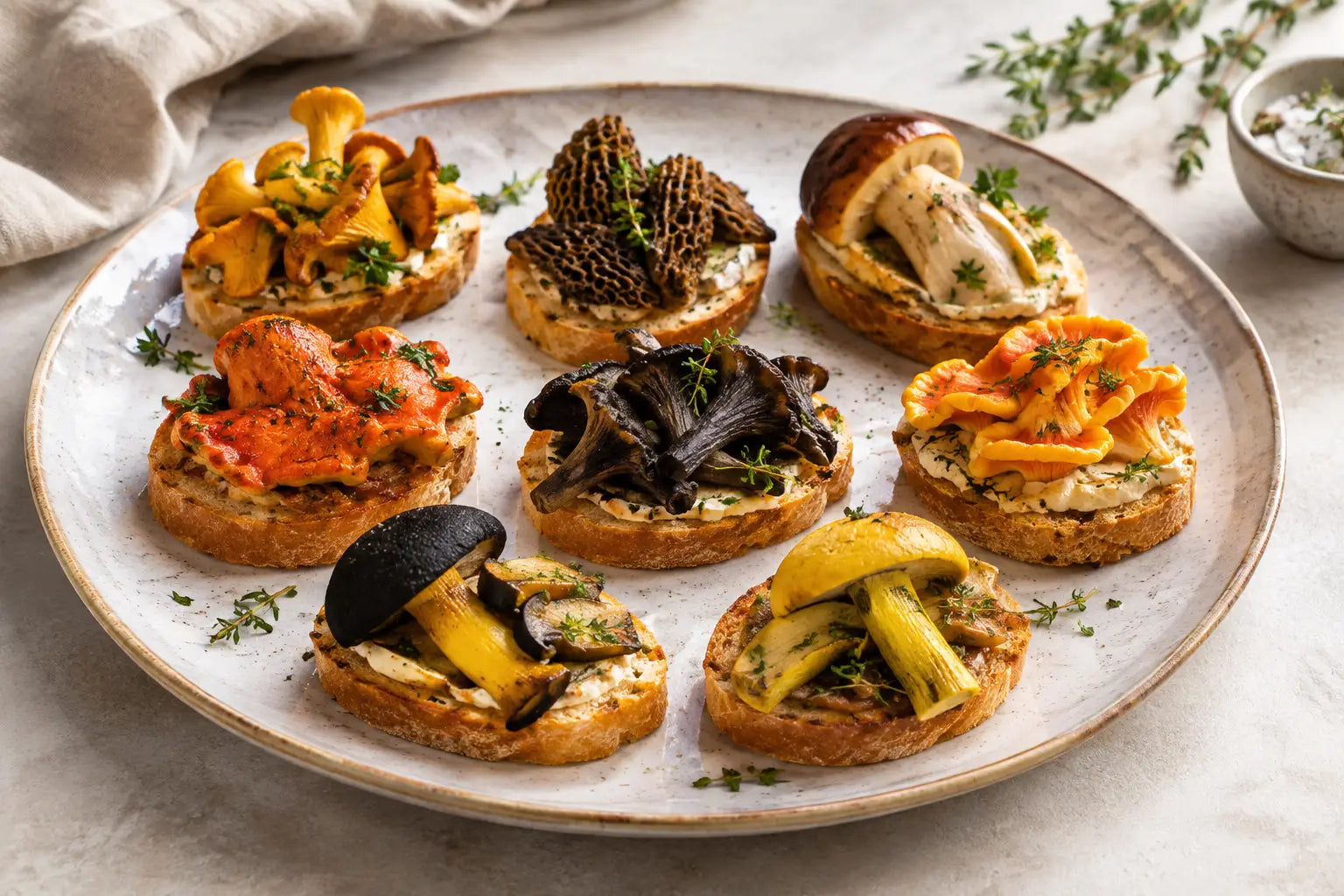
Fresh product is best reserved for applications where appearance, texture, and immediacy are part of the value proposition. A fresh chanterelle garnish, a sauté of chicken of the woods, or a seasonal lobster mushroom preparation can justify a limited-time menu feature when supply supports it. Fresh inventory requires tighter receiving standards, faster rotation, and direct communication between purchasing and the chefs writing specials.
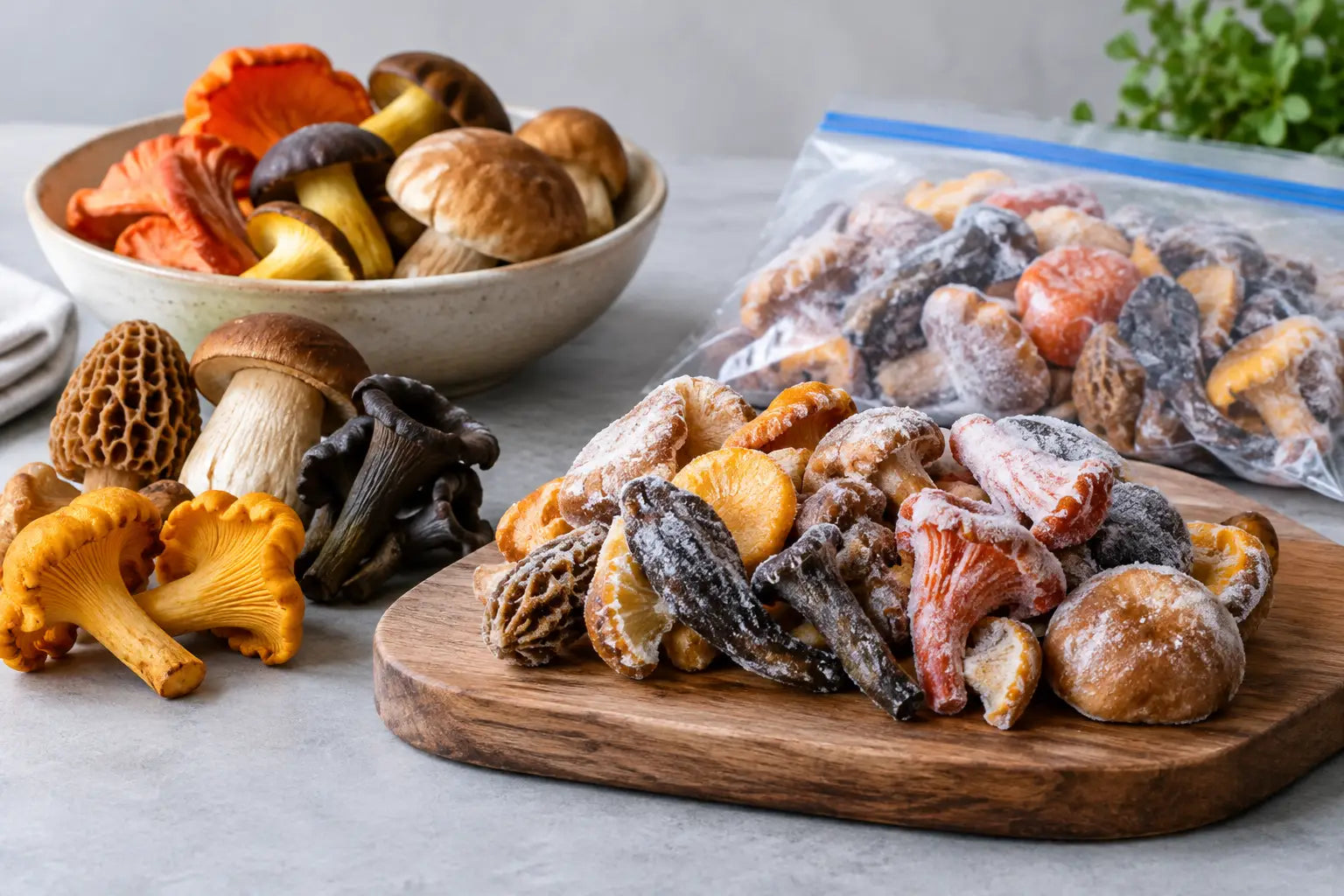
Frozen mushrooms preserve a different kind of flexibility. Product frozen at peak condition gives kitchens a dependable reserve for sauces, pasta fillings, soups, braises, and other applications where a fresh seasonal window should not dictate the entire menu. The key is to design for the format. Frozen mushrooms perform best when cooked with enough heat and space to manage released moisture, rather than crowded into a pan and expected to behave like just-received fresh product.
Dried mushrooms provide concentration and storage depth. Dried porcini and black trumpet are particularly useful when the goal is a deep aromatic base rather than a whole-mushroom presentation. Their soaking liquid, once properly strained, can add another layer to stocks, sauces, and grains. Because dried product is potent, recipe testing should establish a specific weight per batch instead of relying on visual estimates.
A practical inventory structure often uses fresh mushrooms for current features, frozen inventory for dependable production, and dried inventory for flavor insurance. The balance depends on the restaurant. A tasting-menu kitchen may prioritize fresh product and carry smaller reserves. A hotel banquet operation, specialty grocer, or high-volume restaurant may place greater value on frozen and dried depth because consistency across multiple services is the central requirement.
Set Par Levels That Respect Seasonality
A par level should not be a fixed number copied from one season to the next. It should reflect lead times, historical sales, storage capacity, and the volatility of the product. Wild mushrooms are not commodity produce, and purchasing them as if they were creates unnecessary waste or missed revenue.
For fresh inventory, establish a conservative base par tied to confirmed menu demand, then add a controlled buffer for expected walk-in volume, private events, and specials. The buffer should be larger only when the kitchen has a defined secondary use for product that does not sell in its primary application. A chanterelle that can move from a garnish to a sauce is less risky than one purchased for a single plated use.
Frozen and dried par levels can be more stable, but they still require review. If a kitchen relies on dried porcini for a signature sauce, the reorder point should account for both average weekly usage and any events that could create a sudden drawdown. For frozen inventory, review freezer organization and dating with the same discipline used for fresh product. A reserve only protects the operation if it is visible, rotated, and usable.
Use Reorder Points, Not Memory
A reorder point is the minimum quantity that triggers a purchase decision. For example, if a kitchen uses five pounds of frozen mushrooms each week, receives product on a predictable schedule, and wants two weeks of coverage, the reorder point should be set before the freezer is nearly empty. The exact figure changes with delivery timing and expected demand, but the principle is consistent: reorder early enough to preserve choices.
This is especially useful when the chef is not the person receiving deliveries or placing orders. A clear inventory sheet gives sous chefs, purchasers, and receiving teams one standard. It reduces the risk of discovering a shortage during prep, when the only available solution is an unplanned menu adjustment.
Protect Quality at Receiving and Storage
Inventory planning fails when quality control is treated as separate from purchasing. A premium wild mushroom is only valuable if it arrives in condition appropriate for the intended use and is handled correctly from the moment it enters the kitchen.
Fresh mushrooms should be inspected promptly for condition, aroma, moisture, and packaging integrity. Store them so they can breathe without drying excessively, and keep them away from strong odors and unnecessary handling. Rotate by arrival date and plan prep around the most delicate product first.
Frozen mushrooms require a clear cold-storage system. Maintain consistent freezer temperatures, keep cases labeled by variety and date, and avoid partial bags migrating through the freezer without identification. Dried mushrooms need a dry, sealed environment protected from humidity and kitchen heat. These are basic controls, but they prevent premium inventory from becoming a hidden cost.
Give the Team Permission to Adapt
The best wild mushroom plan includes alternatives before they are needed. Write brief production notes identifying the approved format or dish adjustment when fresh supply changes. This is not a compromise in standards. It is how a kitchen protects standards while working with a genuinely seasonal ingredient.
A seasonal special can remain a special. A sauce can shift from fresh mushrooms to a tested dried-mushroom base. A pasta filling can move to frozen inventory while the plated garnish changes. When these decisions are made during menu development, the team can execute confidently rather than improvising during service.
Crown Fungi supports this kind of planning with wild mushrooms handled for professional use across fresh seasonal, frozen, and dried formats. Explore current seasonal offerings and build a supply plan that gives your kitchen room to feature the rare product when it is at its best - without leaving the rest of the menu exposed.