Cart
0
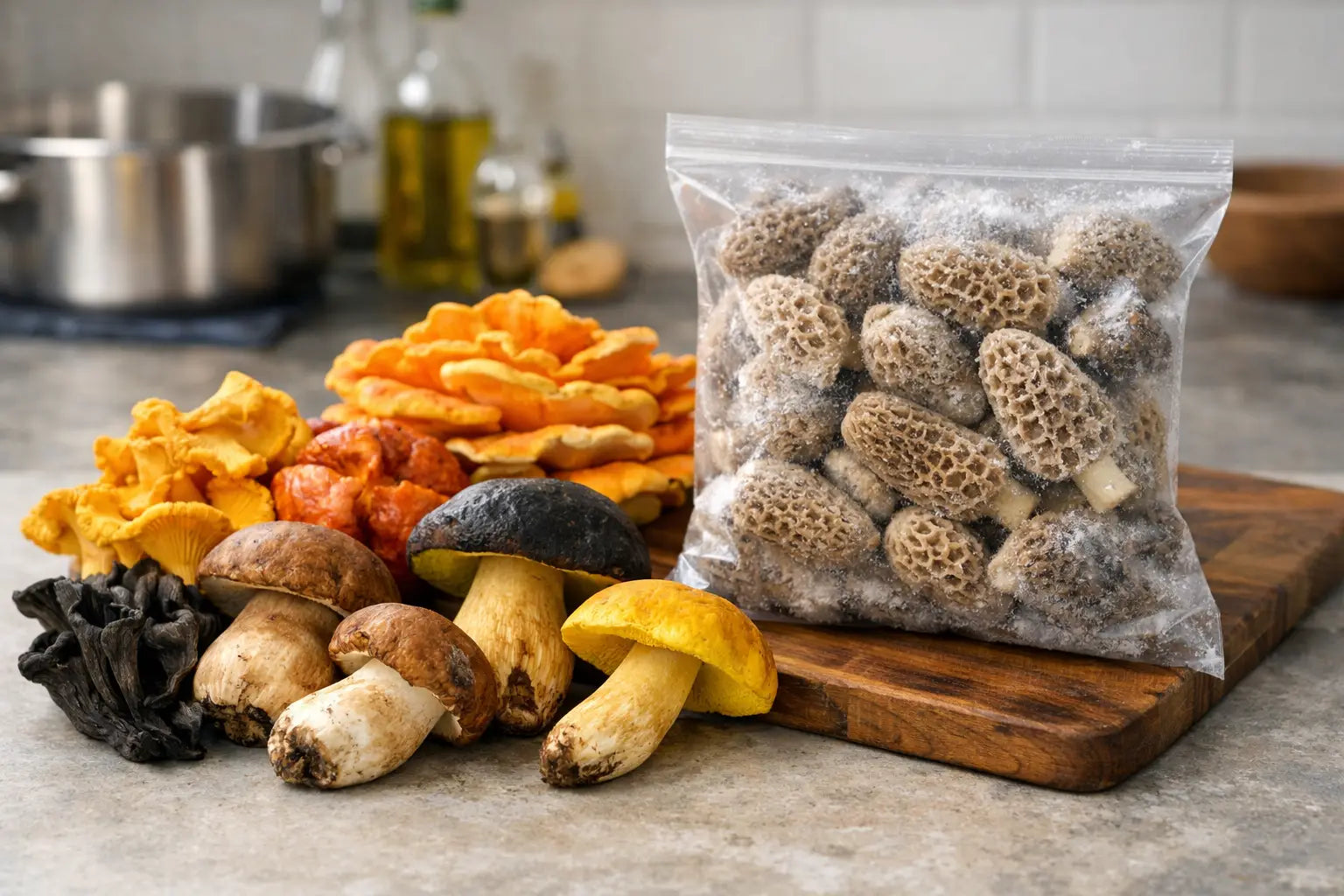
A morel risotto in November, a springlike pasta in the middle of winter, or a deeply savory pan sauce for a special dinner all start with the same question: can you buy frozen morels? Yes. When handled carefully and frozen at their best, wild morels give home cooks access to one of the most distinctive mushrooms beyond the brief fresh season. Crown Fungi focuses on carefully selected wild mushrooms so that rare ingredients can still earn a place in your everyday cooking.
Frozen morels are not a compromise for cooks who care about flavor. They are a practical way to keep the honeycombed texture, woodsy aroma, and savory depth of morels within reach when fresh mushrooms are not in season. The key is choosing a product that was preserved with care, then cooking it in a way that respects its moisture and delicate structure.
Can You Buy Frozen Morels for Home Cooking?
You can buy frozen morels for home cooking, and they are especially useful when a recipe calls for morel flavor but the fresh season has passed. Wild morels have a short natural window, and availability can vary from year to year. Freezing allows cooks to enjoy them well beyond that moment without waiting for spring.
A quality frozen morel should look like a real morel, not a bag of crushed fragments. Expect whole or substantial pieces with the mushroom's recognizable ridged, hollow shape. The color may deepen slightly after freezing, but the important qualities are a clean, earthy scent and mushrooms that cook up tender rather than watery or tough.
Frozen morels work best in cooked dishes. Their flavor blooms with butter, olive oil, shallots, cream, stock, eggs, and herbs such as thyme or chives. They also have enough character to stand beside roast chicken, steak, polenta, fresh pasta, and spring vegetables.
What Freezing Changes, and What It Preserves
Fresh morels are prized for their airy texture and fleeting perfume. Freezing changes the texture somewhat: the mushrooms will be softer after thawing than they would be straight from the fresh basket. That is normal. It does not mean they cannot be excellent.
What freezing preserves well is the part that matters most in a finished dish: concentrated forest aroma and savory, nutty flavor. In sauces, fillings, sautés, and egg dishes, frozen morels can be remarkably satisfying because the dish gives them a place to release that flavor.
The trade-off is simple. If your entire meal depends on presenting pristine, crisp-edged morels as the visual centerpiece, fresh mushrooms in season have an advantage. If you want authentic morel flavor for a memorable meal at home, frozen morels are often the more dependable choice.
Why quality at the time of freezing matters
Not every frozen mushroom cooks the same way. Morels that are frozen when they are in good condition retain more of their structure and flavor than mushrooms that have lingered too long before preservation. Careful cleaning matters, too. Morels have a naturally intricate surface, and a thoughtfully prepared product saves time when dinner is already underway.
A bag should also contain mushrooms rather than a heavy coating of ice. Excess ice can dilute a sauce and make browning difficult. A light amount of frost is not necessarily a concern, but large ice crystals and clumped mushrooms are signs that the product may not cook as cleanly as you want.
How to Cook Frozen Morels Well
The best method depends on the dish. You do not always need to thaw frozen morels first. For a sauce, soup, braise, or risotto, they can often go directly into the pan or pot. This lets their flavorful cooking juices become part of the dish.
For a sauté, thawing first usually gives you more control. Place the mushrooms in a bowl in the refrigerator until pliable, then gently drain any released liquid. Do not discard it automatically. If it smells clean and earthy, add it to a sauce, stock, or pan gravy for extra depth.
Start your sauté in a wide skillet over medium heat. Let the mushrooms release moisture before adding butter or oil if they seem wet. Once the pan is no longer steamy and the mushrooms begin to concentrate, add fat, a little shallot, and a pinch of salt. Finish with thyme, chives, or a splash of cream if the recipe calls for it.
Morels should always be thoroughly cooked. Their flavor improves with cooking, and gentle heat gives the mushrooms time to become tender without breaking them apart. Avoid a hard, crowded boil in a small pan, which can leave them pale and waterlogged.
> Frozen Wild Morels for special meals
>
> Keep frozen wild morels on hand for pasta, sauces, risotto, and buttery skillet dishes when the fresh season is over. Check the current product listing for the available package size and price before ordering.
Three Dishes That Let Frozen Morels Shine
A simple morel cream sauce is one of the best places to begin. Sauté the mushrooms with shallot and butter, add a small splash of white wine, then finish with cream and black pepper. Spoon it over chicken, pork chops, or soft polenta. The sauce captures every bit of the mushroom's character.
Morels and eggs are another natural pairing. Fold cooked morels into softly scrambled eggs, an omelet, or a baked egg dish with Gruyère and chives. Their savory flavor makes a modest breakfast feel special without requiring a complicated recipe.
For pasta, pair morels with browned butter, a touch of pasta water, lemon zest, and Parmesan. Keep the sauce light enough that the mushrooms remain recognizable. Fresh pasta is lovely, but any good noodle with enough surface area to catch the sauce will work.
How Much Frozen Morel Flavor Do You Need?
Morels are an accent ingredient as much as a main ingredient. A small portion can transform a dish when it is used with restraint. For two people, a handful of frozen morels can be enough for eggs, a sauce, or a pasta course, especially when supported by butter, stock, or cream.
If morels are the centerpiece, plan for a more generous amount and keep the rest of the plate simple. A sauté of morels beside roasted chicken or steak does not need many competing flavors. Salt, pepper, fresh herbs, and a little acidity are usually enough.
This is also why frozen morels are so useful for home cooks. You can use only what a recipe needs and return the rest to the freezer promptly. Instead of building your menu around the pressure to use fresh mushrooms immediately, you can cook with more flexibility.
Storage and Handling at Home
Keep frozen morels in the freezer until you are ready to cook. Once thawed, use them promptly and do not refreeze them. If the bag has been opened, press out excess air and seal it well before returning the remaining mushrooms to the freezer.
When planning a special meal, think of frozen morels as a focused finishing ingredient. Bring them into the recipe after you have decided what will support their flavor. They do not need elaborate treatment. A well-seasoned pan, enough room for moisture to cook away, and a few complementary ingredients will do more than an overcomplicated recipe ever could.
Fresh morels will always have a special place during their season. But frozen morels make that unmistakable wild flavor possible when the calendar says otherwise. They are a smart choice for cooks who want to make a weeknight dish feel more considered or turn a dinner at home into an occasion.
Shop This Mushroom
Shop frozen wild morels while current seasonal offerings are available, and keep a rare, deeply savory ingredient ready for the meals worth lingering over.