Cart
0
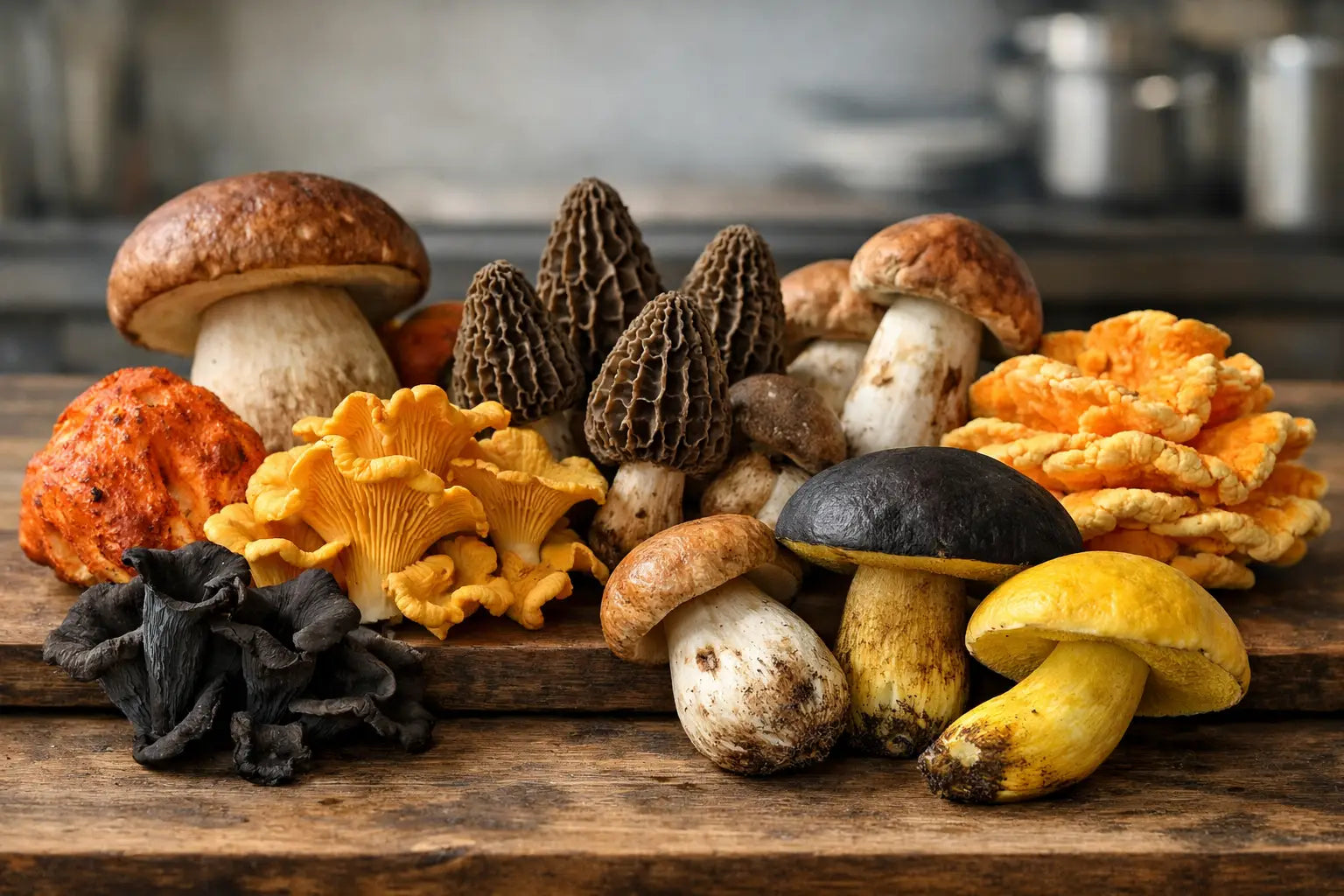
At Crown Fungi, chef demand for rare mushrooms is measured less by novelty than by performance on the plate and reliability in the purchasing cycle. A chanterelle that arrives clean, firm, and aromatic can carry a seasonal entrée. A properly preserved porcini can give a sauce or braise the depth a kitchen needs when fresh supply is not the right fit. For serious kitchens, the category is about flavor, texture, timing, and a supply strategy that holds up through service.
Why Chef Demand for Rare Mushrooms Continues to Grow
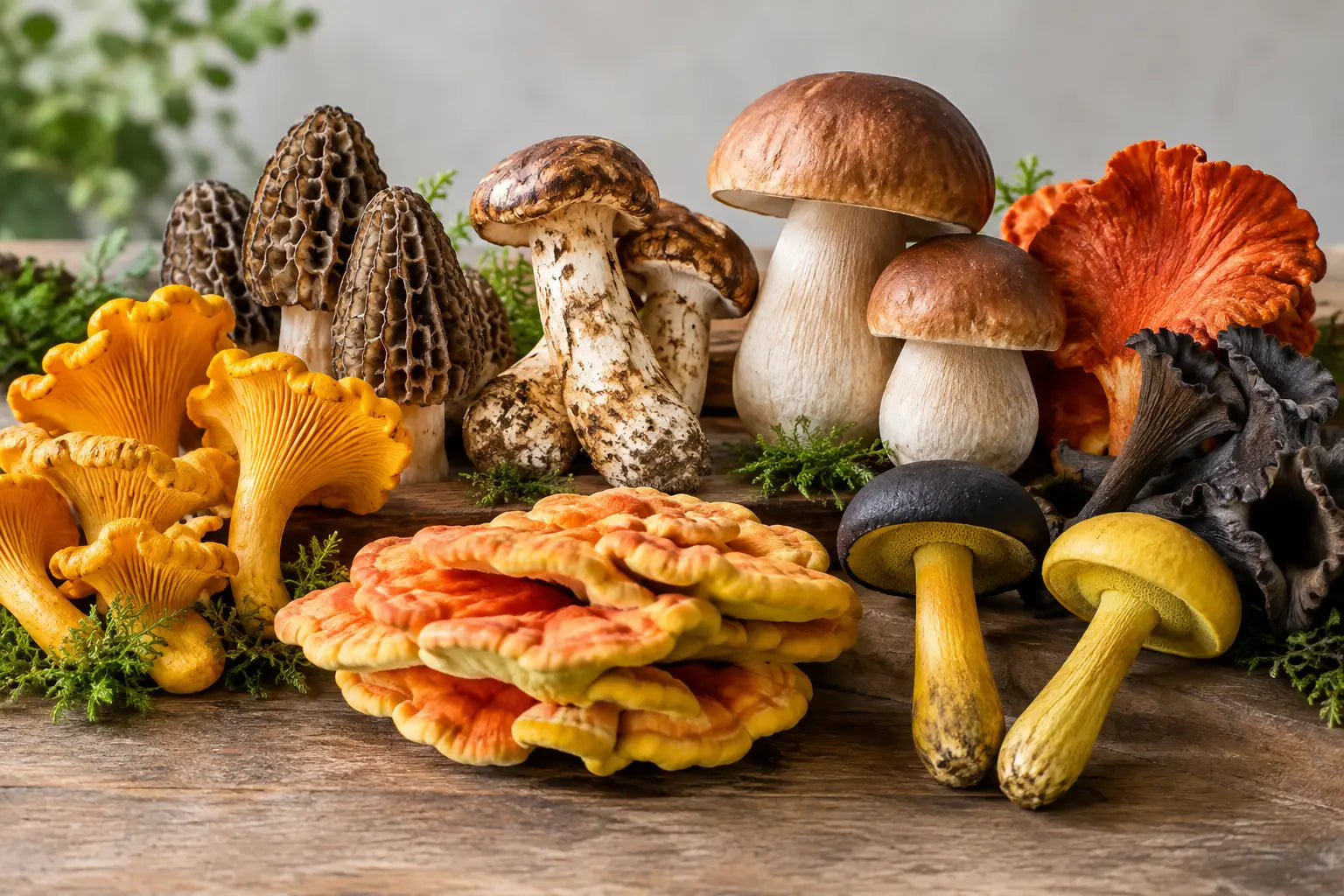
Rare wild mushrooms give chefs something commodity ingredients rarely can: a distinct sense of place and season. Morels bring a honeycombed texture and deep, earthy flavor. Black trumpet mushrooms contribute a dark, floral intensity that works particularly well with seafood, eggs, poultry, and rich sauces. Matsutake offers a powerful aromatic profile that can define a restrained dish without a long list of supporting ingredients.
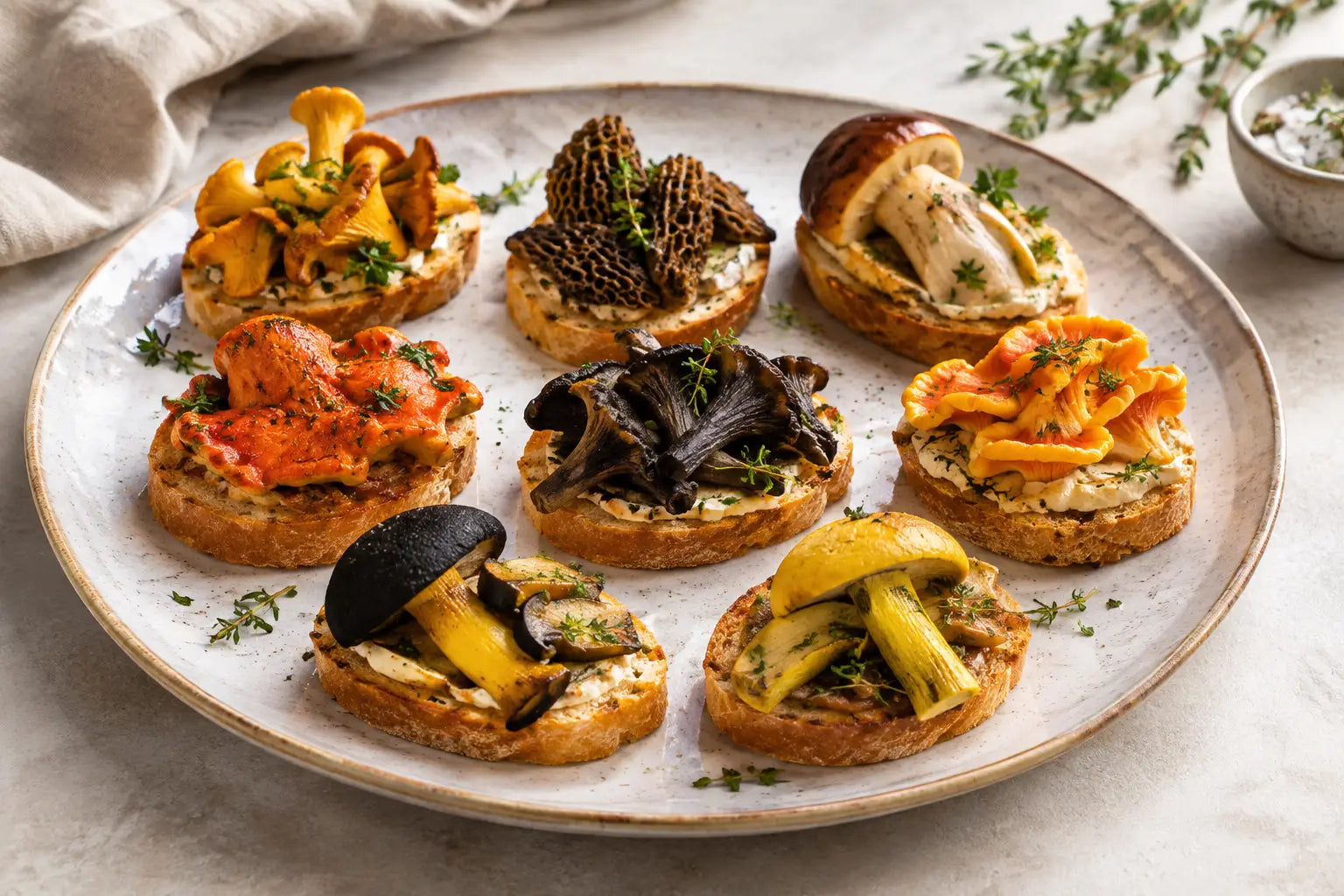
That differentiation matters when menus need to feel intentional rather than merely expensive. A wild mushroom does not need to be used in large volume to make an impression. Often, its value lies in the precision of its use: folded into a pasta filling, layered over a roast fish course, blended into a jus, or used as the focused element in a composed vegetarian plate.
Chef interest is also driven by guest expectations. Diners increasingly recognize names such as chanterelle, morel, porcini, and chicken of the woods. They associate these ingredients with seasonality, skilled sourcing, and food prepared with care. That recognition gives culinary teams an opportunity to create menu language that is specific and credible, provided the product itself delivers.
Flavor Is Only Part of the Buying Decision
A rare mushroom may be exceptional in the woods, but that is not enough for a professional kitchen. Buyers need product that arrives in usable condition, performs predictably after preparation, and supports the pace of service. The difference between a strong supplier relationship and a speculative purchase is often found in the details: grading, cleaning, packaging, temperature control, and communication around availability.
Fresh wild mushrooms are inherently variable. Size, color, moisture level, and exact volume can shift with weather and harvest conditions. A capable kitchen accounts for that reality rather than treating wild product like a standardized produce item. The supplier's role is to manage the product with discipline, set accurate expectations, and move it through the cold chain quickly enough to protect its culinary value.
For chefs, this means sourcing decisions should begin with the intended application. Delicate chanterelles may be best reserved for quick sautés, gentle roasting, or finishing work where their shape and color remain visible. Lobster mushrooms, with their firm texture and savory character, can take more assertive handling in soups, fillings, and composed dishes. Chicken of the woods offers a substantial bite that suits applications where texture needs to remain present.
The right mushroom is not always the rarest one or the most visually dramatic. It is the one that gives the menu the desired flavor, texture, food cost, and consistency.
Seasonality Creates Opportunity and Risk
Wild mushroom demand rises when a variety reaches its peak season, but kitchens cannot build a sound menu around assumptions. Weather patterns, regional harvest conditions, and logistics can change fresh availability quickly. A menu that depends entirely on one fresh variety without a preservation plan can become difficult to execute when supply tightens.
This is where chefs separate a seasonal special from a sustainable menu strategy. Fresh mushrooms offer immediacy: fragrance, visual presence, and the excitement of a brief window. They are ideal for features, tasting menus, and dishes designed to respond to current harvest conditions. But they require flexibility in portioning, menu wording, and purchasing cadence.
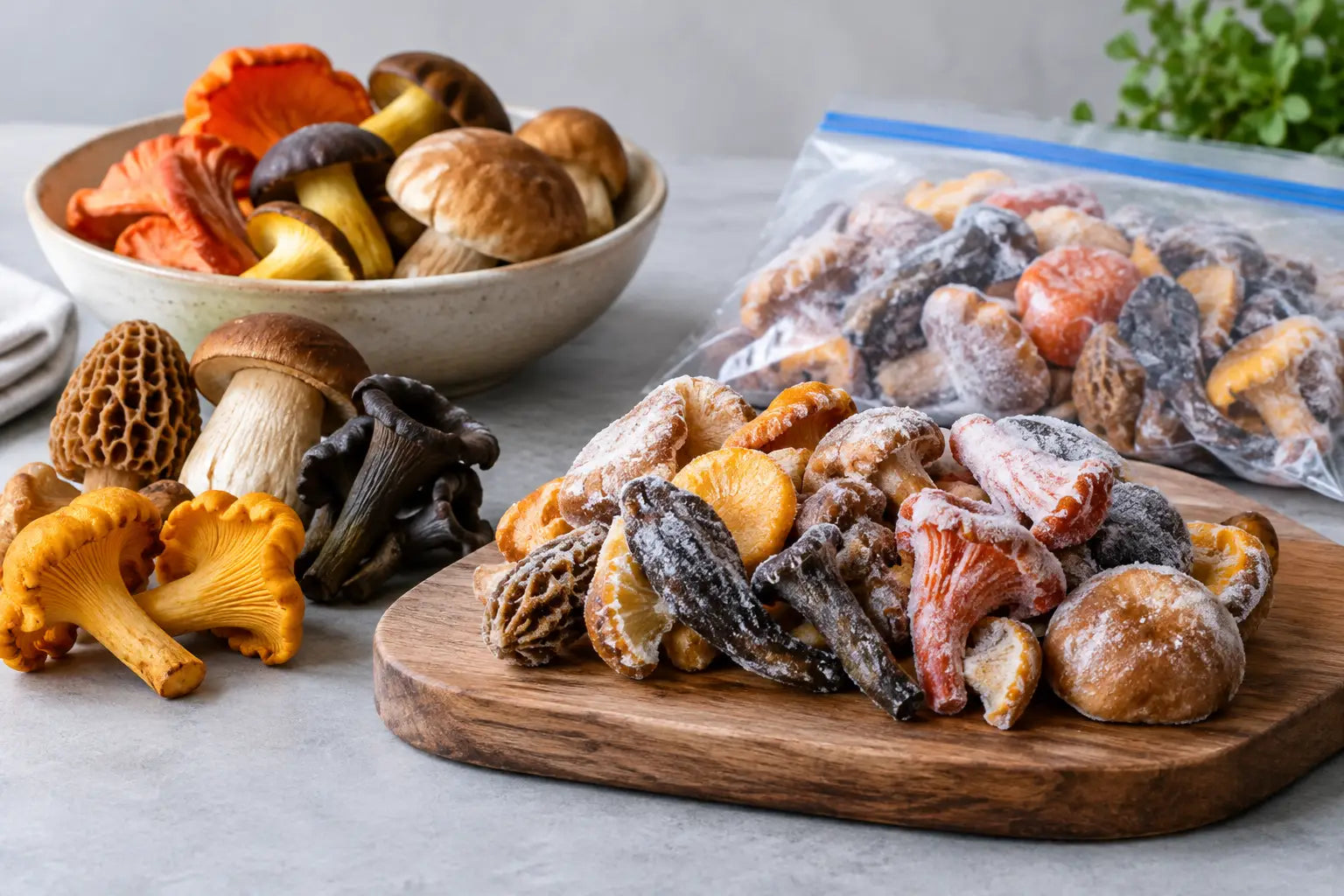
Frozen-at-peak mushrooms offer a different form of control. When properly handled and frozen at the right stage, they allow kitchens to work with the flavor of a wild harvest beyond the narrow fresh window. They are particularly useful for sauces, risottos, fillings, soups, ragùs, and other applications where flavor and texture matter more than the pristine appearance of an individual cap.
Dried mushrooms serve another operational purpose. Dried porcini and black trumpet mushrooms bring concentrated flavor, compact storage, and a long working life in the pantry. Rehydration liquid can become part of a stock, sauce, or glaze when strained carefully, while the mushrooms themselves can be minced, puréed, or incorporated into a broader preparation. For kitchens managing seasonal menus across multiple locations or service periods, that shelf stability has real value.
Build menus around formats, not just varieties
The strongest purchasing programs treat fresh, frozen, and dried mushrooms as complementary tools. Fresh product creates the seasonal statement. Frozen product supports continuity when the dish relies on mushroom flavor through a broader service window. Dried product gives the kitchen an efficient reserve for depth, garnish, and recipe development.
This does not mean every format is interchangeable. A dried black trumpet will not replace the visual delicacy of a fresh chanterelle on a plate. Frozen morels may be excellent in a sauce or stuffing but should be evaluated carefully for applications that demand a crisp, intact presentation. The decision depends on the dish, the menu price, the labor available, and the guest experience being promised.
What Serious Kitchens Expect From Supply
As demand increases, chefs are less willing to accept vague product descriptions or inconsistent handling. They need clear information about form, pack size, condition, and expected use. They also need inventory practices that match the realities of a restaurant, hotel, specialty market, or catering operation.
Cold-packed shipping matters for fresh wild mushrooms because time and temperature directly affect quality. Product should be packed to protect it from excess compression and avoidable moisture while maintaining the cold environment needed in transit. Once it arrives, kitchen teams should inspect it promptly, store it appropriately, and plan prep around the product's condition rather than letting it sit untouched in a walk-in.
Professional grading matters as well. A kitchen may want larger, presentation-worthy pieces for a plated entrée, or smaller pieces for a sauce, farce, or retail blend. Neither need is better than the other, but the product should be represented accurately. Predictable grading helps chefs control trim, portioning, and labor.
Reliability also means being realistic. No responsible wild mushroom supplier can promise that every fresh variety will be available in every week of the year. The better standard is transparent seasonal expertise, disciplined preservation, and a well-managed assortment that gives buyers viable options when fresh harvests shift.
The Economics of a Premium Ingredient
Rare mushrooms carry a higher purchase price because harvesting, sorting, cleaning, and transport are labor-intensive. The relevant question is not whether they cost more per pound. It is whether the ingredient earns its place in the dish.
A small amount of dried porcini can transform a pan sauce across multiple portions. A careful garnish of black trumpets can add aroma and visual contrast without requiring a large yield. Fresh chanterelles can justify a seasonal feature when the menu uses them with restraint and avoids burying their flavor under heavy sauces or too many competing elements.
Waste is the variable that can erode the value of a premium mushroom fastest. Kitchens should buy with a defined use in mind, prep close to service when possible, and use trim intelligently in stocks, butter, sauces, and secondary preparations. This is not an argument for forcing every scrap into a dish. It is a case for treating a high-value ingredient with the same planning applied to premium seafood, heritage meat, or specialty truffles.
Demand Rewards Precision
Chef demand for rare mushrooms will continue because wild ingredients offer real culinary distinction, not just a seasonal talking point. But demand also raises the standard for sourcing. Kitchens need product with a clear use case, honest availability, careful handling, and formats that let the ingredient perform beyond a single brief harvest window.
The best results come from matching mushroom, format, and menu function with precision. Review Crown Fungi's current seasonal offerings and preserved wild mushroom inventory to plan dishes that meet the standards of your kitchen.