Cart
0
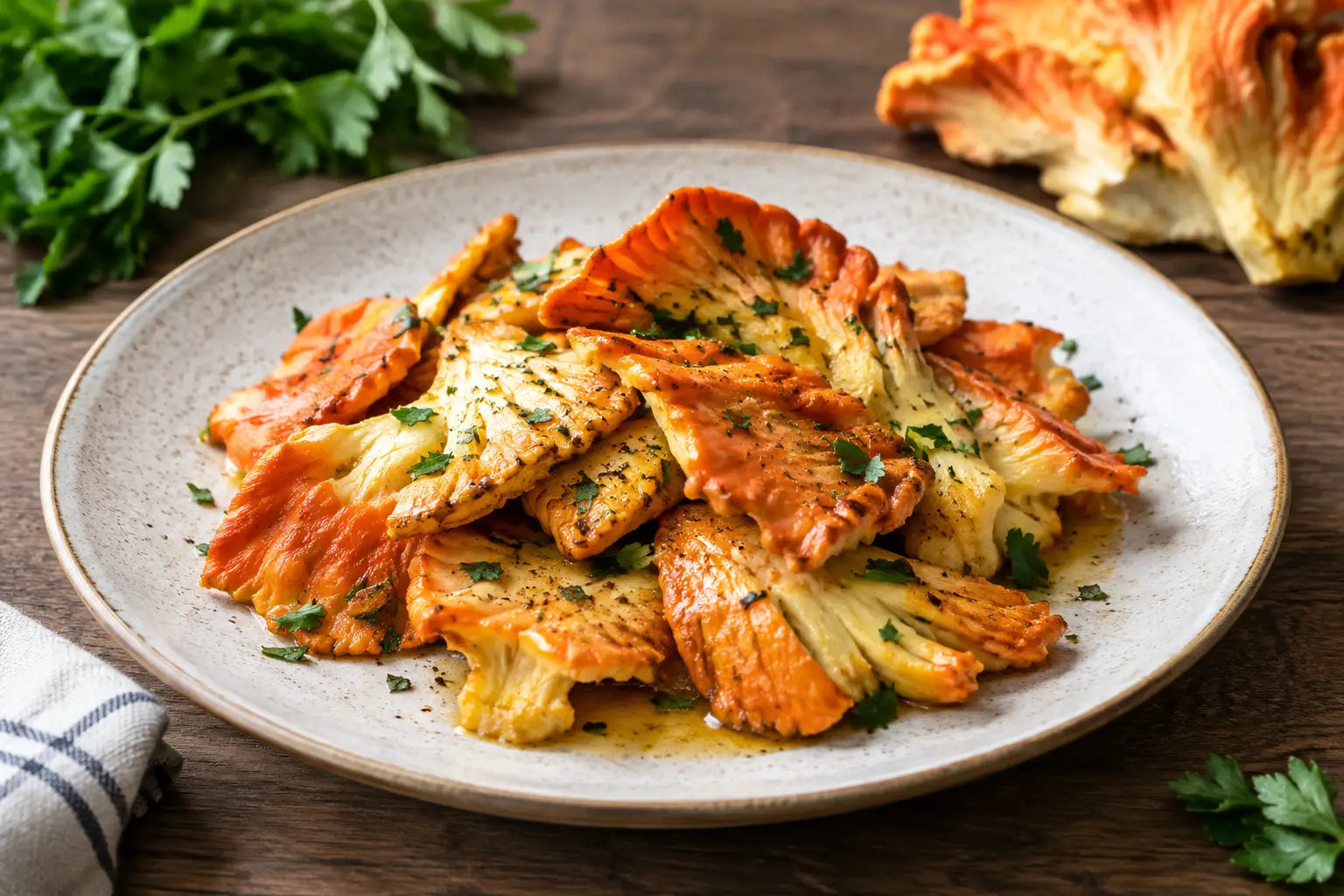
A great chicken of woods recipe should let the mushroom’s texture lead. When properly cooked, chicken of the woods turns tender, savory, and satisfyingly substantial, with crisp golden edges that make a simple skillet dinner feel memorable. Crown Fungi selects wild mushrooms for the kind of flavor and texture home cooks notice immediately, whether you are cooking a seasonal fresh find or a carefully frozen portion.
This butter-and-herb skillet preparation is the one to make when you want the mushroom to stay at center stage. Garlic, thyme, lemon, and a final spoonful of butter bring out its woodsy, lightly citrusy character without covering it up. Serve it over creamy polenta, alongside eggs, folded into pasta, or on good toast with a soft-fried egg.
Chicken of Woods Recipe With Butter, Garlic, and Lemon
This recipe serves two generously as a main dish with a starch or three to four as part of a larger meal. The key is patience at the beginning: give the pieces room in the pan so moisture can cook away and the edges can brown.
Ingredients
- 12 ounces chicken of the woods, fresh or frozen
- 2 tablespoons olive oil
- 3 tablespoons unsalted butter, divided
- 2 garlic cloves, finely sliced
- 1 teaspoon fresh thyme leaves
- 1/2 teaspoon kosher salt, plus more to taste
- Freshly ground black pepper
- 1 tablespoon fresh lemon juice
- 1 teaspoon finely grated lemon zest
- Chopped parsley, for finishing
Cook the mushroom until it is deeply browned
Tear or cut the chicken of the woods into pieces about 1 to 2 inches wide. Aim for uneven, natural-looking pieces rather than thin strips. Their ridges and edges catch butter beautifully, while the thicker centers stay pleasantly meaty.
Set a large skillet over medium-high heat and add the olive oil with 1 tablespoon of butter. Once the butter foams, add the mushroom in a single layer. Do not stir right away. Let it cook for about 3 minutes so the underside can take on color.
Turn the pieces and continue cooking for 6 to 8 minutes, stirring only occasionally. Chicken of the woods releases moisture as it cooks, especially if it was frozen. Let that liquid evaporate before expecting serious browning. If the skillet becomes crowded or wet, cook in two batches instead. It takes a few more minutes, but the result is far better.
When the pieces are golden at the edges and tender throughout, add the remaining 2 tablespoons of butter, garlic, thyme, salt, and several grinds of black pepper. Lower the heat to medium and toss for about 1 minute, just until the garlic is fragrant. Finish with lemon juice, zest, and parsley.
Serve immediately while the mushroom is hot and the butter is still glossy. Chicken of the woods should be cooked thoroughly, not served raw. Its texture is at its best when the thicker pieces are tender all the way through but still hold their shape.
> Cook’s Pick: Chicken of the Woods
> Choose fresh chicken of the woods when it is in season for a delicate, tender bite. Frozen chicken of the woods is an excellent option for keeping this recipe within reach when fresh wild mushrooms are not available.
Why This Chicken of Woods Recipe Works
Chicken of the woods has a personality all its own. Its layered, fibrous structure gives it more presence than many wild mushrooms, but it still benefits from straightforward treatment. Heavy cream sauces, strong cheese, or a crowded pile of vegetables can easily hide its flavor. Butter and herbs support it instead.
The olive oil and butter combination matters. Butter brings nutty flavor but can brown too quickly on its own; olive oil gives you a little more control at higher heat. Adding the final butter near the end delivers a fresh, rich finish rather than a greasy one.
Lemon is equally deliberate. A small amount brightens the mushroom’s savory side and keeps the dish from tasting heavy. Use just enough to sharpen the flavors. If your chicken of the woods is especially young and delicate, start with half the lemon juice and adjust after tasting.
How to Serve It
For an easy weeknight plate, spoon the finished mushroom over creamy polenta or buttery white beans. The juices from the skillet settle into the base and turn a short ingredient list into a full meal. A crisp green salad with a tart vinaigrette is a smart contrast.
For breakfast or brunch, pile the chicken of the woods onto sourdough toast, then add a poached or fried egg. The runny yolk joins the lemon butter in the best possible way. A shower of Parmesan is optional, but use it lightly so the mushroom remains the focus.
Pasta also works well, particularly wide noodles that can hold the glossy sauce. Cook the pasta just shy of done, then toss it in the skillet with a splash of pasta water before adding the lemon. If you go this route, make a little extra mushroom. It tends to disappear quickly once it is mixed through the noodles.
Fresh or Frozen: What Changes in the Skillet?
Fresh chicken of the woods often cooks a little faster and can have a more delicate bite, depending on the particular piece. Frozen chicken of the woods offers a practical way to enjoy a wild mushroom outside its short fresh season. Because freezing can release extra moisture as it thaws, the main adjustment is giving it enough pan time.
Do not try to force color before the moisture has cooked away. Keep the heat steady, avoid covering the skillet, and resist adding garlic or herbs too early. Garlic can scorch while the mushroom is still giving off liquid, leaving the finished dish bitter. Add those flavorings only after the pieces have started to brown.
The skillet size also makes a difference. For 12 ounces, a 12-inch skillet is ideal. If you only have a smaller pan, work in batches. Browning is not cosmetic here: it concentrates the mushroom’s savory flavor and gives chicken of the woods the appealing contrast of crisp edges and a tender center.
A Few Smart Adjustments
This is a flexible recipe, but keep the balance in mind. Swap thyme for sage in fall, or use tarragon for a softer anise note in spring. Shallot can replace garlic if you prefer a sweeter base. For a little heat, add a pinch of red pepper flakes with the garlic.
If you want a more substantial sauce, deglaze the browned skillet with a small splash of dry white wine before adding the final butter. Let it reduce almost completely, then finish as written. The result is still mushroom-forward, just a touch more luxurious.
Avoid soaking chicken of the woods in water before cooking. If it needs attention, brush away any visible debris or wipe gently with a barely damp towel, then dry it well. Treating this mushroom with care from prep to plate is what preserves its exceptional texture.
Shop This Mushroom
Keep chicken of the woods in mind for the meals that deserve more than an ordinary side dish. Explore Crown Fungi’s current seasonal fresh and frozen wild mushroom offerings, and bring this golden, savory skillet recipe to your table when chicken of the woods is available.