Cart
0
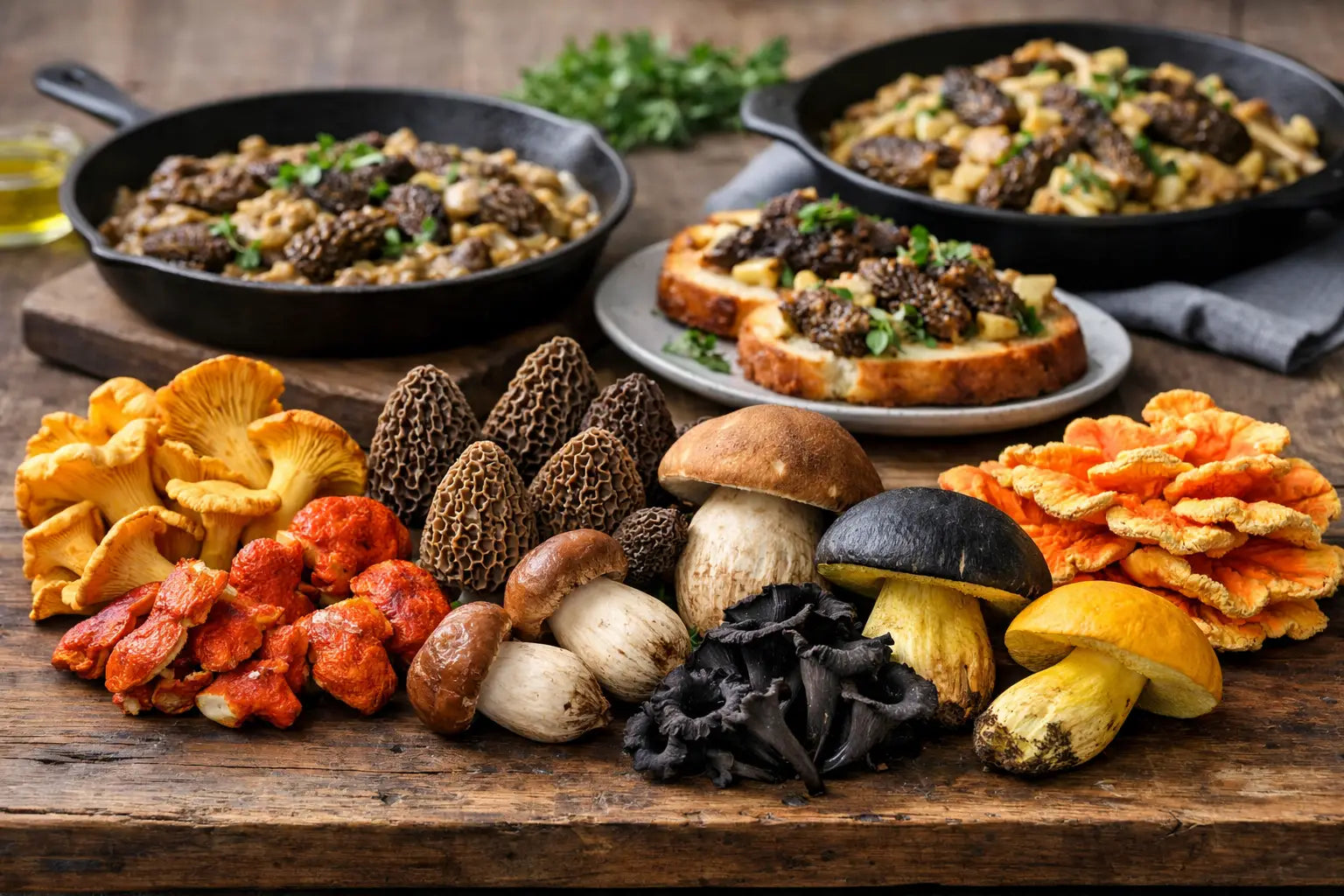
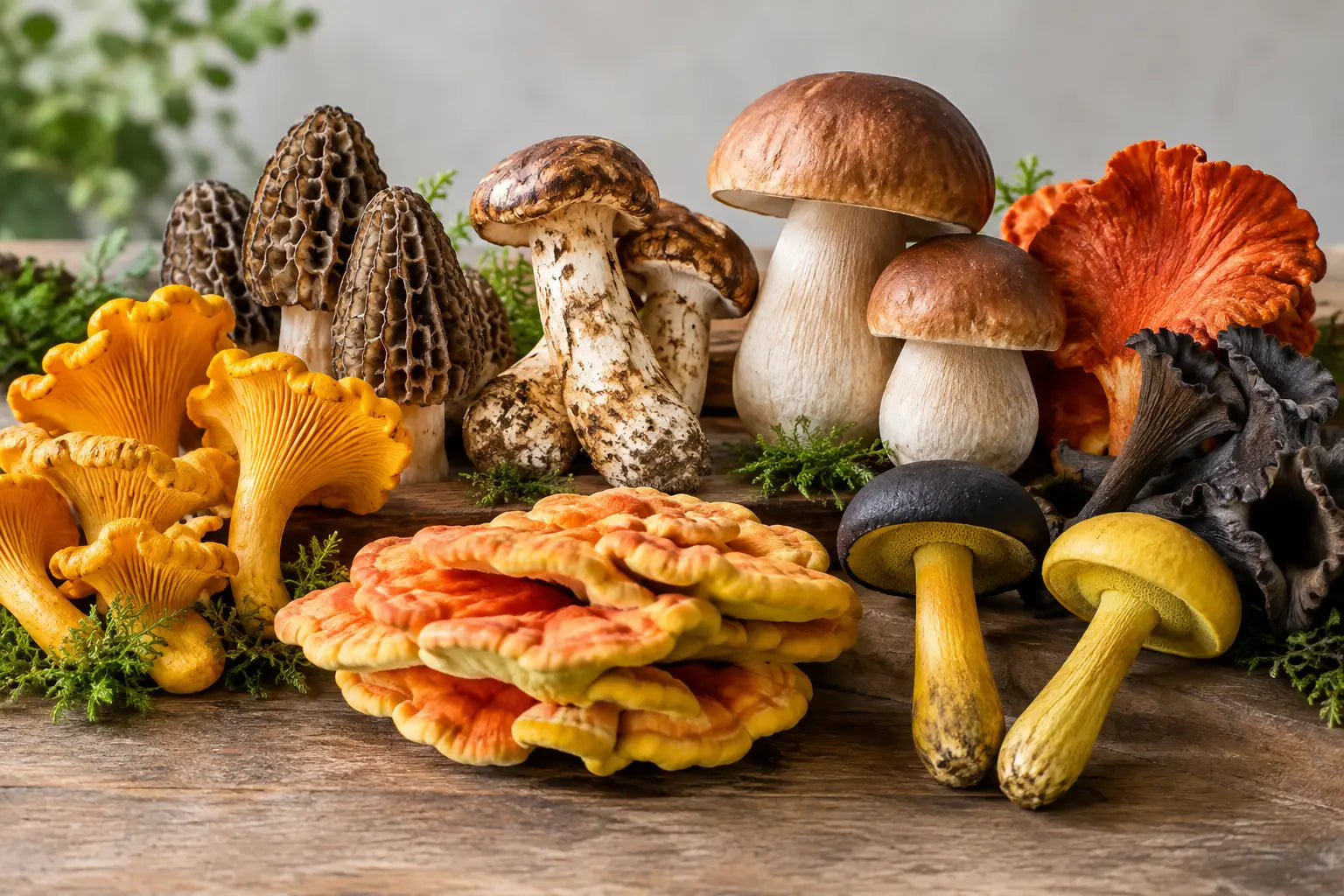
A good morel does not need much persuasion. Its honeycombed cap brings a deep, woodsy aroma and a buttery, almost meaty texture to the pan. The best morel recipes begin with that restraint: cook the mushrooms thoroughly, give them enough room to brown, and pair them with ingredients that support rather than bury their character. Crown Fungi makes it easier to bring this fleeting wild mushroom to your home kitchen, whether you are cooking with a seasonal fresh batch or frozen morels preserved at peak quality.
Morels reward simple cooking, but they are not a toss-in-at-the-end ingredient. Their ridges hold moisture and their flavor develops with heat, so take a few minutes to prep them well and let the pan do its work. From a quick skillet of eggs to a dinner-party-worthy chicken roast, these ideas keep the mushroom at the center of the plate.
Start Every Morel Recipe With the Right Prep
Fresh morels should be handled gently. Split larger mushrooms lengthwise so you can check the hollow interior, then rinse quickly under cool running water if needed. Pat them very dry with a clean kitchen towel. Avoid soaking them, which can leave the delicate caps waterlogged and make browning difficult.
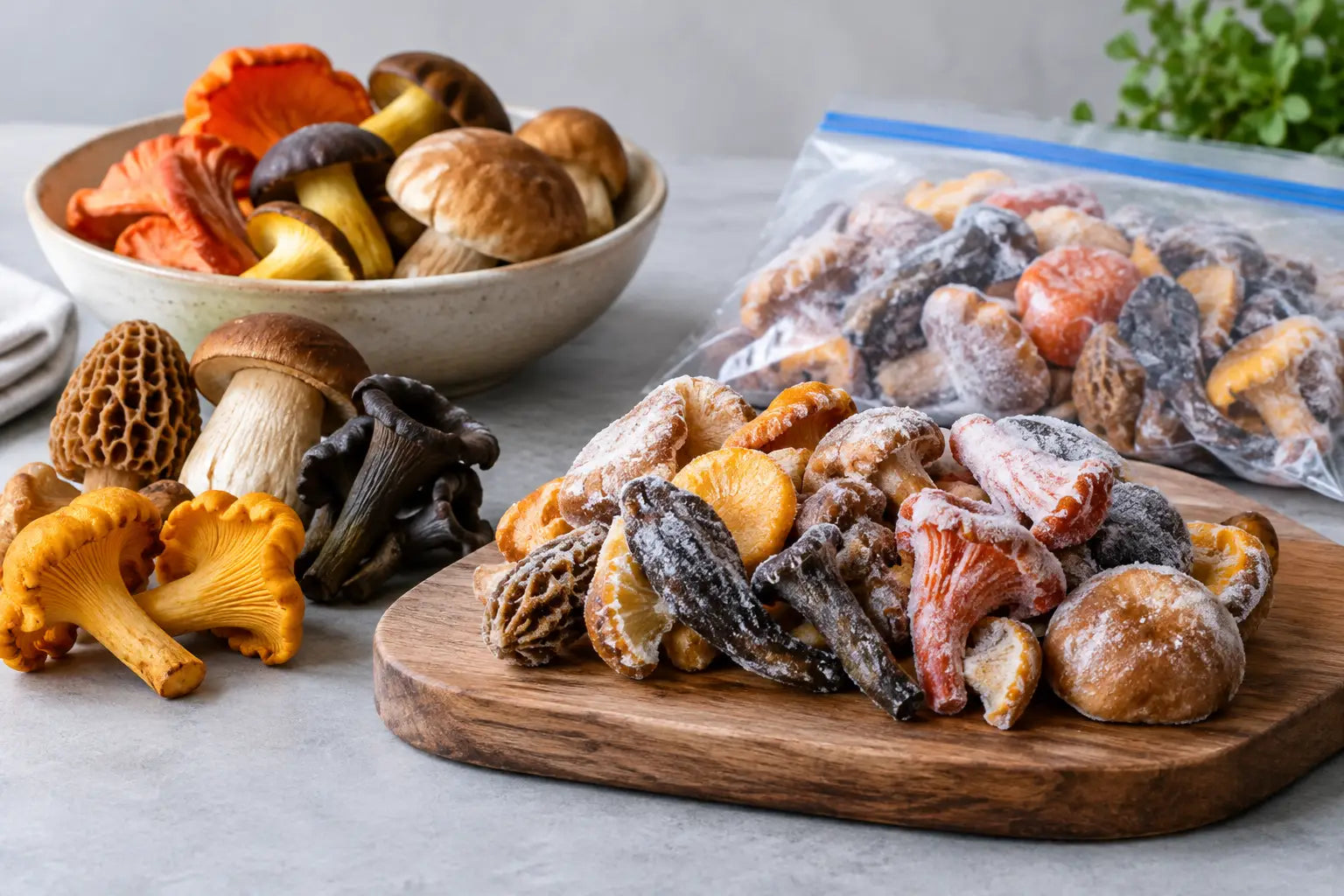
Frozen morels are especially useful when you want wild mushroom flavor without waiting for a short seasonal window. For most skillet dishes, add them directly to a hot pan over medium heat and let their released moisture cook off before adding butter or oil. If your recipe needs a drier texture from the start, thaw them in the refrigerator, then pat dry before cooking.
Morels should always be cooked thoroughly. The goal is not a hard sear that turns them brittle. You want tender caps, lightly golden edges, and a concentrated aroma. Start with a wide skillet, use medium heat, and do not crowd the pan. If the mushrooms steam instead of sizzle, cook them in two batches.
Morel Recipes for a Beautiful First Course
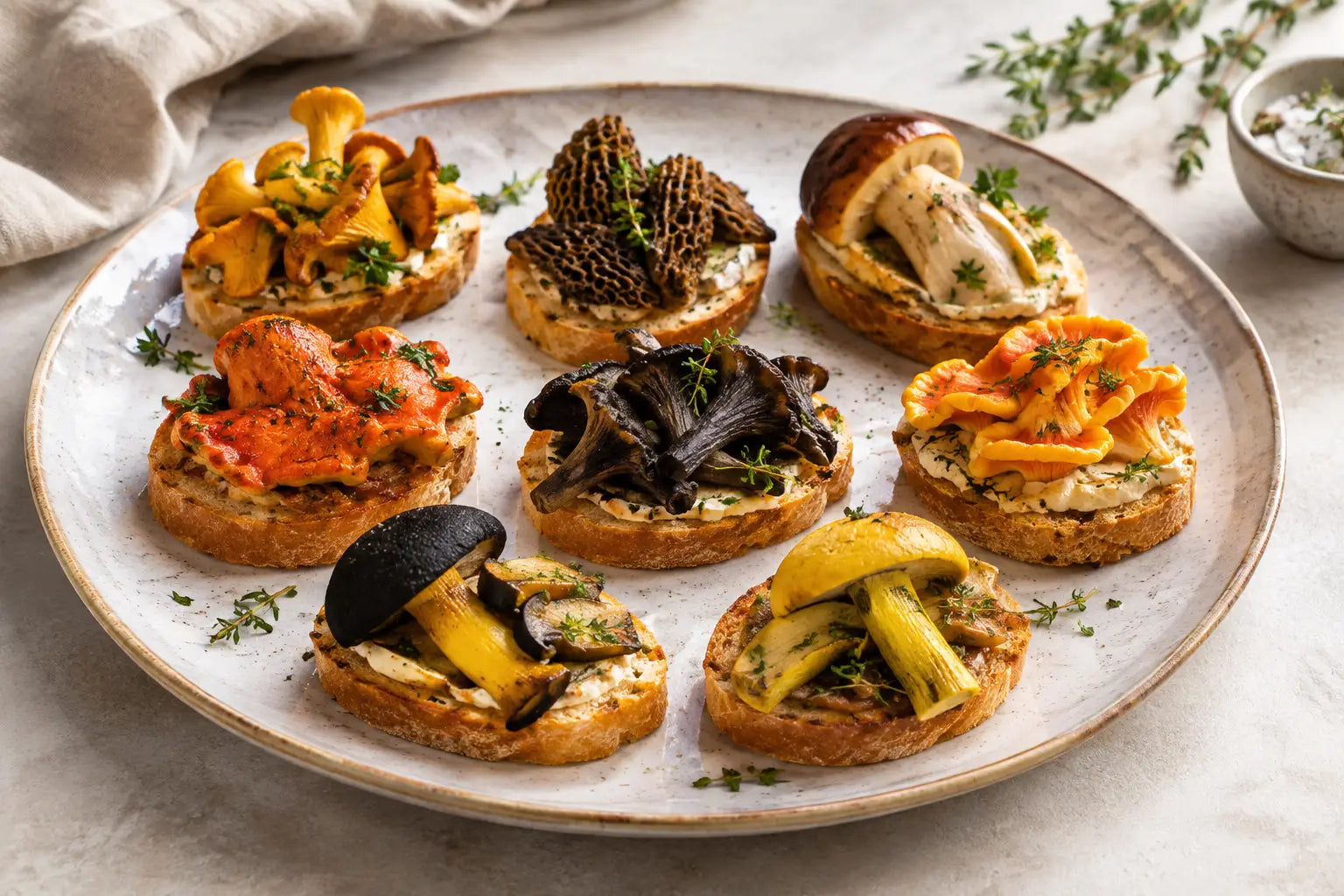
Butter-Braised Morels on Toast
This is the recipe to make when you want the mushrooms to do most of the talking. Warm a tablespoon of olive oil and a generous knob of butter in a skillet. Add cleaned fresh morels or frozen morels that have cooked off their moisture, season with kosher salt, and cook until tender and lightly browned. Add a small splash of dry white wine or stock, then simmer until the liquid lightly coats the mushrooms.
Pile the morels over thick slices of toasted sourdough. Finish with chopped chives, a little lemon zest, and a spoonful of ricotta or fresh goat cheese if you want a creamy contrast. Keep the cheese light-handed. The point is the morels, not a heavy spread.
Soft Scrambled Eggs With Morels and Herbs
Morels and eggs are a classic pairing because both are rich without being overwhelming. Cook the mushrooms first in butter with a pinch of salt. Transfer them to a plate, then lower the heat and make softly scrambled eggs in the same pan. Fold the warm morels back in just before the eggs finish setting.
Tarragon, chives, parsley, or a few tender thyme leaves all work well here. Serve with toast and a simple green salad. It is a luxurious breakfast, but it is also one of the most practical ways to stretch a modest portion of morels into a memorable meal.
> Product Callout: Frozen Wild Morels
> Keep frozen wild morels on hand for spontaneous pastas, eggs, risotto, and pan sauces. Check the current Crown Fungi shop listing for availability and price before ordering.
A Morel Pasta That Stays Light Enough
Cream can make morels feel instantly special, but too much of it can flatten their nuance. For a balanced morel pasta, use the pasta water to create a glossy sauce rather than relying on a thick cream base.
Sauté morels in butter with a finely sliced shallot. Add a small amount of white wine and let it reduce. Toss in cooked tagliatelle, fettuccine, or pappardelle with a splash of pasta water and grated Parmesan. Stir until the sauce clings to the noodles, then finish with black pepper, parsley, and a few drops of lemon juice.
If you prefer a richer version, add two or three tablespoons of crème fraîche at the end instead of a full pour of heavy cream. Crème fraîche brings tang as well as richness, which keeps the pasta from becoming one-note. Peas are welcome in spring, while finely chopped asparagus can add freshness, but use either sparingly so the morels remain the main event.
Roast Chicken With Morel Pan Sauce
A whole roast chicken makes an ideal centerpiece for morels because the pan drippings provide depth without requiring a long list of ingredients. Roast chicken pieces or a whole bird until deeply golden, then let it rest while you make the sauce.
Pour off excess fat from the roasting pan, leaving the browned bits behind. Add butter, shallot, and morels, then cook over medium heat until fragrant. Deglaze with white wine or stock and scrape up every browned bit. Add a little stock, simmer briefly, and finish with a spoonful of crème fraîche or cold butter. Spoon the sauce over the chicken and serve with mashed potatoes, polenta, or buttered noodles.
The trade-off here is timing. Morels cook quickly, while chicken needs time to roast. Make the sauce only after the bird comes out of the oven, and keep it brief. A long simmer can dull the mushrooms' texture and reduce the sauce beyond its best point.
Risotto With Morels, Parmesan, and Lemon
Risotto is a natural home for morels, but it asks for attention. Cook the mushrooms separately first, then stir half into the finished risotto and reserve the rest for the top. This gives every serving both integrated flavor and visible, tender pieces of morel.
Use a straightforward Parmesan risotto as your base. Add warm stock gradually, stirring often enough to keep the rice creamy but not constantly. When the rice is tender with a slight bite, fold in butter, Parmesan, the cooked morels, and a touch of lemon zest. Top each bowl with the reserved mushrooms and a final crack of black pepper.
Skip truffle oil in this dish. It is tempting, but morels already provide the forest-like depth people are looking for. Lemon, Parmesan, and butter are enough to frame them.
How to Build Better Morel Pairings
Morels shine beside foods with gentle richness and clean acidity. Butter, eggs, chicken, cream, pasta, spring peas, asparagus, potatoes, and mild cheeses are reliable partners. White wine and lemon brighten the mushroom's savory depth, while chives, parsley, tarragon, and thyme add fragrance without competing.
Be more cautious with intensely smoky ingredients, aggressive hot peppers, heavily sweet sauces, or large amounts of garlic. None are forbidden, but they can make a premium wild mushroom disappear. If you are using morels in a bold dish, reserve some to fold in at the end so their texture and flavor remain recognizable.
Portion size also depends on the dish. For toast or a simple egg dish, use enough mushrooms for them to feel generous. For pasta, risotto, or a sauce, a smaller amount can go farther because the mushrooms are distributed throughout the meal. Frozen morels are particularly convenient for this approach: use what you need, then keep the rest ready for another dinner.
Shop This Mushroom
For morel recipes that taste focused, start with carefully handled wild morels and let butter, heat, and a few good supporting ingredients do the rest. Explore Crown Fungi's current seasonal offerings to find fresh or frozen wild morels for your next meal.