Cart
0
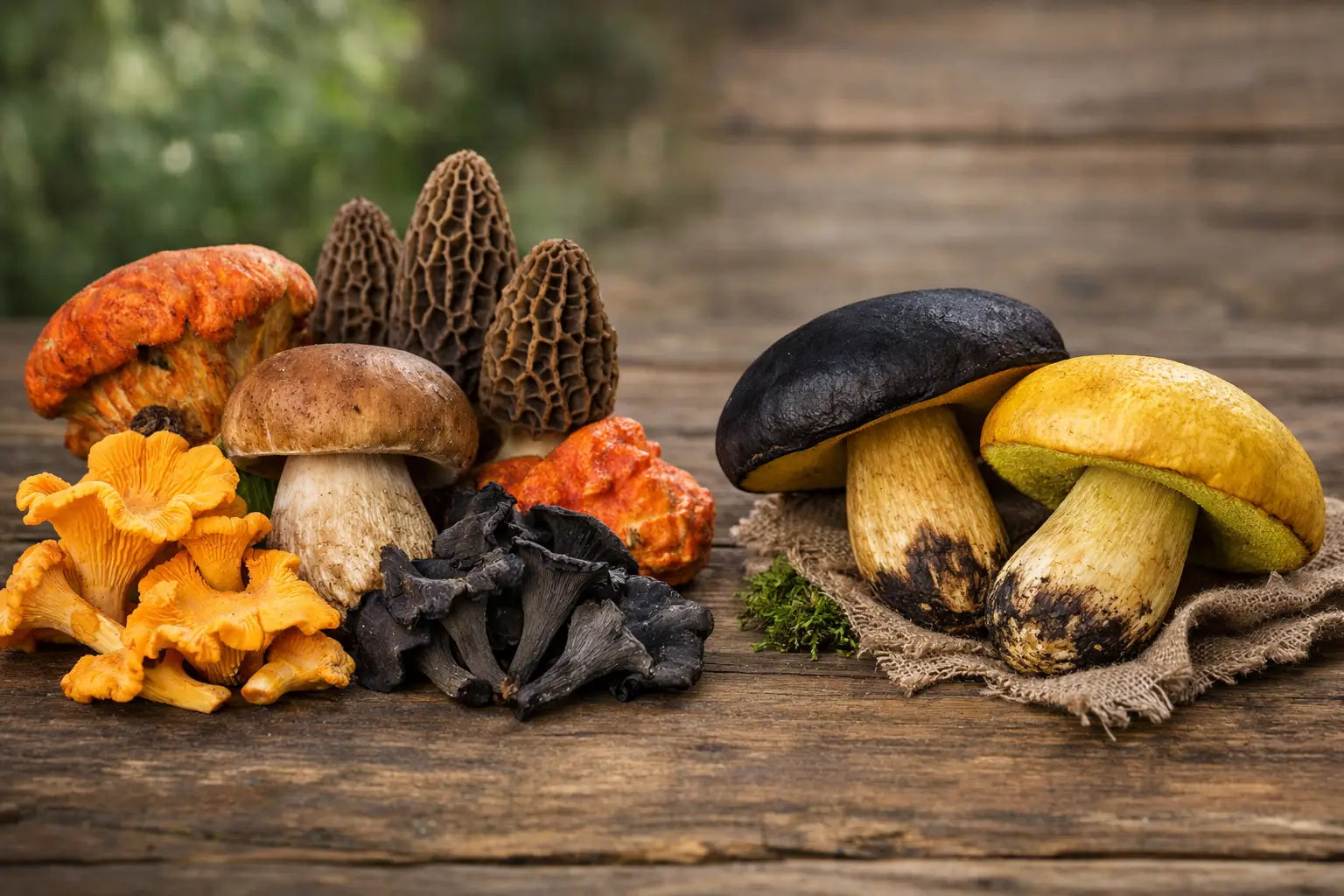
At Crown Fungi, the difference between wild mushrooms vs cultivated mushrooms begins long before the pan. It starts with origin, seasonality, handling, and the level of flavor a kitchen expects from the ingredient. For chefs building a dish around a mushroom rather than treating it as a supporting component, that distinction directly affects menu price, prep strategy, and guest experience.
Cultivated mushrooms provide a dependable baseline for many kitchens. Wild mushrooms bring a different proposition: distinct terroir, limited harvest windows, variable forms, and aromatic complexity that cannot be standardized. Neither category is automatically better for every application. The right choice depends on whether consistency, rarity, cost control, or a specific culinary result is the priority.
Wild Mushrooms vs Cultivated Mushrooms: The Core Difference
Cultivated mushrooms are grown in controlled environments designed to produce repeatable results. Temperature, humidity, substrate, harvest timing, and distribution are managed to support predictable supply and a uniform product. That reliability is valuable when a menu calls for steady volume and a familiar cooking performance.
Wild mushrooms grow in their natural habitats and are harvested during specific seasonal conditions. Their appearance can vary more from piece to piece because they are shaped by weather, soil, moisture, tree associations, and the pace of the season. This variation is not a quality defect when the product is professionally graded. It is part of what gives wild mushrooms their character.
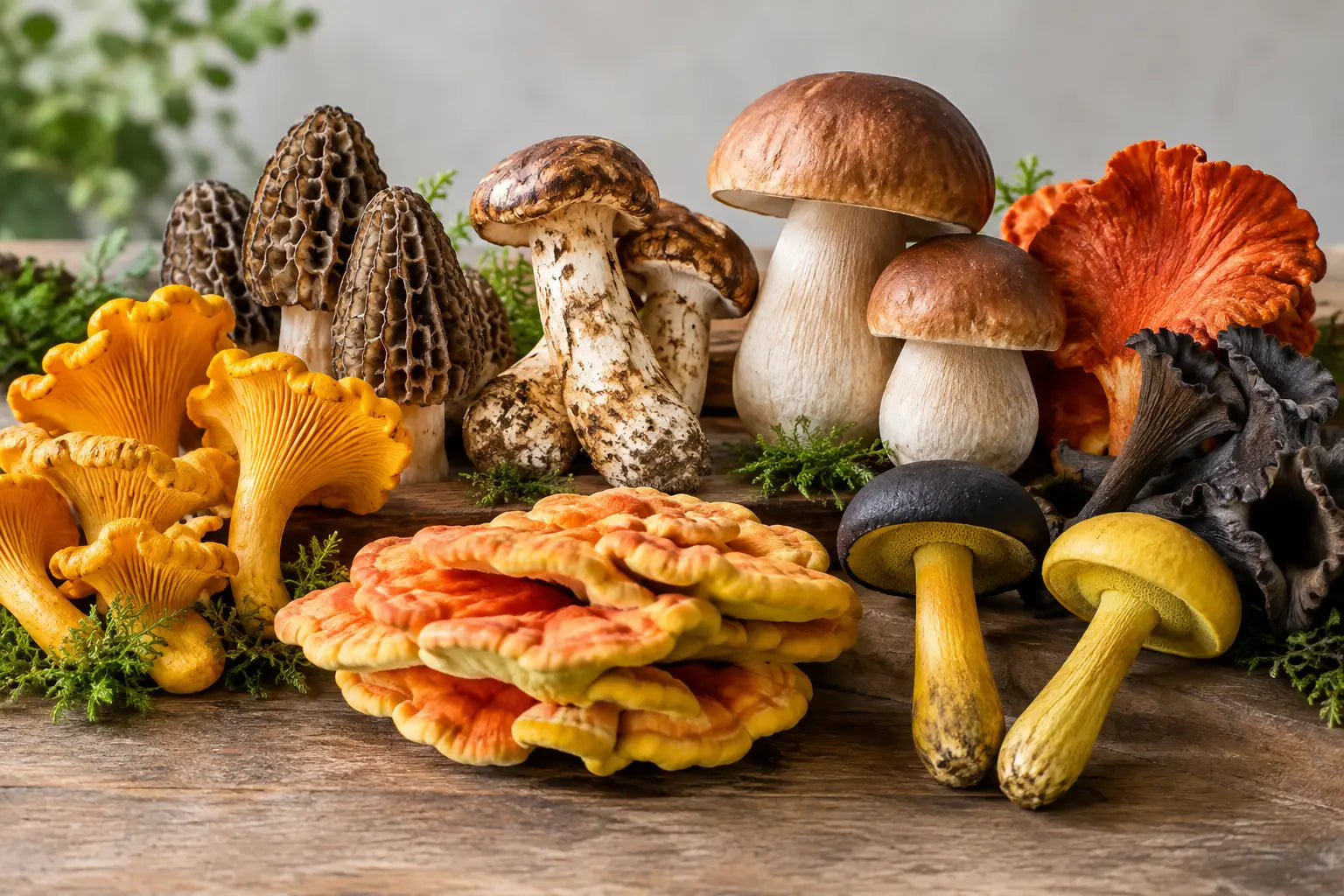
For a serious kitchen, the practical distinction is simple. Cultivated product is generally built for regularity. Wild product is built around specificity. A chanterelle's apricot-like aroma, a porcini's deep woodland savoriness, or a black trumpet's dark floral intensity creates a flavor signature that a controlled growing environment does not readily reproduce.
Flavor Is the Primary Reason to Choose Wild
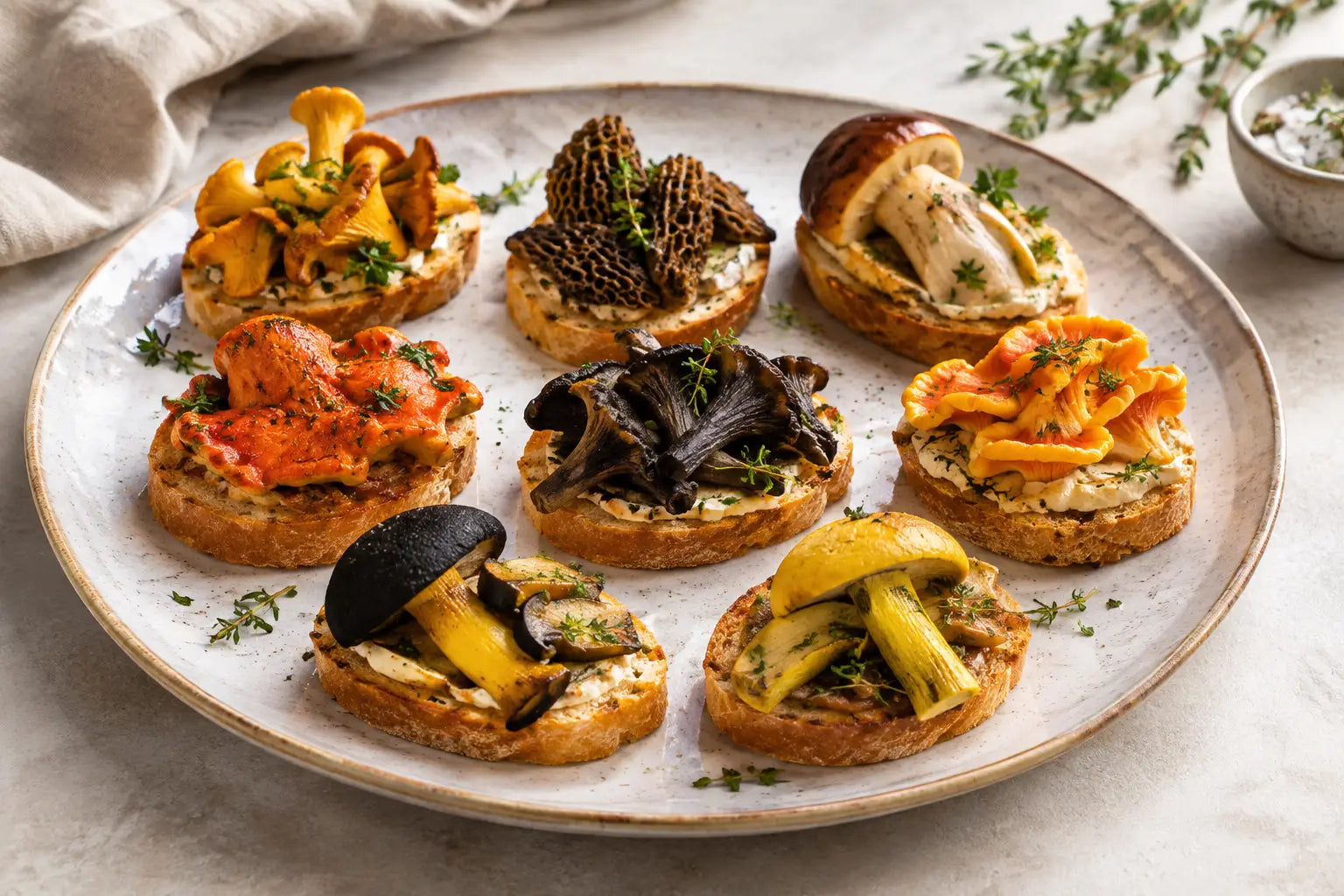
Wild mushrooms earn their place on premium menus because they bring more than mushroom flavor. They can contribute fruit, pepper, smoke, earth, nuttiness, forest-floor depth, and savory concentration, depending on the variety and preparation. A well-handled wild mushroom can establish the direction of a sauce, pasta, risotto, stuffing, consommé, or composed entrée with relatively little additional intervention.
Chanterelles are prized for their firm bite and golden color, with a delicate aroma that works especially well with butter, cream, eggs, poultry, and seafood. Morels have a honeycombed structure that captures sauce and carries rich, roasted flavors. Porcini offer a dense, nutty profile suited to stocks, sauces, grains, and braises. Black trumpets bring an elegant, concentrated aroma that performs exceptionally well in dried form.
Cultivated mushrooms can be useful where the goal is mildness or where they serve as a neutral vehicle for other flavors. But when the mushroom must be memorable, wild varieties provide a more defined culinary point of view. That is why they are often used as a featured seasonal element rather than an interchangeable component.
Terroir Creates Variation Worth Managing
The same wild variety can show subtle changes across regions and harvest periods. Rainfall, temperature swings, and the timing of collection all influence moisture level, firmness, and aroma. For chefs, this means a wild mushroom order should be evaluated like any other seasonal luxury ingredient: by current condition, intended application, and expected yield.
Professional sourcing helps translate that natural variation into a usable product. Careful grading, cleaning, packing, and temperature control reduce avoidable inconsistency while preserving the qualities that make the mushroom distinctive in the first place.
Texture and Cooking Performance Are Not Interchangeable
Flavor is only part of the decision. Wild and cultivated mushrooms often behave differently under heat. Many wild varieties have a denser structure and lower perceived wateriness, allowing them to brown effectively when given adequate pan space and high heat. Others are delicate and benefit from a gentler approach.
Fresh chanterelles should be cooked with restraint. A crowded pan can trap moisture and soften their texture, while a measured sauté preserves their shape and aroma. Lobster mushrooms have a substantial, seafood-like chew that holds up in richer preparations. Chicken of the woods can offer a meaty, layered texture when properly trimmed and cooked until tender.
Cultivated mushrooms are often selected for uniform sizing and predictable moisture release. That can simplify high-volume mise en place. Wild mushrooms require more deliberate prep because their shapes are irregular and their ideal cooking methods vary by species. The trade-off is worthwhile when texture is part of the dish's identity.
Supply Planning Matters More With Wild Product
Seasonality is one of the clearest differences between wild mushrooms and cultivated mushrooms. Controlled cultivation can support a regular production cycle. Wild harvests follow natural calendars, and those calendars can shift by region and weather.
A chef who treats wild mushrooms as a permanent, fixed menu item may face avoidable substitutions or quality compromises. A chef who treats them as a seasonal opportunity can build more compelling menus around their arrival. This does not mean wild mushrooms are limited to a brief fresh window. Preservation formats extend their usefulness well beyond peak harvest.
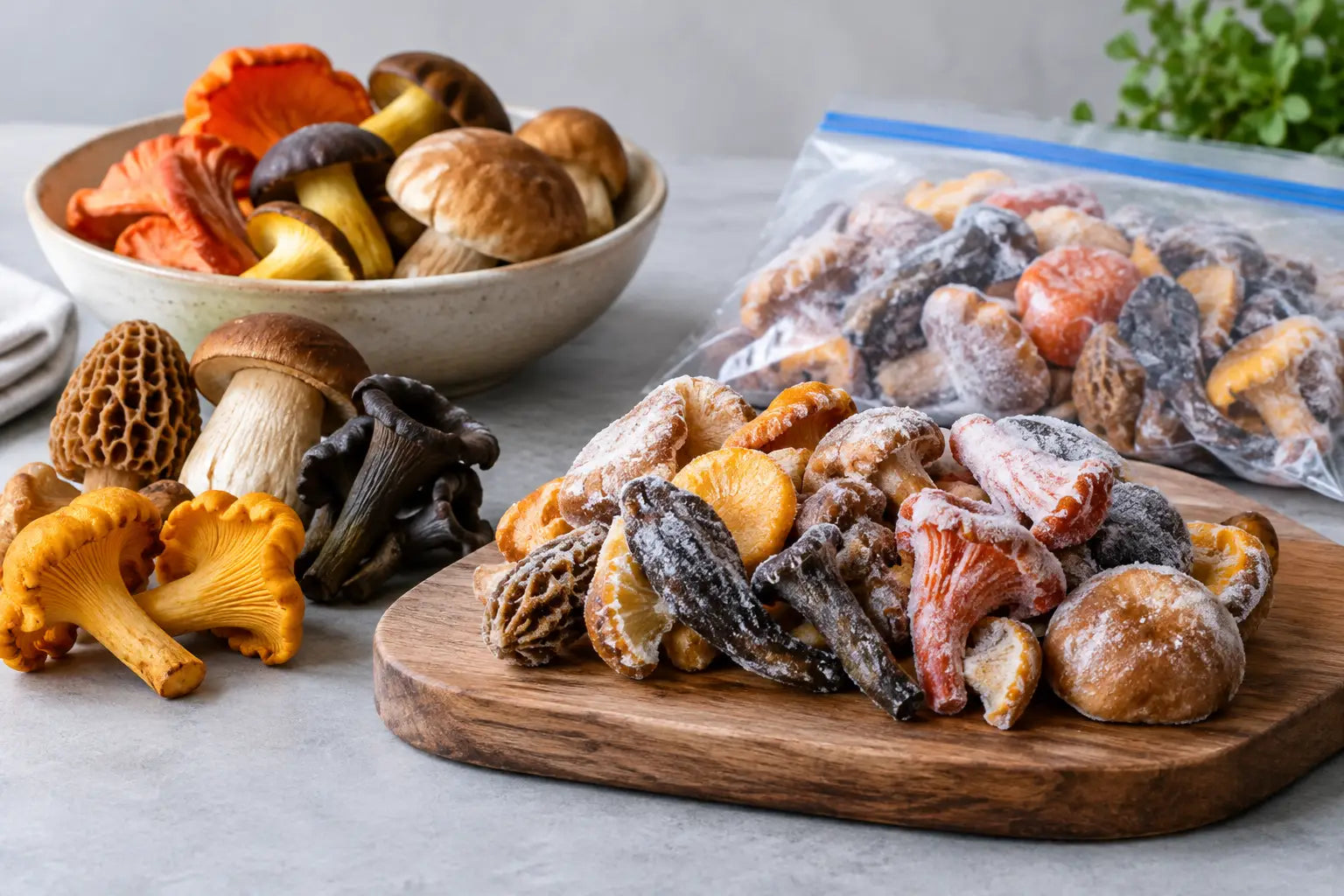
Frozen wild mushrooms, preserved at peak quality, can provide a practical bridge for kitchens that need the flavor and texture of a seasonal harvest outside of the fresh window. Dried mushrooms offer another planning advantage. They concentrate flavor, occupy minimal storage space, and can be rehydrated for sauces, broths, fillings, grains, and blended applications. The soaking liquid, when properly strained, can become part of the finished dish rather than a discarded byproduct.
Buy for the Format, Not Just the Variety
Fresh, frozen, and dried wild mushrooms are not interchangeable, but each has a clear role. Fresh product is best when visual impact, delicate texture, and immediate aroma are central to the plate. Frozen product is valuable for consistent access and practical portioning. Dried product delivers concentrated flavor and dependable pantry utility.
For menu development, the strongest approach is often to choose a variety first, then select the format that matches the application. A fresh chanterelle garnish and a dried porcini jus serve different purposes, even when both are intended to communicate seasonality and depth.
Cost Should Be Measured Against Yield and Impact
Wild mushrooms usually carry a higher purchase price than cultivated mushrooms. That is a direct result of skilled harvesting, limited supply, sorting, cleaning, cold-chain handling, and the risk inherent in seasonal procurement. Looking only at cost per pound, however, can obscure their operational value.
A smaller quantity of high-quality wild mushrooms can create more perceived value than a larger quantity of a mild, uniform mushroom. Their aroma can carry through a sauce. Their texture can turn a simple garnish into a focal point. Their rarity can support a seasonal menu feature or supplement that gives diners a reason to order now rather than later.
The calculation depends on the dish. For a large-volume preparation where mushrooms are not the primary flavor, cultivated product may be the sounder cost decision. For a limited pasta, a seasonal tasting-course garnish, a compound butter, or a mushroom-forward sauce, wild mushrooms can produce a stronger return through differentiation and menu appeal.
Handling Determines Whether Quality Reaches the Plate
Wild mushrooms are perishable ingredients that reward disciplined receiving and storage. Fresh product should be inspected promptly, kept cold, protected from excess moisture, and used according to its condition. Sealed, wet storage is a common cause of quality loss. A breathable container or paper-lined storage approach is generally better suited to maintaining texture.
Avoid washing fresh wild mushrooms far in advance of cooking. Clean only what is necessary, with attention to the variety's structure, then cook them promptly. Morels, for example, have natural cavities that require careful cleaning. Delicate mushrooms should be handled lightly to avoid bruising or unnecessary breakage.
For frozen product, preserve the cold chain and cook from frozen when the preparation calls for it. Thawing can release moisture and compromise browning. Dried mushrooms should be stored airtight, away from heat and light, then rehydrated with a clear plan for both the mushroom and its flavorful liquid.
The Better Choice Depends on the Job
Wild mushrooms are the better choice when a kitchen needs unmistakable flavor, seasonal relevance, visual individuality, or a premium ingredient story supported by real culinary performance. Cultivated mushrooms are the better choice when the operation requires steady volume, predictable sizing, and a neutral flavor foundation.
The most capable kitchens do not treat the categories as rivals. They assign each one to the work it performs best. Use cultivated mushrooms where repeatability carries the dish. Use wild mushrooms where the ingredient needs to lead it.
For menus that demand seasonal character without compromising handling standards, review the current seasonal selection and preserved wild mushroom inventory, then choose the format that gives the dish its strongest finish.