Cart
0
A good morel dinner should begin with anticipation, not a frantic search during a short spring season. This frozen morel mushroom review looks at what home cooks can realistically expect from premium frozen morels, from their unmistakable woodsy flavor to the cooking choices that protect their delicate texture. At Crown Fungi, wild mushrooms are selected for the qualities that matter once they reach your pan: aroma, clean flavor, and the ability to make an ordinary meal feel considered.
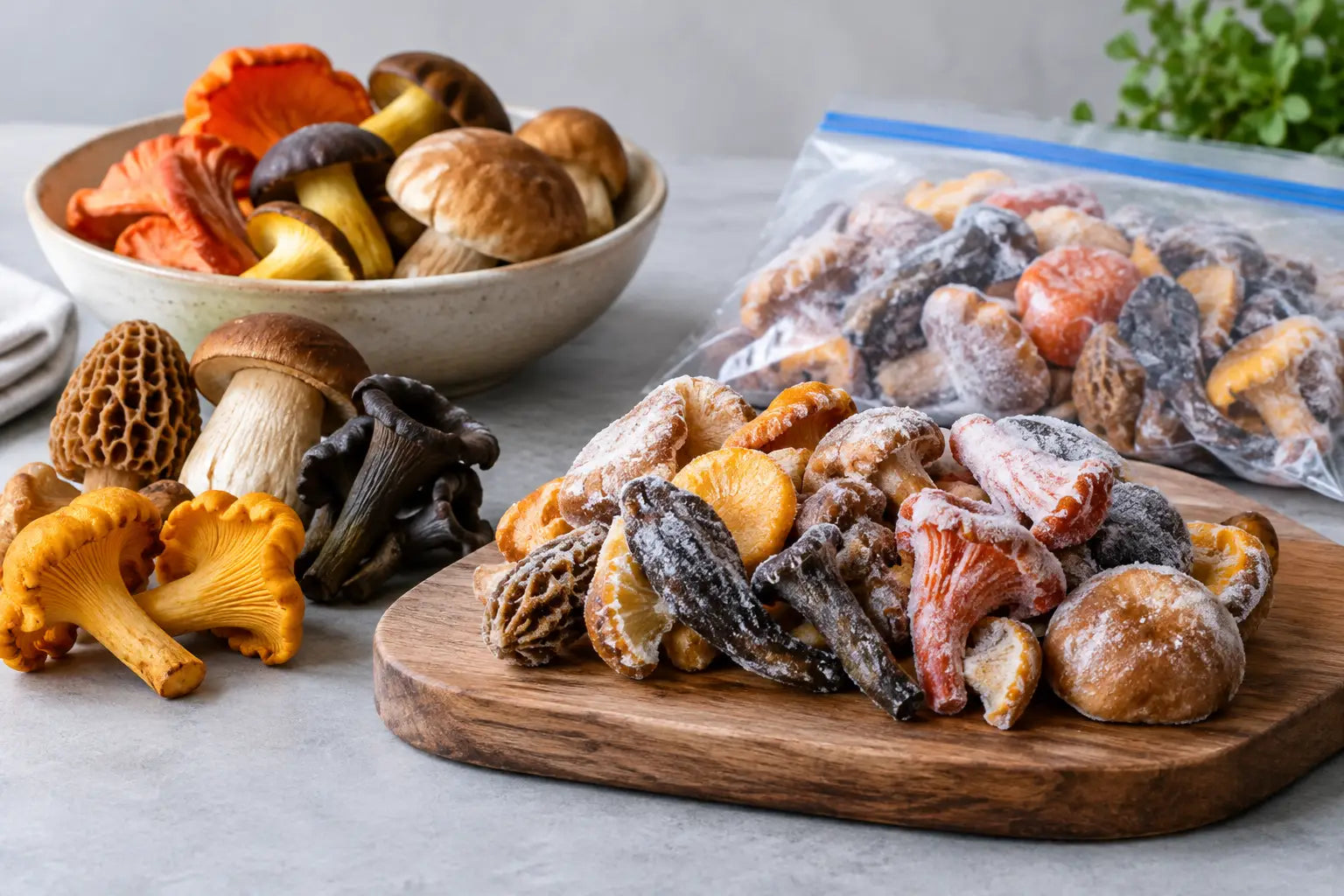
Frozen morels are not meant to imitate freshly picked mushrooms in every detail. They solve a different problem. They give home cooks a dependable way to cook with one of the most prized wild mushrooms when fresh morels are not part of the season.
What Frozen Morels Taste Like
Morels have a flavor that is difficult to replace. They are deeply earthy, gently nutty, and savory without being heavy. Their aroma has a forest-like character that becomes especially vivid when they meet butter, warm cream, eggs, or a good pan sauce.
Freezing preserves much of that signature flavor, particularly when the mushrooms are frozen close to peak condition. In a finished dish, quality frozen morels still bring the concentrated, luxurious note people expect from this variety. They are especially compelling in recipes where the mushrooms have company, such as a cream sauce, risotto, pasta, or a chicken dish with pan juices.
The main trade-off is texture. Fresh morels can have a slightly firmer, springier bite, while frozen morels release moisture as they thaw and cook. That does not make them inferior. It simply means the cooking method matters more. Treat them with patience and a hot pan, and they can be tender, richly flavored, and very satisfying.
Frozen Morel Mushroom Review: The Texture Question
The question most cooks ask is fair: do frozen morels turn soft? They can, especially if they are thawed slowly and left sitting in their released liquid. But that outcome is not inevitable.
Morels have a honeycombed structure with many folds and pockets. Those folds are part of their appeal, but they also hold water. Frozen mushrooms need enough heat and enough space in the pan for excess moisture to evaporate. A crowded skillet steams them. A wide skillet lets their flavor concentrate.
For most home cooking, frozen morels perform best in dishes with a little richness and moisture. Fold them into a cream sauce, spoon them over toast with soft scrambled eggs, or add them to a risotto near the end of cooking. Their texture is less suited to a preparation where a crisp, dry-seared mushroom is the entire point of the plate.
That distinction is useful rather than disappointing. Frozen morels are a premium ingredient with a particular strength: they provide genuine wild morel flavor in recipes built around warmth, sauce, and savoriness.
How to Cook Frozen Morels Well
The simplest approach is usually the best. Move the mushrooms from the freezer to a hot skillet over medium-high heat. Let their initial moisture cook off before adding butter or oil. Once the pan is no longer watery, season lightly and cook until the morels smell fragrant and begin to take on a little color.
Do not rush to add garlic, shallots, wine, or cream. Those ingredients are excellent with morels, but adding them too early traps steam and slows browning. Give the mushrooms a few minutes on their own first. Then build the rest of the dish around them.
A little fat carries morel flavor beautifully. Butter is the classic choice, but olive oil works well, too. Finish with a small splash of cream, dry white wine, or stock if you are making a sauce. Fresh thyme, chives, parsley, and black pepper are enough seasoning for most preparations. Morels are distinctive, so heavy spice blends tend to compete rather than help.
Always cook morels thoroughly. Their best texture is tender and fully heated through, never raw or merely warmed. If your package includes handling instructions, follow those directions first.
> Product Callout: Frozen Morel Mushrooms
> A special-occasion wild mushroom for pasta, eggs, risotto, and buttery pan sauces. Check the current product listing for availability and price before ordering.
When Frozen Morels Are Worth Buying
Frozen morels make the strongest case for themselves when the recipe deserves them. They are not a weeknight substitute for every mushroom dish, and they do not need to be. Their value is in turning a meal into something memorable without waiting for a narrow fresh-morel window.
Consider them for a date-night pasta, a birthday brunch, a holiday side dish, or a thoughtful gift for someone who loves to cook. A modest amount can flavor an entire dish, especially when paired with ingredients that let the mushroom lead. Eggs, fresh pasta, potatoes, poultry, and mild cheeses are all natural partners.
They are also worthwhile for cooks who prefer to keep an exceptional ingredient on hand. A freezer portion gives you flexibility. Instead of planning a meal around whether a specialty market happens to have fresh morels, you can plan around the dish you want to make.
Price matters, of course. Wild morels are a rare, seasonal mushroom, and their cost reflects that. The practical way to think about them is not as a replacement for everyday mushrooms, but as an ingredient that brings a restaurant-worthy sense of occasion to a home-cooked meal. Use them where their flavor will be noticed.
Best Dishes for Frozen Morels
A simple morel cream sauce is one of the best starting points. After cooking the mushrooms until their moisture has reduced, add a little shallot, a splash of wine, and cream. Spoon it over chicken, pork chops, or wide pasta. The sauce settles into the morels' folds and makes the most of their flavor.
Morels are equally at home with eggs. Cook them in butter, then fold them into softly scrambled eggs or layer them over a crisp piece of toast with a fried egg. Add chives and a touch of flaky salt. It is a small meal with a serious payoff.
For risotto, cook the morels separately and stir them in near the end. This keeps their flavor clear and prevents them from disappearing into the rice. A similar approach works for mashed potatoes or polenta: use the morels as a warm, buttery topping rather than mixing them completely through.
If you want to stretch a package, combine morels with another mild wild mushroom only after the morels have been given their own time in the pan. The morels should remain the focal point. Their aroma is the reason for the dish.
A Few Expectations to Set Before You Cook
Frozen morels are at their best when you judge them on flavor rather than expecting the exact feel of a freshly picked mushroom. They may be softer than fresh morels, and they will give off moisture. A hot pan, a small batch, and a sauce-friendly recipe make those realities easy to work with.
They are also not an ingredient to bury under too many additions. Skip aggressive seasoning, sugary glazes, and overly acidic sauces. Let butter, cream, eggs, potatoes, and herbs create a frame for the mushrooms rather than taking over.
For home cooks who care about seasonal ingredients but want more freedom in the kitchen, that is the real appeal. Frozen morels make one of the wild mushroom world's most distinctive flavors available when inspiration strikes, not only when the calendar allows it.
Shop This Mushroom
Explore current frozen morel mushroom offerings from Crown Fungi and choose a package that fits your next special meal. Availability and pricing can change with the season, so check the current shop listing before planning your dish.