Cart
0

A great mushroom pizza is decided before it reaches the oven. The best wild mushrooms for pizza bring concentrated flavor, but they also carry moisture that can soften a crust in minutes if they are not handled well. Crown Fungi focuses on carefully selected wild mushrooms that give home cooks access to varieties with the aroma, texture, and character that an ordinary pizza topping cannot match.
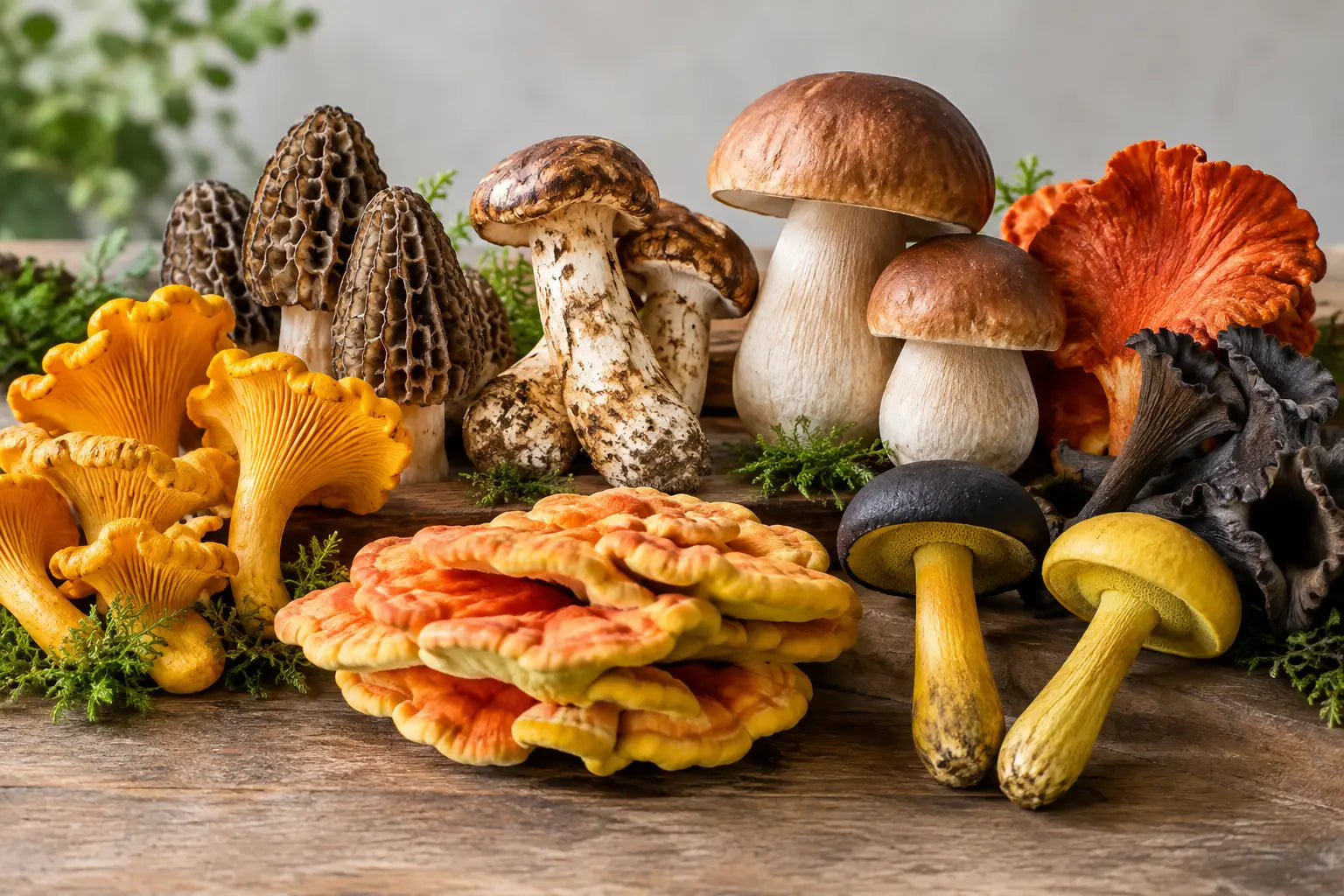
The right choice depends on what you want from the pie. Some mushrooms are buttery and delicate, some are dark and woodsy, and some offer a substantial, almost meaty bite. Below are six excellent options, along with the cooking approach that lets each one stay distinct against melted cheese, blistered dough, and a hot oven.
Best Wild Mushrooms for Pizza: The Top 6
1. Chanterelles: best overall for a classic white pizza
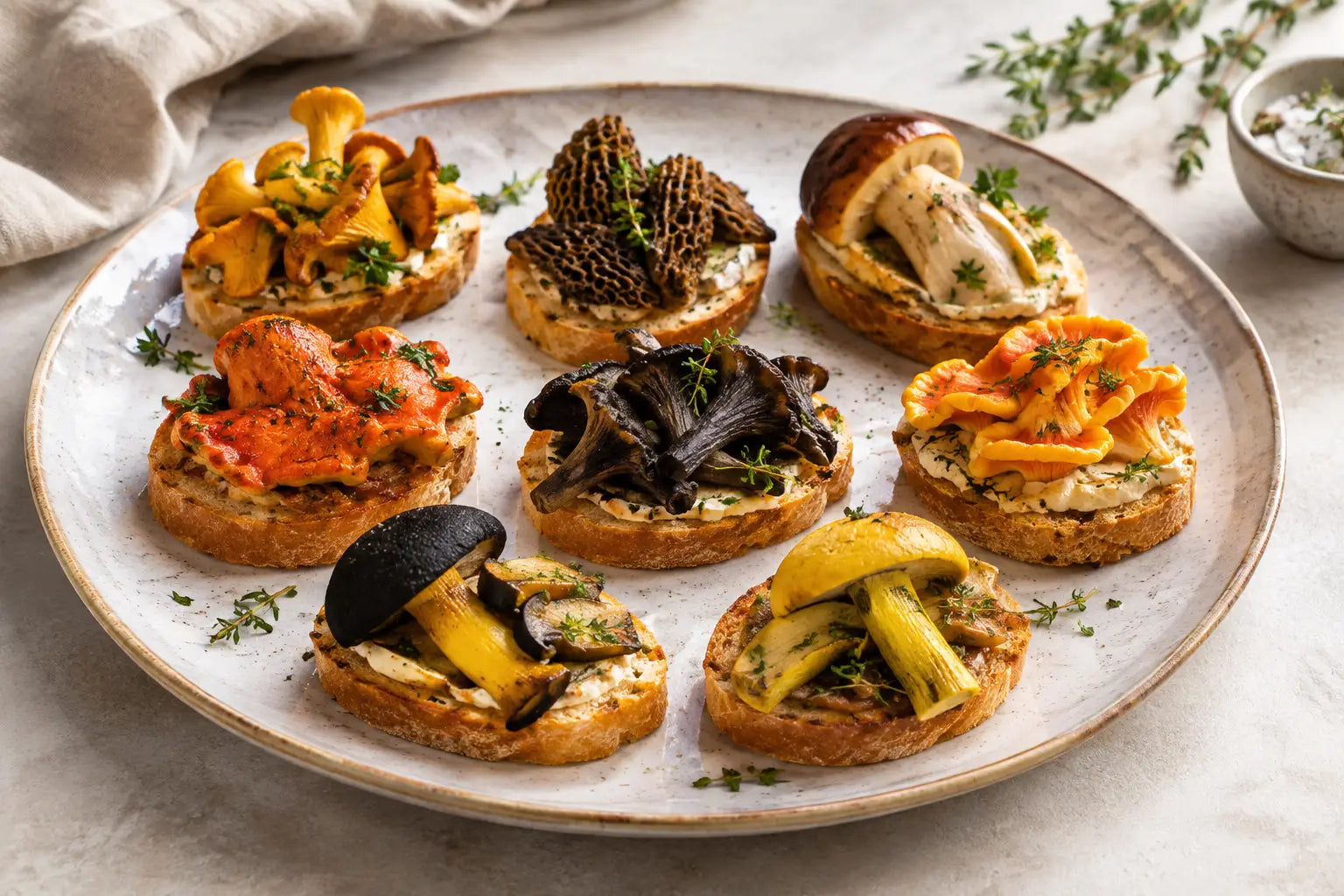
Chanterelles are one of the most natural fits for pizza. Their golden color, gently fruity aroma, and firm yet tender texture make a pie feel special without making it heavy. They shine on a white pizza with mozzarella, fontina, ricotta, or a light cream base, plus thyme and a finishing squeeze of lemon.
Keep the rest of the toppings restrained. Chanterelles have nuance, and a thick layer of sauce, strong cured meats, or too much garlic can flatten it. Tear larger mushrooms into bite-size pieces, then sauté them in a wide skillet until their moisture cooks away and their edges begin to turn golden. Add them to the pizza only after that step.
They are also a smart choice when you want a wild mushroom pizza that will please people who are trying rare varieties for the first time. Their flavor is recognizable as mushroom-forward but still elegant and approachable.
2. Porcini: best for deep, savory flavor
Porcini are for the pizza night when you want a more intense, autumnal profile. Their flavor is rich, nutty, and deeply savory, with enough presence to stand beside caramelized onions, roasted garlic, taleggio, or a thin layer of tomato sauce.
Fresh porcini have a beautiful, substantial texture, but the same rule applies: cook them first. Slice them thickly enough to keep some bite, sauté in olive oil or butter over medium-high heat, and season simply with salt near the end. If the pan begins to crowd, cook in batches. A packed pan steams mushrooms instead of browning them.
Porcini can take fuller flavors than chanterelles. Try them with mozzarella, a small amount of pecorino, and fresh rosemary. For a red-sauce pizza, use a light hand with the sauce so the mushroom remains the main event.
3. Morels: best for a special-occasion pizza
Morels bring a honeycombed shape and a roasted, earthy flavor that feels made for a memorable meal. They pair especially well with rich dairy, spring herbs, asparagus, and eggs. A morel pizza with a soft-set egg added near the end of baking is luxurious without being complicated.
Because morels have many folds, slice larger ones lengthwise and cook them thoroughly in a skillet before they go on the pizza. This both develops their flavor and helps them release excess moisture. Their texture is tender rather than dense, so they work best with toppings that do not compete for attention.
Use morels when the goal is a focused pie: a creamy base, mozzarella or fontina, morels, black pepper, and chives after baking. It is less about piling on ingredients and more about giving a rare mushroom enough room to be noticed.
> Pizza Pick: Morels
>
> For a celebratory white pizza, pair sautéed morels with fontina, a spoonful of ricotta, and fresh chives. Keep the topping layer light so the crust stays crisp.
4. Black trumpet mushrooms: best for bold aroma
Black trumpet mushrooms have a dark, dramatic look and an aroma that can read almost truffle-like once cooked. They are excellent when you want a smaller amount of mushroom to make a big impression. Their delicate shape means they do not create the same substantial bite as porcini or lobster mushrooms, but their perfume is remarkable.
Use black trumpets on a pizza with mild cheese and a little fat to carry their flavor. Mozzarella, crème fraîche, ricotta, or a light brush of olive oil all work. A scattering of black trumpets with potatoes and rosemary makes a particularly satisfying pizza, especially in cooler weather.
Do not bury them under a mountain of cheese. Their flavor is concentrated, but their structure is fine. Sauté them briefly until they soften and become fragrant, then distribute them evenly across the pie. A little goes a long way.
5. Lobster mushrooms: best for color and hearty texture
Lobster mushrooms add vivid orange-red color and a firm, satisfying bite. Despite the name, the flavor is not literally seafood-like. Think savory, rich, and slightly sweet, with a texture that holds up beautifully under heat. They are a strong choice for anyone who wants a pizza that feels generously topped rather than delicate.
Their sturdiness makes them useful alongside bolder ingredients. Lobster mushrooms can handle roasted red peppers, sweet onions, smoked mozzarella, chile flakes, or a modest amount of spicy sausage if you eat meat. For a vegetarian pie, pair them with mozzarella, roasted corn, scallions, and a touch of lime after baking.
Cut lobster mushrooms into even pieces so they cook at the same rate. Sauté until browned at the edges, then let them cool for a moment before topping the dough. That brief pause prevents hot, wet toppings from making the dough harder to shape.
6. Chicken of the woods: best for a substantial slice
Chicken of the woods has a dense, layered texture that makes it one of the most filling wild mushroom choices for pizza. It is especially good for a hearty, vegetable-forward pie where you want the mushroom to provide real substance. Its mild flavor readily takes on olive oil, garlic, herbs, and cheese.
Cook chicken of the woods until tender before it goes anywhere near the pizza. Slice it into thin, manageable pieces and sauté it with enough time for the texture to soften and the edges to brown. A quick toss in the pan is not enough for this variety.
For a balanced pie, pair it with a tomato base, mozzarella, roasted onions, and oregano. It also works on a white pizza with garlic oil, provolone, and parsley. Since it has more body than black trumpets or chanterelles, it can carry a more generous topping layer, though the crust still needs breathing room.
Fresh or Frozen: Which Works Better on Pizza?
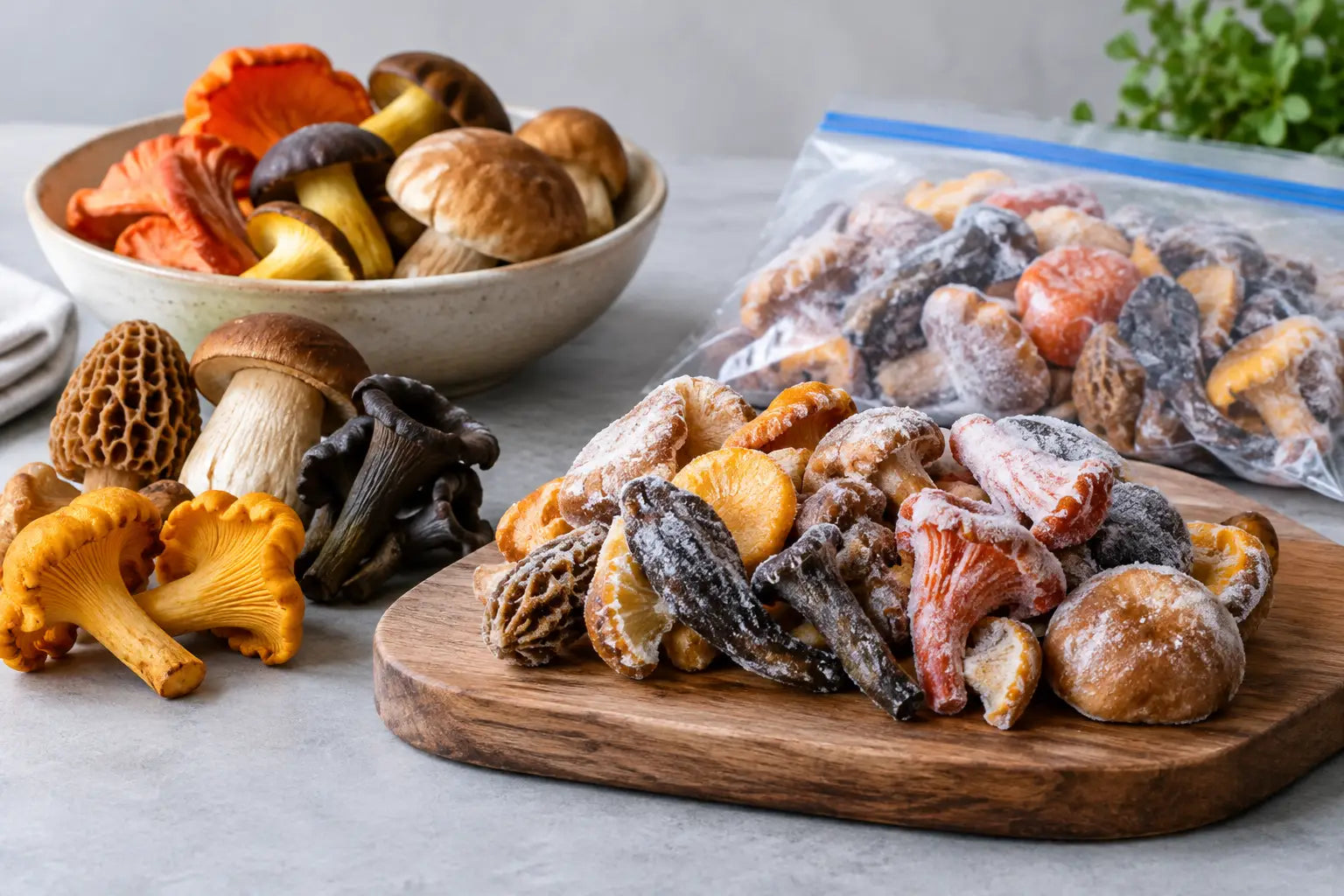
Both fresh and frozen wild mushrooms can make excellent pizza. Fresh mushrooms are wonderful when you want the immediate texture and seasonal character of a particular variety. Frozen mushrooms offer a practical option for keeping a favorite wild mushroom on hand for an impromptu dinner, provided you cook off their released moisture before assembling the pie.
For either format, the goal is the same: start with a hot, wide skillet and avoid crowding it. Let the mushrooms release their moisture, continue cooking until that liquid has mostly evaporated, then add butter or olive oil if needed for browning. Season near the end. This concentrates flavor and protects the crust.
Do not put raw wild mushrooms directly on a pizza unless you are using only a very small amount and baking at extremely high heat. Most home ovens benefit from pre-cooked mushrooms, especially when the pizza includes wetter cheeses, sauce, or vegetables.
The Crust Rule That Makes Wild Mushroom Pizza Better
Wild mushrooms deserve a crisp foundation. Stretch the dough thinner than you might for a heavily loaded pizza, use a light layer of sauce or cheese, and preheat your baking surface thoroughly. A pizza steel, stone, or preheated sheet pan makes a noticeable difference because it starts setting the bottom crust immediately.
There is also a topping limit. Even the best wild mushrooms cannot overcome a pizza overloaded with cheese and vegetables. Choose one mushroom variety as the lead, add one or two supporting flavors, and stop there. For example, chanterelles with fontina and thyme are enough. Porcini with mozzarella, rosemary, and caramelized onion are enough. Morels with ricotta and chives are more than enough.
Finish the pizza after baking rather than before whenever possible. Fresh herbs, lemon zest, a little grated cheese, good olive oil, or chile flakes add brightness without releasing water in the oven. The contrast makes the mushrooms taste clearer, not busier.
Choose by the Pizza You Want to Make
If you want a refined, crowd-pleasing white pizza, choose chanterelles. If you want depth and a richer savory profile, choose porcini. Morels are the standout for a special dinner, while black trumpets deliver the most dramatic aroma. Choose lobster mushrooms for hearty texture and bold color, or chicken of the woods when you want a substantial, satisfying vegetarian centerpiece.
The best choice is not always the strongest-flavored mushroom. It is the one that fits the base, cheese, and mood of the meal. Give it enough heat, avoid excess moisture, and let a few excellent ingredients do the work.
Shop This Mushroom
Explore the current fresh and frozen wild mushroom selection to find the variety that fits your next homemade pizza.